
How is Whatcom County’s homeless situation? Report details success, failure

AI-generated summary reviewed by our newsroom.
- WCHCS reported over 800 unhoused residents in Whatcom County as of January.
- Unsheltered homelessness rose after loss of winter shelters and pandemic aid cuts.
- Rising housing costs and funding gaps hinder shelter services and partner outreach.
More than 800 people in Whatcom County are experiencing homelessness, according to a new report from Whatcom County Health and Community Services (WCHCS).
The data comes from the county’s most recent Point in Time Count, an annual survey of sheltered and unsheltered people experiencing homelessness on a single January night. It often doesn’t capture everyone experiencing homelessness at that time, but is one of the most consistent sources of data for WCHCS.
Chris D’Onofrio, WCHCS housing and homelessness supervisor, said he likes to look at the Point in Time Count as a “measurement” for WCHCS’ services.
“These are all the people that, despite our best efforts, are not getting the kind of services they need,” D’Onofrio said. “Our hope here is that by understanding who they are, we can respond with programs that better target their needs.”
The availability of funding is one of the biggest challenges to addressing homelessness, D’Onofrio said, so it’s important to be able to direct it to where it’s needed. WCHCS allocated $20.5 million in county funds and state and federal grants to support housing and homelessness programs in 2024.
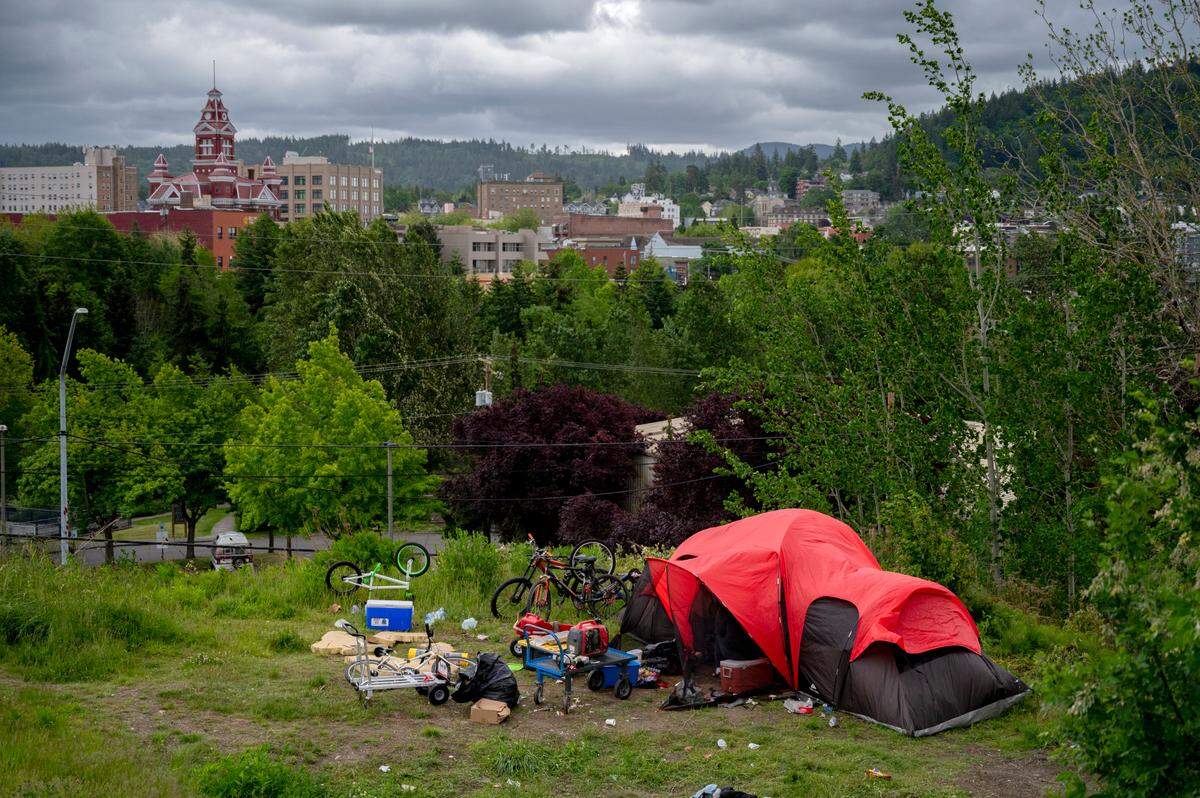
Homelessness overall did not change much in Whatcom County over the past year, though the Point in Time Count found a slight decrease in unhoused people compared to the 4.4% increase statewide. Data also showed that unsheltered homelessness increased, while sheltered homelessness decreased.
WCHCS Housing Specialist Ashley Geleynse said this change was largely due to winter shelters that operated in 2024 no longer operating in 2025. She said the county also wasn’t able to invest as much in motel rooms to house people due to pandemic funding drying up.
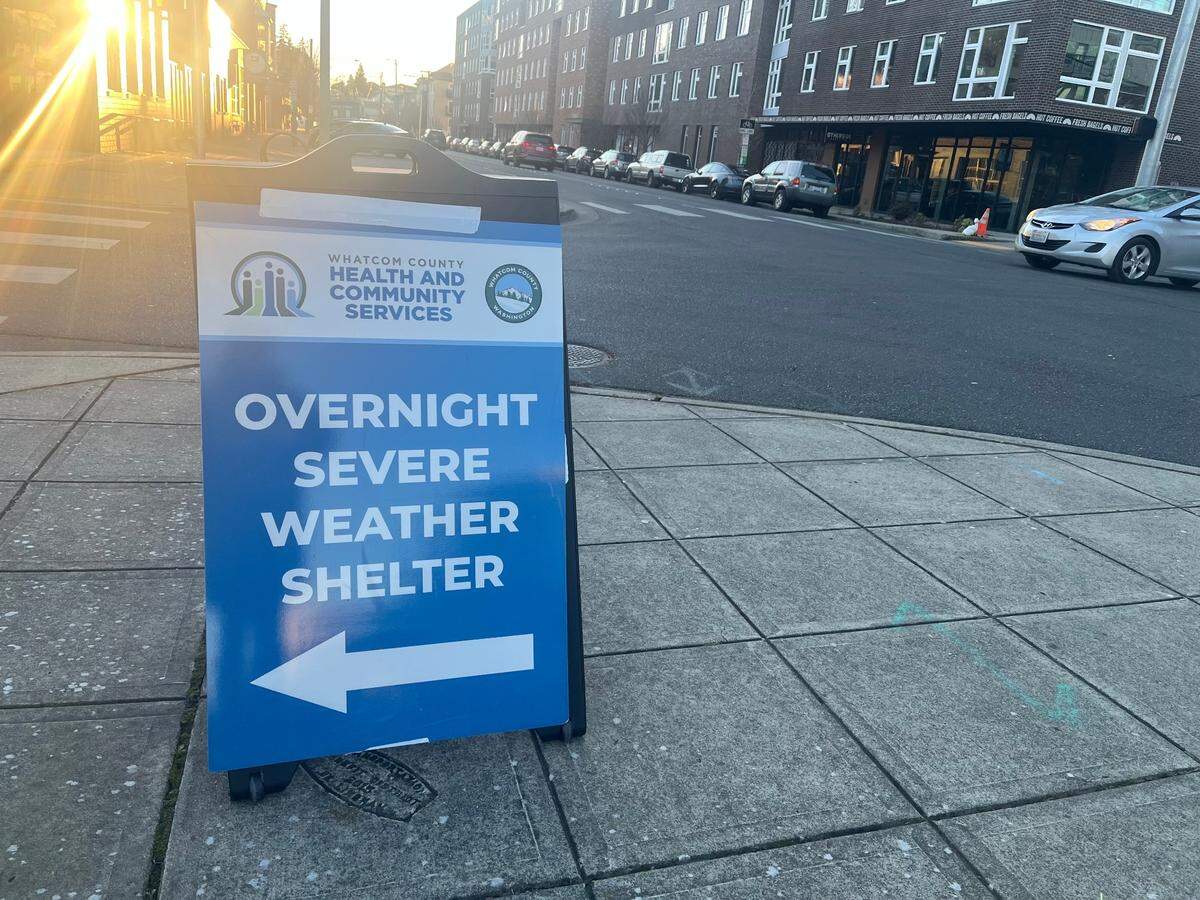
WCHCS has put out requests for providers to help bridge the gaps in service, Geleynse said, but it’s been difficult to find partners. No one responded to a request from the county for an organization to operate a severe weather shelter in Bellingham this coming winter, so the county will be tasked with the project for a third straight year.
A recent request for proposals to operate severe weather shelters outside Bellingham city limits is still open until Aug. 19.
What’s driving homelessness in Whatcom County?
While there’s no one single cause, D’Onofrio said increased housing prices have been a major driver of homelessness. The cost of renting or buying homes in Whatcom County have been steadily on the rise, with the average monthly rental price for all property types in Bellingham recorded at $2,105 in July — a $260 increase from the prior year, according to Zillow data.
When there isn’t enough affordable housing to go around, D’Onofrio said factors like physical and mental health, age and race often come into play. Discrimination and inequities in other aspects of life often impact housing stability as well, whether directly or indirectly.
Homelessness in Whatcom County continues to disproportionately affect people of color, the Point in Time Count found. Thirty-six percent of unhoused people counted were not white, despite people of color only making up 23% of the county’s overall population.
D’Onofrio said that these larger issues aren’t necessarily ones that WCHCS is capable of addressing. Instead, he said it’s important for other organizations to help bridge that gap.
“We’re dealing with some of the symptoms of these bigger challenges, but not really in a way that can address those underlying causes,” he said.
Other measures of homelessness
The Point in Time Count is not the only way for WCHCS to track homelessness in the county and see where needs lie.
The nonprofit Opportunity Council, which receives funding from WCHCS, oversees the county’s coordinated entry system. The program helps connect people who apply for a housing pool with permanent housing programs.
More than 1,000 households applied for assistance through the program last year, according to WCHCS, but only 20% were able to be referred to permanent housing programs. Of the households in the pool, roughly half were single adults, and 190 were families with children.
About one in 24 K-12 public school students in Whatcom County were homeless during the 2024-2025 school year. This number includes students without stable housing as well as those couch surfing or living with another family due to loss of housing or economic hardship.
WCHCS pointed to four districts as showing the greatest increase in students experiencing homelessness between the 2022-2023 school year and the 2024-2025 school year. They were Meridian (104%), Nooksack Valley (49%), Lynden (23%) and Bellingham (19%).
Aaron Jacoby, director of special services for Meridian School District, said the needs of students experiencing homelessness in the district often vary due to the law’s broader definition of the term when applied to youth.
“The biggest thing is making sure that we make school be the safest place they can possibly have, which is what we want for any kid,” Jacoby said.
Under the McKinney-Vento Homeless Assistance Act, students classified as homeless have the right to remain at their “school of origin” even if they no longer technically live in the district. Jacoby said Meridian works to transport students to their same school regardless of their housing situation to continue to provide stability and support.
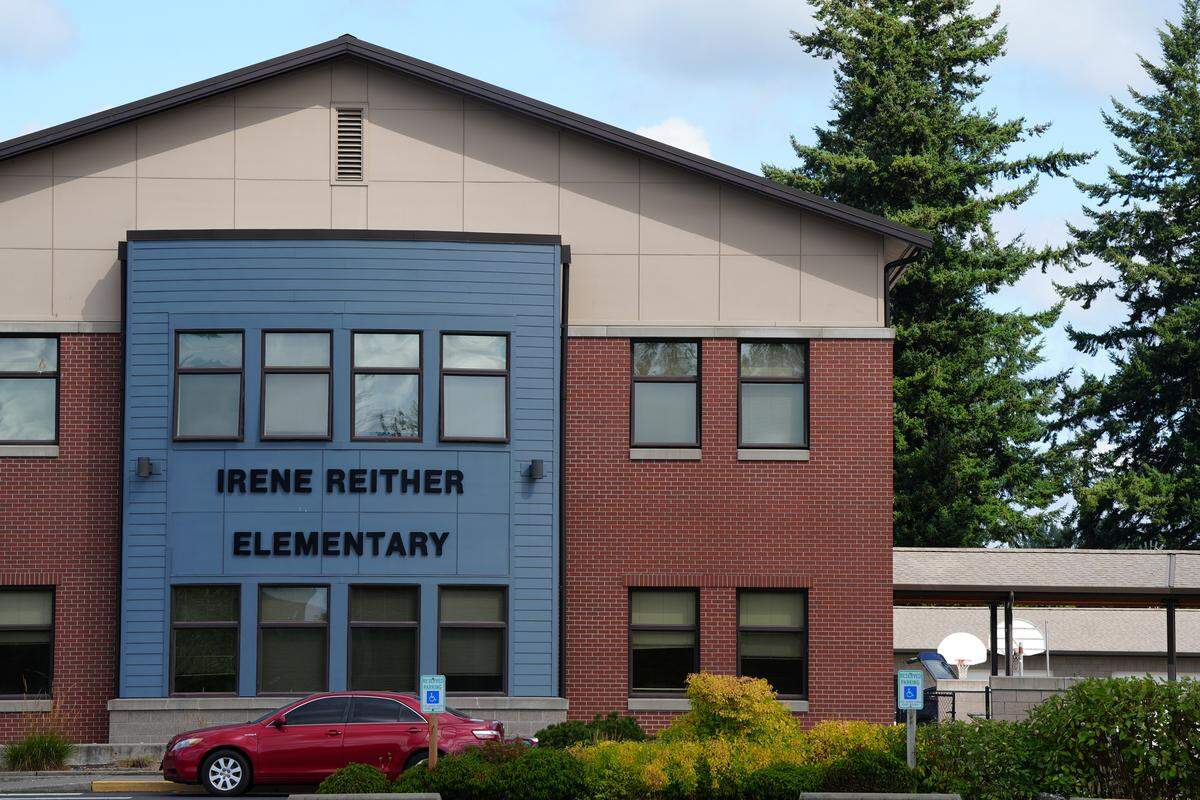
Meridian School District also operates a family support center at Irene Reither Elementary School on weekdays. The center provides free food, clothing and hygiene supplies to anyone in need.
Jacoby said worsening academic performance is often an indicator of possible homelessness. State data shows that students experiencing homelessness tend to have higher rates of school discipline and chronic absenteeism. However, Jacoby said it “really boils down to knowing your kids.”
He said that even with the data collection methods that the school, county and state have, it’s hard to know the true scope of the problem.
“We’re in a day and age where there’s more and more pressure being put on schools to support the needs of kids,” Jacoby said. “We’re also happening to be in a day and age where schools are being asked to work with less resources in a lot of ways.”
Addressing housing, homelessness
WCHCS is working with the Whatcom County Housing Advisory Committee as it completes the final stages of drafting the county’s five-year Homeless Housing Plan.
A new plan is required from each county every five years by the state in accordance with guidance from the Washington State Department of Commerce. The plan must meet a series of strategic objectives, including the strengthening of the homeless service provider workforce, prioritization of assistance based on greatest barriers to housing stability and promotion of an “equitable, accountable and transparent homeless crisis response system.”
D’Onofrio said the new plan will not be a complete overhaul; instead, they are working to continue their current efforts in an improved way. They will also place a bigger emphasis on measuring the outcomes of services and programs in order to make them more effective.
Whatcom County began work on its new plan in January, with the committee holding public engagement activities throughout the year. The first draft will be available for public review and feedback Sept. 11, with plans to present the finalized version to Whatcom County Council in November.
This story was originally published August 11, 2025 at 8:28 AM.