Outdoor recreation industry fears for future as these changes impact the North Cascades
As the snow piled up in the North Cascades this winter, amassing to about 2 feet higher than average on Mount Baker, Luke Baugh sprang into action. There was little doubt in his mind that it would be a high-flow season for the region’s rivers, which are fed by snowpack, and Baugh needed to prepare his whitewater rafting guide company to contend with the strong waters.
“We buy the biggest boats we can, we train our guides to deal with it,” said Baugh, founder of Bellingham-based company Triad River Tours. The company runs tours along the Skagit, Sauk, Skykomish, Wenatchee, Nooksack and Snoqualmie Rivers. “We tell everyone it will be big this year.”
But in a costly turn of events for Baugh and his company, the rivers weren’t “big” this year. A record-breaking heat wave blasted the Pacific Northwest in late June, depleting the snow water equivalent of the North Cascades snowpack to zero by July 6. Researchers found that the heat wave would have been almost impossible without human-caused climate change. About a week later, Gov. Jay Inslee declared a statewide drought emergency.
The water that had seemed so abundant mere months earlier was suddenly scarce, and Baugh said his customers were perplexed when they arrived to river flow so low that they were hitting rocks on the rafting trips they had paid up to $85 per person for. Although Baugh doesn’t control the weather, that didn’t stop customers from leaving negative online reviews, he said.
Nature is inherently unpredictable in many ways, and people pay outdoors outfitters like Triad River Tours for their intimate knowledge of the rivers, mountains and forests that make Washington state an outdoor enthusiast’s paradise. The outdoor recreation industry is one of the largest in the state, supporting 264,000 jobs and resulting in $26.5 billion in annual expenditures, according to a 2020 report by nonprofit Earth Economics.
But what happens to the industry when the natural world shifts in unprecedented ways? As climate change alters the fabric of the Pacific Northwest, increasing the frequency and severity of heatwaves, wildfires and precipitation extremes, some of these companies are scrambling to adapt their business models to shorter seasons and unpredictable conditions.
“With climate change, Mother Nature just threw a huge fit this year, all over the place,” Baugh said. “There is tremendous public demand and not all outfitters are ready for what’s already going on. And we are certainly not ready for what’s about to come.”
Big changes in the North Cascades
The Pacific Northwest warmed about 1.3 degrees Fahrenheit between 1895 and 2011, according to the University of Washington’s Climate Impact Group. This upward trend in average temperature is expected to continue, particularly if humanity doesn’t curb its greenhouse gas emissions fast.
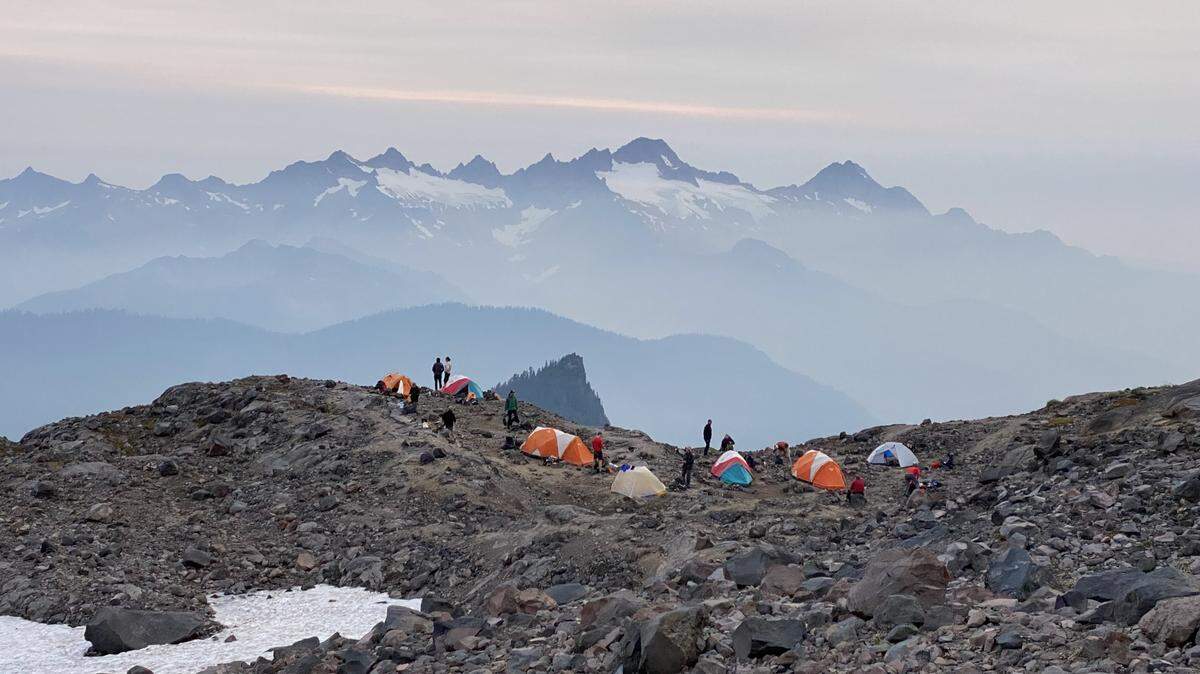
Climate change impacts are making it impossible for outdoor recreation companies to continue business-as-usual: Hotter, drier conditions fuel wildfires that send smoke billowing over the American West, discouraging potential customers from wanting to spend time outdoors. The North Cascades’ glaciers have lost 53 percent of their area since 1900, and the region is seeing a trend of diminishing mountain snowpack, according to the National Park Service. These changes force guides to funnel time and resources into adapting to new conditions.
It’s not just a handful of outdoor recreation companies that should be worried — the local economy as a whole is also at risk, said Todd Elsworth, who has worked in the outdoor recreation industry in Whatcom County for two decades and is executive director of nonprofit Recreation Northwest. Whatcom County has solidified its status as a mountain biking destination, he said, and many local restaurants, bike shops and stores rely on that tourism. If the smoke season gets worse or longer, mountain bikers may instead plan their adventures in places like North Carolina, Ohio or the Northeast, Elsworth said.
“I grew up here, and we didn’t grow up with this. I can still remember back about six years, when this smoke all really started,” he said. “It’s saddening to live through that spike in history.”
Changes at Mount Baker
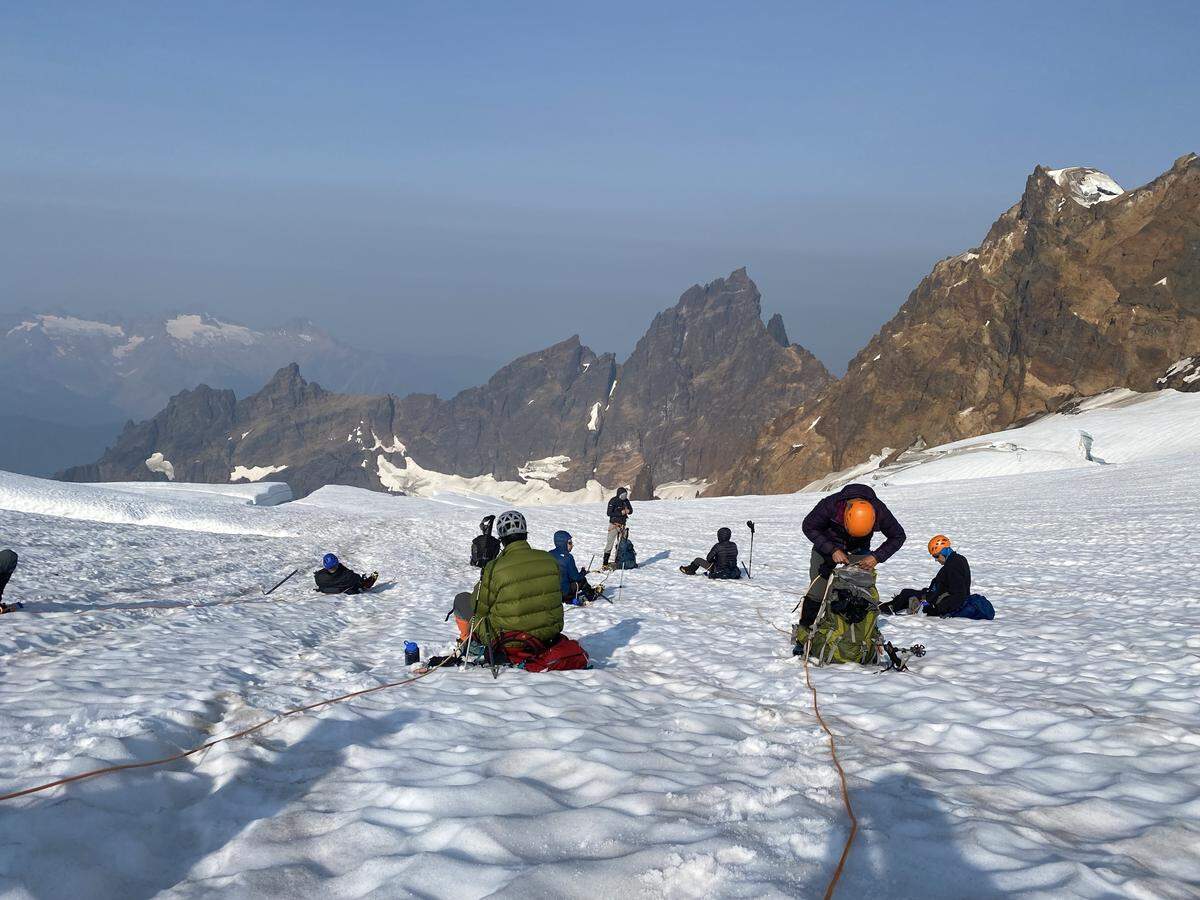
Northwest Alpine Guides has five months each year to earn its money by running mountain climbing trips in the North Cascades, particularly on Mount Baker. If climate change shortens that season much more, company director Dennis Broadwell is troubled by what that could mean for the business based in Sammamish, Wash.
“If that season comes down to three months because of climate change, if the routes are not climbable into August or September, that puts a lot of financial stress on us,” he said.
Mount Baker is one of the snowiest places in the world, and all that snowpack feeds the peak’s 10 glaciers. If there is less snowpack, the routes dry out and become icier, Broadwell said, revealing deep, open crevasses that can make it more difficult and dangerous to summit the mountain.
There’s a chance that climate change will make the North Cascades easier to climb, if the melting glaciers reveal big dirt tracts, Broadwell said. But that potential silver lining doesn’t do much to ease his fears about the business.
“It’s a stress when you run a business, and you see a lot of change and don’t know how to deal with that change,” Broadwell said. “Especially after COVID.”
Mt. Baker Ski Area is not as immediately concerned about profits, said the ski area’s CEO Gwyn Howat. That’s because the mountain is so snowy that a gradual reduction in snowpack won’t send her business financially reeling.
“If there’s any place that’s going to hopefully be OK for snow, it’s going to be here,” Howat said. “The way our infrastructure is set up is very adaptable to changing snow conditions.”
But that doesn’t mean that climate change isn’t a threat to the ski resort. Her team has observed that storms are increasing in intensity, with winds over 100 mph occurring one to two times each winter as opposed to one to two times every three to five years, as in previous decades. These sorts of extreme conditions can force the ski area to shut down certain lifts and lose that business for the day.
Luckily, the ski resort is situated in a rugged, mountainous area not as prone to wildfire as areas farther east. But if a fire did hit, it could take out expensive infrastructure such as lifts and lodges, Howat said.
The ski area plans to invest in higher elevation areas expected to have more snow for longer, such as Heather Meadows. It is also preparing to ramp up capacity if climate change brings in customers who would typically go to other mountains, Howat said.
“As other places get less or worse snow, that can drive more people here,” she said. “So we are adapting our capacity to operational demands.”
Smoky skies, frustrated customers
Outdoor outfitters typically book their trips weeks if not months in advance, which can result in awkward conflicts with customers in the wake of unpredictable weather. People come from all over the country for these trips and typically have physically trained as well as booked flights, hotels and rental cars, Broadwell said,
“People already have pictured themselves on the summit when they buy a trip like this,” he said. “Managing expectations is really stressful for business owners because a big part of it is out of our control.”
In August, as some of the season’s worst smoke swept across the region, Broadwell had a customer call on Thursday wanting to cancel a Saturday trip due to air quality concerns. Broadwell was torn: Although he doesn’t want to pressure people to climb the mountain if they feel it’s unhealthy, there is also always the chance that the smoke will clear or that it won’t be as bad at higher elevation. Granting requests like these is a slippery slope — Broadwell can’t issue a refund to everyone who is concerned about smoke, especially if it becomes a more common occurrence.
“We don’t have enough profit margins to do that,” Broadwell said. “We can’t refund people and pay our guides at the same time.”
He has recently started recommending customers to get traveler’s insurance, so they can get their money back if events are canceled.
Baugh of Triad River Tours echoed Broadwell’s sentiment. The season along the Sauk and Skykomish rivers used to run well into August, according to some of his older guides, but it now ends in the first days of the month. Baugh has had to cancel about 10 percent of Triad’s trips this summer due to fires shutting down roads, smoke and poor river conditions, and the lost revenue puts a strain on the relationship between him and his staff.
When guides don’t know if they’ll get paid from one day to the next, it drives workers out of the whitewater rafting industry and toward more stable positions, such as those at zipline and amusement parks, Baugh said. It’s been hard for him to find experienced guides to hire this season, so he’s had to bring on a number of college students. Although that creates a fun atmosphere, Baugh said it also worries him, since “there is undeniably a correlation between public safety and guide experience.”
Triad River Tours has a strict protocol of running the river at its current conditions before sending any customers out. Although that increases safety, it also costs Baugh money. When he arrives at the river and it’s running extremely high because of a heat event, Baugh has to cancel trips and pay guides for a scouting tour with no customers aboard. In turn, prices must go up, he said.
Not all whitewater guides, however, are willing to take these precautions, and there is little government regulation forcing them to, Baugh said. That’s bad news in an already dangerous sport such as whitewater rafting, which carries the risk of drowning or being pummeled against sharp rocks.
“Without regulation, there is a perverse incentive to do what we do without proper training and equipment,” he said. “When you put small companies under pressure of climate change, shorter sessions and less guides, you create too much incentive for them to cut corners.”