This is what the heat wave did at Mount Baker and what that means for Whatcom County
Western Washington’s deadly June heat wave melted the heavy North Cascades snowpack so fast that it exposed glaciers and threatened to leave fish and farmers high and dry later this summer.
And it’s a harbinger of how Whatcom County’s climate could change as the global warming trend continues, scientists, agricultural interests and wildlife officials told The Bellingham Herald.
“It was definitely a very rapid melt,” said Scott Pattee of the USDA’s Natural Resources Conservation Service office in Mount Vernon.
“The (snowmelt) wasn’t that much early, but the heat wave really killed it,” said Pattee, who is a water supply specialist for Natural Resources.
Some 704 inches of snow fell during the 2020-2021 season, about 2 feet above average, according to measurements at Mt. Baker Ski Area, and the snowpack was measured at 130% of normal in March.
Water contained in the snowpack around the North Puget Sound Region, which includes Whatcom County, was 102% of normal on June 7, according to NRCS data.
But by July 6, the snow water equivalent of the North Cascades snowpack was zero — gone.
Drought likely in Northwest
And, just as the Northwest moves into its driest part of the year, U.S. Drought Monitor indicates “drought development is likely” for Western Washington with the Climate Prediction Center’s forecast calling for warmer than normal temperatures with less average rainfall through summer.
“We had temperatures in the 70s at places in the mountains that don’t get over the 50s and 60s,” said Kirby Cook at the National Weather Service in Seattle. “It’s been dry and unusually warm and I doubt that we’ll see conditions that would change that.”
That could spell trouble for late-season crops like potatoes, and for salmon, which need a steady supply of cold, clear water in streams and rivers, Pattee said.
“It’s very critical for them,” Pattee said. “River flows are normal now, but we could see things dry out in late summer and early fall.”
Harm to salmon unknown
Damage could already have been done to young salmon, especially juvenile Chinook, because readings on the Nooksack River near Nugents Corner show that the river increased in temperature, speed and turbidity during the days in late June where temperatures were in the 90s and over 100 degrees in some areas.
But it will take time before the heat wave’s full effects are known, said Eryn Couch, a spokeswoman for the state Department of Fish and Wildlife
“We’re not likely to know any widespread impacts of this year’s recent weather conditions until annual population surveys can be conducted that compare year-to-year population changes,” Couch told The Herald in an email.
More floods, heatwaves
Bob Mitchell, a professor of hydrogeology at Western Washington University, said that if the planet’s warming trend continues, Mount Baker’s glaciers will keep retreating and the Nooksack could become fed by rainfall, rather than by glacial melt.
“We’re predicting that the snowline will increase,” Mitchell told The Herald. “We’ll essentially get more rain in winter than snow” in the mountains.
That could mean more catastrophic flooding events, such as the early 2020 flood in north Whatcom County, and warmer stream temperatures that are harmful to salmon.
“If we have reduced snowpack, we’ll lose that spring runoff. The snowmelt keeps stream temperatures cool,” he said. “If that snowline increases in elevation, it’s going to increase flood severity going forward.”
Could affect water supply
And it’s uncertain what that will mean for groundwater that feeds agricultural and residential wells.
Water supply shouldn’t be an issue for Bellingham, even though the city sometimes gets some of its water from the Nooksack’s middle fork, said Amy Cloud, spokeswoman for the Department of Public Works Department.
“Although we at times in the past have diverted water from the middle fork of the Nooksack River, currently we are not. Last year the dam was removed and we are still in the process of installing a fish-screening facility at the Diversion. So, we have not diverted due to this project and therefore snow melt didn’t affect diversion,” Cloud told The Herald.
Potatoes ‘took a hit’
Dillon Honcoop, spokesman for Save Family Farming, said that farmers won’t harvest late-season hay this year because it’s so dry — but they made up for it in the spring.
“Spuds took a hit — they’ve been seeing some wilt,” Honcoop told The Herald.
Only about 15% of agricultural irrigation comes directly from the Nooksack in summer, and the rest comes from groundwater, Honcoop said.
“In Whatcom County, our aquifer is very shallow and it’s fully recharged in November and December,” the area’s rainiest months, he said.
Artist Point nears opening
But the rapid thaw could extend the summer hiking season at higher elevations, where snow can linger and block trail access.
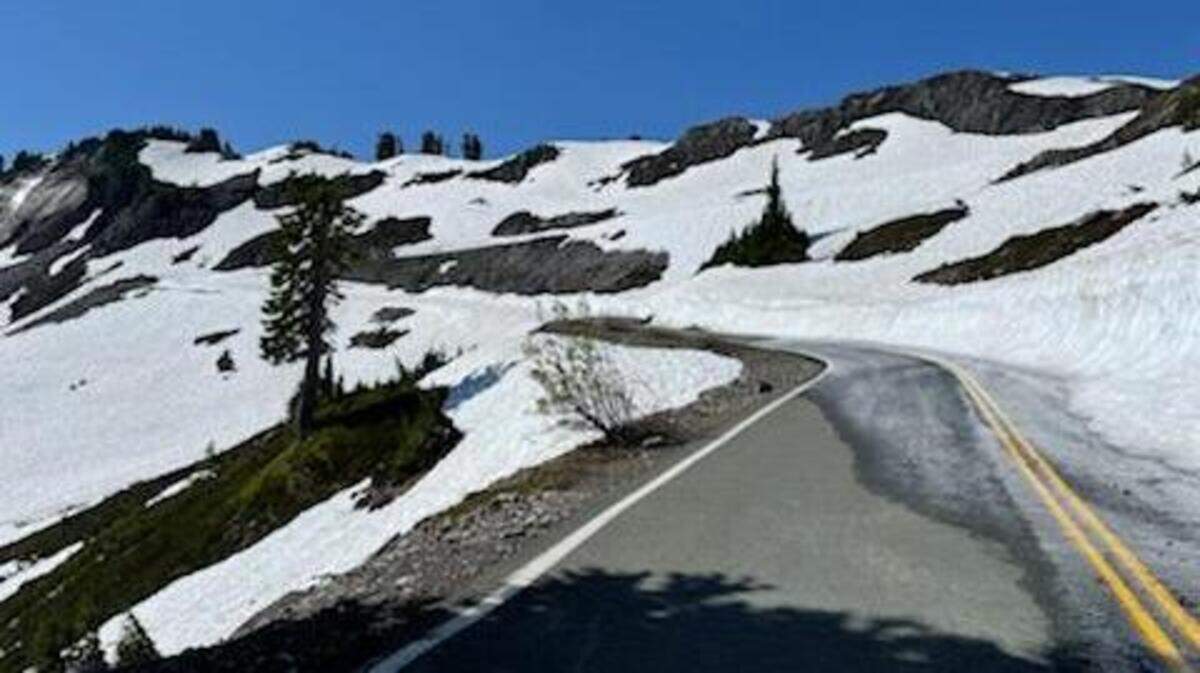
Jordan Longacre, a spokesman for the Washington State Department of Transportation, said maintenance crews working on Mount Baker Highway saw rapid snowmelt that could speed the summer opening of the road to Artist Point.
“They say the heat certainly caused a significant amount of snowmelt and they are confident we will be able to have the road back open not long after the hillside stabilization is complete,” Longacre said in an email.
“There is 2 to 8 feet of snow still on the highway, but the maintenance crews report it to be melting at a good pace,” he said.
In most years, some 30 feet to 50 feet of snow accumulates on the road at the 5,000-foot level near Artist Point, requiring skiploaders and bulldozers to clear it.