Bellingham Council could take up renaming Pickett Road over possible Confederacy link
The City Council will be asked whether it wants to rename Pickett Road after questions were raised about a possible link to a Confederate officer.
Bellingham officials have been looking into the name since the issue surfaced on social media and during a June 12 protest in Bellingham against racial injustice and inequality experienced by people of color. The event was at the intersection of West Bakerview Road and Arctic Avenue near Costco, and a protester held up a sign that read “Pickett Rd. is 1/2 mile from here. Whatcom Co. has racism.”
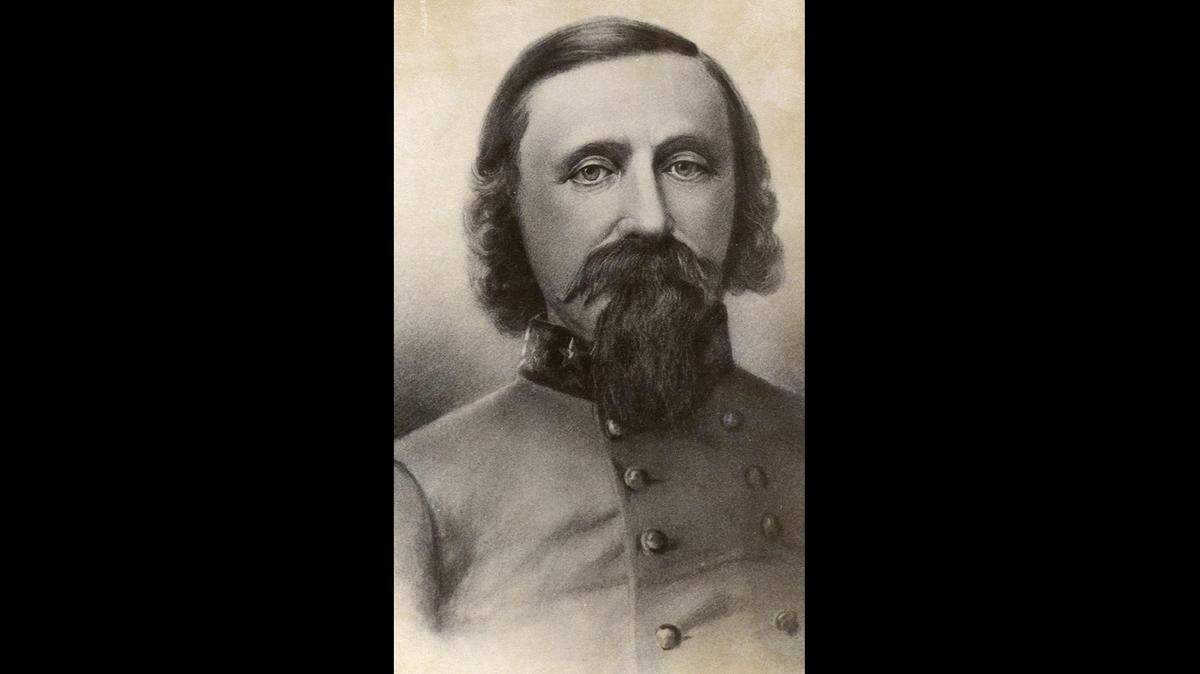
The Southern Poverty Law Center has listed the short road, located off Northwest Drive near Costco in Bellingham, as a public symbol of the Confederacy, one of two in Washington state. The organization says on its website that the road was named in honor of a Confederate general named George Pickett.
Pickett was an Army officer who played a role in Whatcom County’s early days before leaving what was then the Washington Territory in 1861 to serve the Confederacy in the Civil War.
The road’s name was Bennett Street until 1971, when residents living in what was then the county outside Bellingham asked county officials to rename it Pickett Road. They didn’t provide a reason for their request, according to a Bellingham Herald article in July.
The city annexed the area in 2013, which is why the road’s name is now a Bellingham matter.
A Bellingham committee that handles administrative requests for changes to addresses and street names was looking into the origin of the street’s name. It was told that it might have been named after William S. Pickett, who reportedly owned property in the area, perhaps in the early 1900s.
The committee is part of the Bellingham Fire Department.
Fire Chief Bill Hewett told The Bellingham Herald that the research hasn’t turned up an answer.
“City staff from Fire, Library, and Museum completed various searches for records and could not locate anything that indicated why the County Commission picked Pickett Rd. when they changed the name. We were also unable to locate any records of a Pickett owning property in the area, as suggested by one of the current property owners,” Hewett said in an email to The Bellingham Herald.
“Unfortunately, this leaves us back to where we were when we first talked, with nothing in the records to indicate who or what the road was named for,” Hewett said.
Under Bellingham code, “addresses (including street names) can be changed at the request of a homeowner or by the Fire Chief when ‘in the opinion of the Fire or Police Chief the existing condition negatively impacts emergency services responsiveness,’ ” Janice Keller, spokesperson for the Mayor’s Office, said to The Bellingham Herald in an email.
Neither Hewett nor Bellingham Police Chief David Doll believe that the road’s current name negatively affects emergency services response, so its name can’t be changed administratively by staff, Keller said.
But the City Council does have the ability to change street names through a legislative process, as it did when it changed Indian Street to Billy Frank Jr. Street, according to Keller.
The City Council did so in 2015 in honor of the late Native American fishing rights activist. A member of the Nisqually Indian Tribe, Frank’s activism in the 1960s and ’70s led to a major strengthening of tribal fishing rights under the Boldt court ruling.
Keller said Mayor Seth Fleetwood would likely bring the matter before the City Council at its Sept. 14 meeting to determine the council’s “interest in any next steps.”
Name overview
Based in Alabama, the Southern Poverty Law Center tracks hate groups and helps communities grappling with Confederate monuments, controversial links to the past that have resurfaced during recent Black Lives Matter protests and marches for their link to slavery and white supremacy.
The Bellingham Herald has reached out to the Southern Poverty Law Center but has yet to hear back from the organization about why Pickett Road was put on its list of public symbols of the Confederacy.
But on its website, the SPLC said it used a variety of public and private sources to vet its information and to create its list and map, as well as news stories and information provided by the public.
Public resources included state and local governments as well as the U.S. Geological Survey, the National Park Service and the National Register of Historic Places. Private sources included Waymarking, a database which allows members to post locations of historical monuments that they’ve visited.
As for roads, the SPLC said one way in which it determined that a street was named for Confederates was if a person’s full name was used or if the “last name or nickname matches a prominent Confederate hero and is not commonplace, e.g. Stonewall and Forrest...”
Should it take up the question over the road, it wouldn’t be the first time the City Council has grappled with the Pickett name.
In November, the City Council voted to strip George E. Pickett’s name from the bridge that spans Whatcom Creek on Dupont Street, as recommended by the city’s Historic Preservation Commission. It was a previous City Council that named it after Pickett in 1918.
In adopting the Historic Preservation Commission’s recommendations, the City Council agreed that having Pickett’s name on the bridge was “inappropriate and does not reflect the values of the city of Bellingham.”
Before removing the name from the bridge, the City Council relied on research that included The Bellingham Herald archives from a century ago and studying guidelines in the SPLC’s 2019 publication, “Whose Heritage? Public Symbols of the Confederacy.”
The center’s publication asks “whose heritage do the symbols truly represent, and does the tribute specifically honor an aspect of the person’s Civil War life,” the city staff report noted.