Amid concerns about symbols of the Confederacy, Bellingham delves into Pickett Road
Who is Pickett Road named after?
Was it George E. Pickett, an Army officer who played a role in Whatcom County’s early days before leaving to serve as a Confederate general in the Civil War? Or was it William S. Pickett, who reportedly owned property in the area, perhaps in the early 1900s?
The answer matters because the short road, located off Northwest Drive near Costco in Bellingham, has been listed by the Southern Poverty Law Center as a public symbol of the Confederacy. The organization says on its website that the road was named after the Confederate general.
The answer also is of significance in Bellingham, where the City Council voted in November to strip George E. Pickett’s name from the bridge that spans Whatcom Creek on Dupont Street, as recommended by the city’s Historic Preservation Commission. It was a City Council that named it after Pickett in 1918.
In adopting the Historic Preservation Commission’s recommendations, the City Council agreed that having Pickett’s name on the bridge was “inappropriate and does not reflect the values of the city of Bellingham.”
The question of which Pickett the road was named after is being researched by a Bellingham committee that handles administrative requests for changes to addresses and street names. The committee is part of the Bellingham Fire Department.
It could have an answer to the which Pickett question next week, Fire Chief Bill Hewett said to The Bellingham Herald.
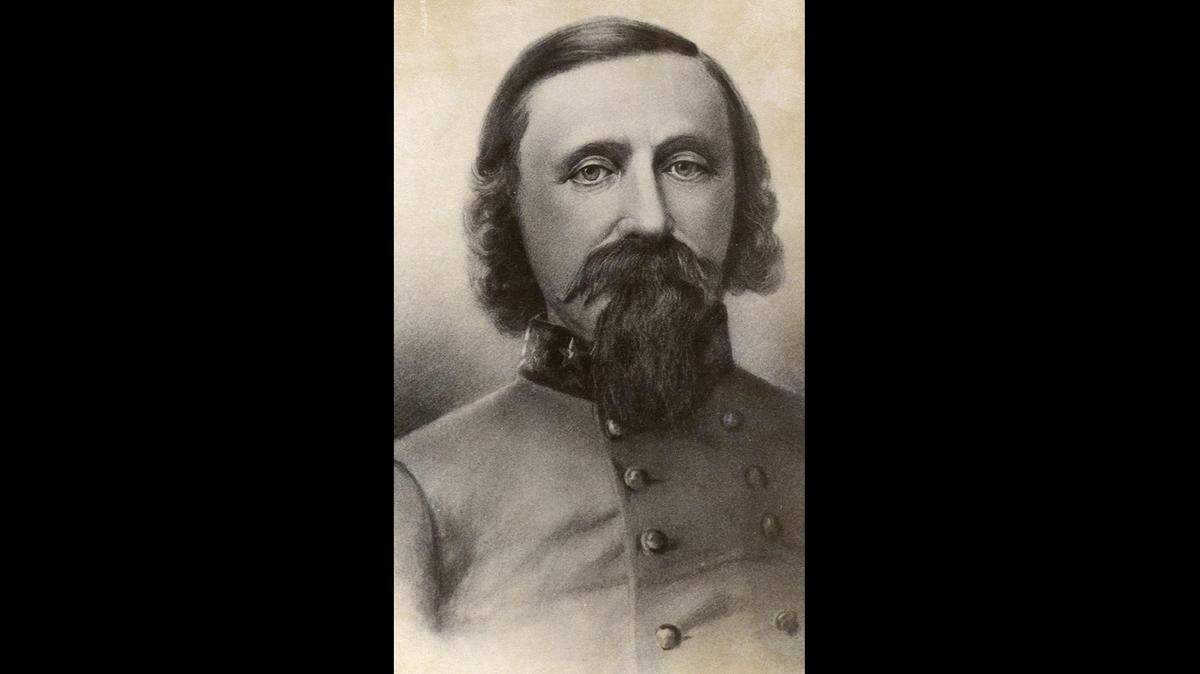
Who was Pickett?
Capt. George E. Pickett was a U.S. Army officer who built Fort Bellingham, in what was then the Washington Territory, in the 1850s and supervised the construction of the first bridge across Whatcom Creek.
He arrived from Fort Steilacoom on Aug. 26, 1856, to build Fort Bellingham to protect the communities of Whatcom, Sehome and Fairhaven against attacks from “northern Indians,” according to an essay by Janet Oakley on HistoryLink.org.
He also was instrumental in securing the San Juan Islands for the U.S.
Pickett left the area in 1861 to fight for his home state of Virginia in the Civil War and later became a general in the Confederate States Army.
He was part of an infamous offensive — the failed Pickett’s Charge — at the Battle of Gettysburg in July 1863.
When Pickett left what was then the Washington Territory to fight for the Confederacy, he left behind a son he’d had with his wife, a Native American woman believed to be from the Haida tribe, according to an essay by Phil Dougherty on Historylink.org.
James Tilton Picket was born on Dec. 31, 1857. He never saw his father again after he left, according to Dougherty’s essay. Jimmie Pickett, as he was known, died in Portland in 1889 after working as an artist for the Seattle Post-Intelligencer and the Portland Oregonian. He was 31.
Pickett Bridge
The Pickett Bridge in Bellingham became a flashpoint in 2017 when city officials removed signs that identified the bridge and that directed people to Pickett House after deadly clashes during a white nationalist rally in Charlottesville, Virginia, in mid-August.
At that time, Bellingham officials said they were acknowledging community members and Western Washington University students who were “uncomfortable with a local landmark named in honor of a military leader who served during a war marked as ‘a pinnacle of America’s racist history.’ ”
Before removing the name from the bridge in November, the City Council relied on research that included Bellingham Herald archives from a century ago and studying guidelines in the Southern Poverty Law Center’s 2019 publication, “Whose Heritage? Public Symbols of the Confederacy.”
The center’s publication asks “whose heritage do the symbols truly represent, and does the tribute specifically honor an aspect of the person’s Civil War life,” the city staff report noted.
Based in Alabama, the Southern Poverty Law Center tracks hate groups and helps communities grappling with Confederate monuments, which have become a lightning rod during recent Black Lives Matter protests and marches for their link to slavery and white supremacy.
Pickett Road
The push to change the road’s name has surfaced on social media and at the June 12 protest in Bellingham against racial injustice and inequality experienced by people of color. The event was at the intersection of West Bakerview Road and Arctic Avenue near Costco, and a protester held up a sign that read “Pickett Rd. is 1/2 mile from here. Whatcom Co. has racism.”
Tracking back the Pickett Road name has been a challenge. The Bellingham Herald reached out to the Southern Poverty Law Center about Pickett Road being featured on its list but didn’t hear back.
Here’s what The Herald has learned so far:
▪ The road was first named Bennett Street, back when it was in the city of Whatcom, which eventually became part of Bellingham in 1903. It eventually became part of Whatcom County.
In 1971, the residents along Bennett Street petitioned the Whatcom County Commissioners to change the name to Pickett Road, according to Roland Middleton, Special Programs manager for the Whatcom County Public Works Department.
The commissioners did on Aug. 19, 1971.
▪ Why the residents asked for that name change wasn’t in the county records. Nor was it in the hand-written request signed by seven people on Aug. 11, 1971, and dug up for The Bellingham Herald by Alison Costanza of the Washington State Archives.
A search of The Bellingham Herald archives from back then didn’t reveal an answer or a reference to the name change.
“The lack of explanation, as to why Pickett was chosen, is typical,” Jeff Jewell, a researcher at Whatcom Museum, said to The Herald.
▪ The city of Bellingham annexed the area in 2013, which is why the road’s name is now a Bellingham matter.
▪ Back to 2020, the city of Bellingham committee looking into Pickett Road faced similar challenges about finding the reason for the change.
However, Hewett said that when the committee contacted property owners — three people own the four parcels there — along Pickett Road to let them known the city was looking into the possibility of changing the name, one of the owners said he was told by his family that the street was renamed after William S. Pickett.
So now the committee is searching through old Whatcom County Assessor’s Office records in search of William S. Pickett.
When the name change was asked for in 1971, Hewett said, there were three Bennetts — a street, a drive and an avenue. Hewett wondered if the request to rename the street was based in part on that.
What happens next will depend on which Pickett the road is named after. As an administrative matter, Hewett said the committee could only rename Pickett Road for public safety reasons.
“It’s not totally up to me to make that decision,” Hewett said. “As a city, we want to do the right thing here. What that means, of course, is to have some relevance to what the history is.”
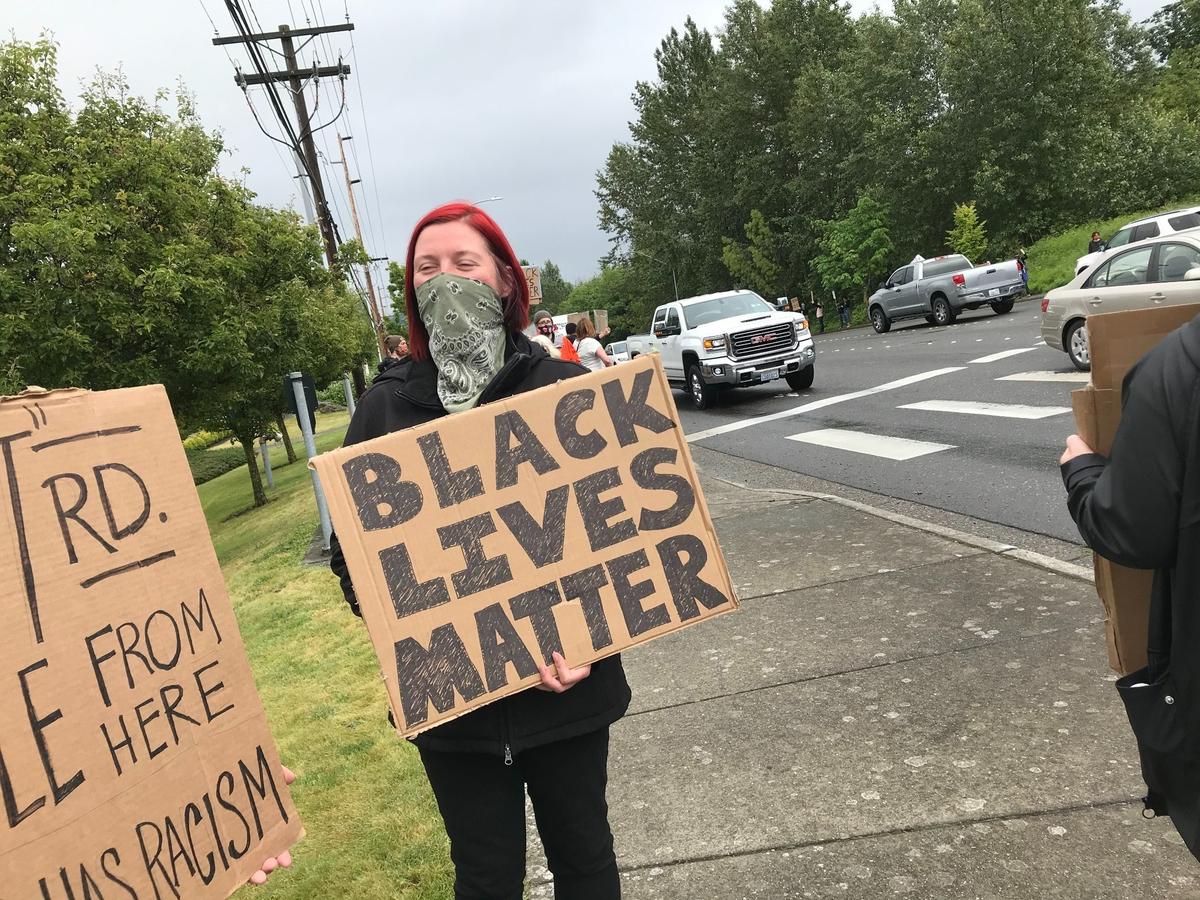
Bellingham City Council member Hollie Huthman said she first heard about Pickett Road while at the June 12 protest. She has a picture of herself standing next to the protester holding the sign about Pickett Road.
If it turns out that the road wasn’t named after Gen. Pickett, should the City Council rename it because of its problematic association?
“I think we probably need a lot more information about where the name came from before we make any conclusions,” Huthman said.