Bellingham named a bridge after Confederate officer 100 years ago. Why it’s history
The Pickett Bridge is history.
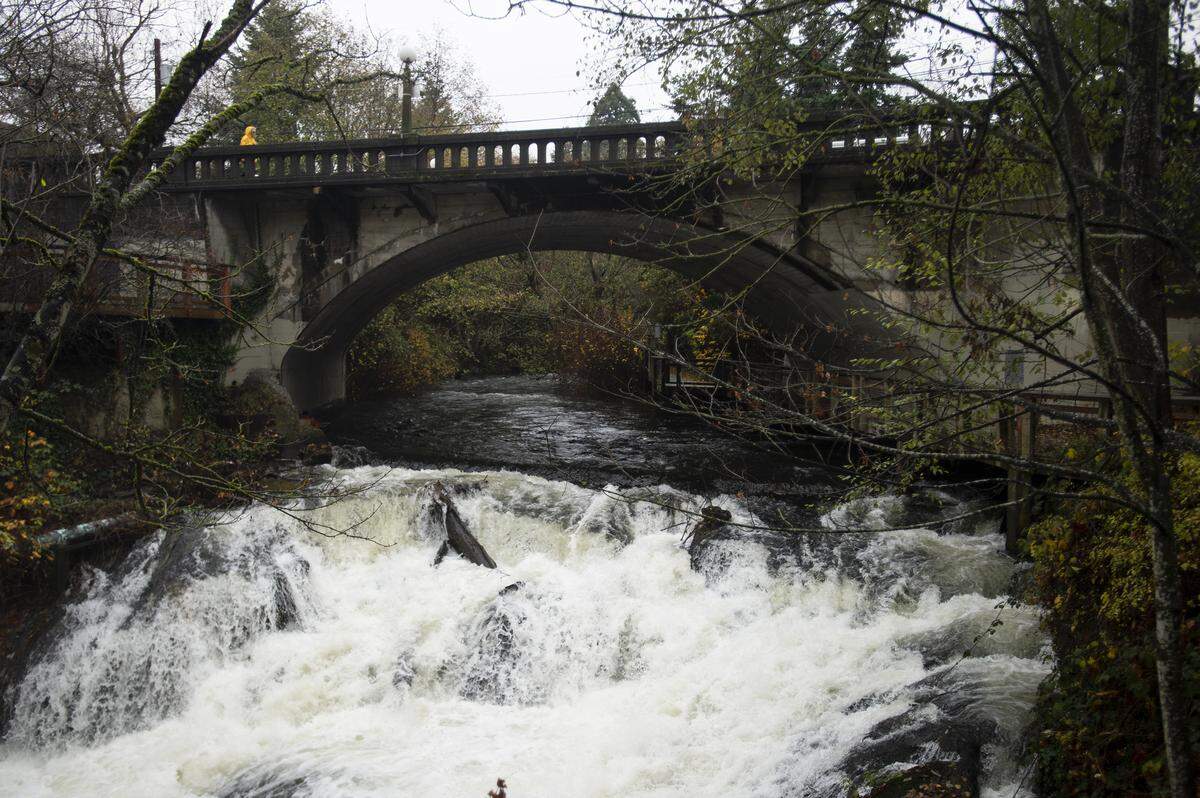
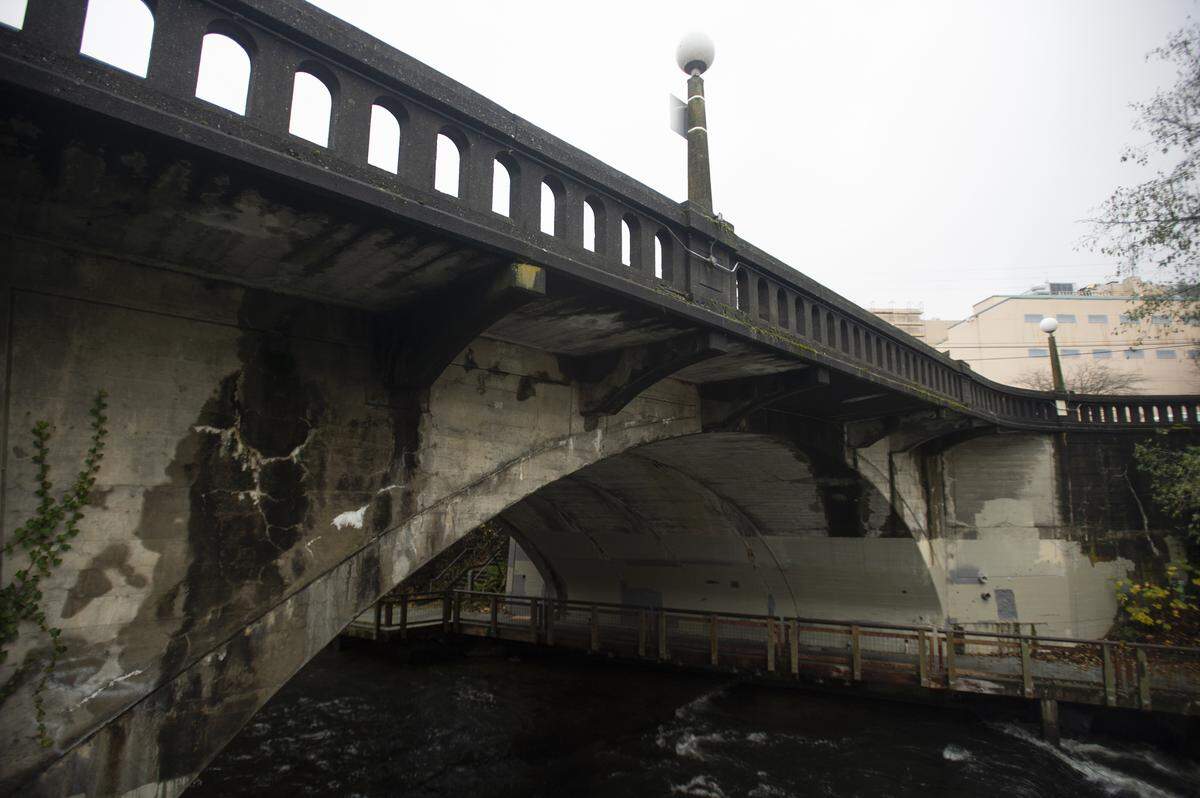
The Bellingham City Council voted unanimously Monday, Nov. 18, to strip the name of a Confederate general — George E. Pickett — from the bridge that spans Whatcom Creek on Dupont Street, as recommended by the city’s Historic Preservation Commission.
They also agreed to follow the commission’s recommendation to take out the 1920s bronze plaque honoring Pickett that’s on the bridge.
The City Council isn’t giving the bridge another name.
In adopting the Historic Preservation Commission’s recommendations, the City Council agreed:
▪ That having Pickett’s name on the bridge was “inappropriate and does not reflect the values of the City of Bellingham.”
▪ To remove the memorial plaque, if possible, and find another spot to put it that would provide context and interpretation for the era when the plaque was put into place. The plaque is embedded in the bridge. If the plaque can’t be removed, then that context and interpretation should be added to the bridge.
“This was a long process. We are not trying to erase our history. We are just recognizing who we are right now,” City Council member Pinky Vargas said Monday. “We weren’t willy-nilly about this.”
Vargas was referring to the two years that have passed since the City Council assigned the task to the commission, 180 pages of public comments that were submitted, and the Oct. 22 public hearing before the commission this year.
Who was Pickett?
Capt. George E. Pickett was a U.S. Army officer who built Fort Bellingham, in what was then the Washington Territory, in the 1850s and supervised the construction of the first bridge across Whatcom Creek.
He arrived from Fort Steilacoom on Aug. 26, 1856, to build Fort Bellingham to protect the communities of Whatcom, Sehome and Fairhaven against attacks from “northern Indians,” according to an essay by Janet Oakley on HistoryLink.org.
He also was instrumental in securing the San Juan Islands for the U.S.
Pickett left the area in 1861 to fight for his home state of Virginia in the Civil War and later became a general in the Confederate States Army.
He was part of an infamous offensive — the failed Pickett’s Charge — at the Battle of Gettysburg in July 1863.
Why now?
The Pickett Bridge in Bellingham became a flashpoint in 2017 when city officials removed signs that identified the bridge and that directed people to Pickett House after violent and deadly clashes during a white nationalist rally in Charlottesville, Virginia, in mid-August.
At that time, Bellingham officials said they were acknowledging community members and Western Washington University students who were “uncomfortable with a local landmark named in honor of a military leader who served during a war marked as ‘a pinnacle of America’s racist history.’ ”
But not all of the community agreed.
Others who said the bridge name should stay spoke of Pickett’s contributions to the area in the early days of its settlement and the importance of keeping landmarks of local history in order to learn from them.
In all, 180 pages of written comments were submitted over Pickett’s name on the bridge.
Name removal
To arrive at its recommendation that Pickett’s name shouldn’t be on the bridge, the commission and City Council considered research done by the Planning and Community Development Department, which was given the task of delving into local history.
“We did extensive research on the provenance of the naming of the bridge itself” and the plaque, said Rick Sepler, director of the Bellingham Planning and Community Development Department, to the City Council during its committee meeting on Monday afternoon.
“One can’t erase history but one can interpret it fully,” Sepler said.
That research included Bellingham Herald archives from a century ago and studying guidelines in the Southern Poverty Law Center’s 2019 publication, “Whose Heritage? Public Symbols of the Confederacy.”
Based in Alabama, the Southern Poverty Law Center tracks hate groups and helps communities grappling with how to deal with Confederate monuments.
Its publication asks “whose heritage do the symbols truly represent, and does the tribute specifically honor an aspect of the person’s Civil War life,” the city staff report noted.
Based on their research, city staff concluded that:
▪ The current Pickett Bridge — named after Pickett by the City Council in 1918 — isn’t the one built by his men.
Pickett was given the task, in summer 1858, of building a military road across Whatcom Creek that would connect Fort Bellingham in the north with Fort Steilacoom in the south.
His men built that bridge over the creek at what would now be Prospect and Ellsworth streets, if those streets were to be extended until they meet.
That bridge lasted about 15 years until 1873, when it was rebuilt. It remained there until about 1903, when it was then replaced with a streetcar trestle, which was removed in 1939.
The bridge that has been the source of controversy for the past two years is on Dupont at Prospect Street. It was built in 1918, near the original military bridge, according to a previous Bellingham Herald story.
The Daughters of the American Revolution put a commemorative bronze plaque on the bridge in September 1920.
▪ “While the naming of the bridge honors George Pickett’s pre-Civil War service in the region, the dedication also specifically honors aspects of George Pickett’s Civil War service.”
The staff report referred to Bellingham Herald stories from a century ago that revealed that his Civil War service was lauded.
It concluded, then, that Pickett Bridge name “is inappropriate and does not reflect the values of the city of Bellingham” because it honored Pickett’s Civil War service.
Next steps
The city’s Public Works Department will figure out whether the plaque can be removed, Sepler told The Bellingham Herald Tuesday.
If it can, officials will next look at the best place to put it. That could be the Whatcom Museum, Sepler said.
If it can’t be removed, then the city will provide onsite interpretive information, he said.
This story was originally published November 19, 2019 at 12:52 PM.