
Before closing Bellingham schools, be clear about the evidence | Opinion
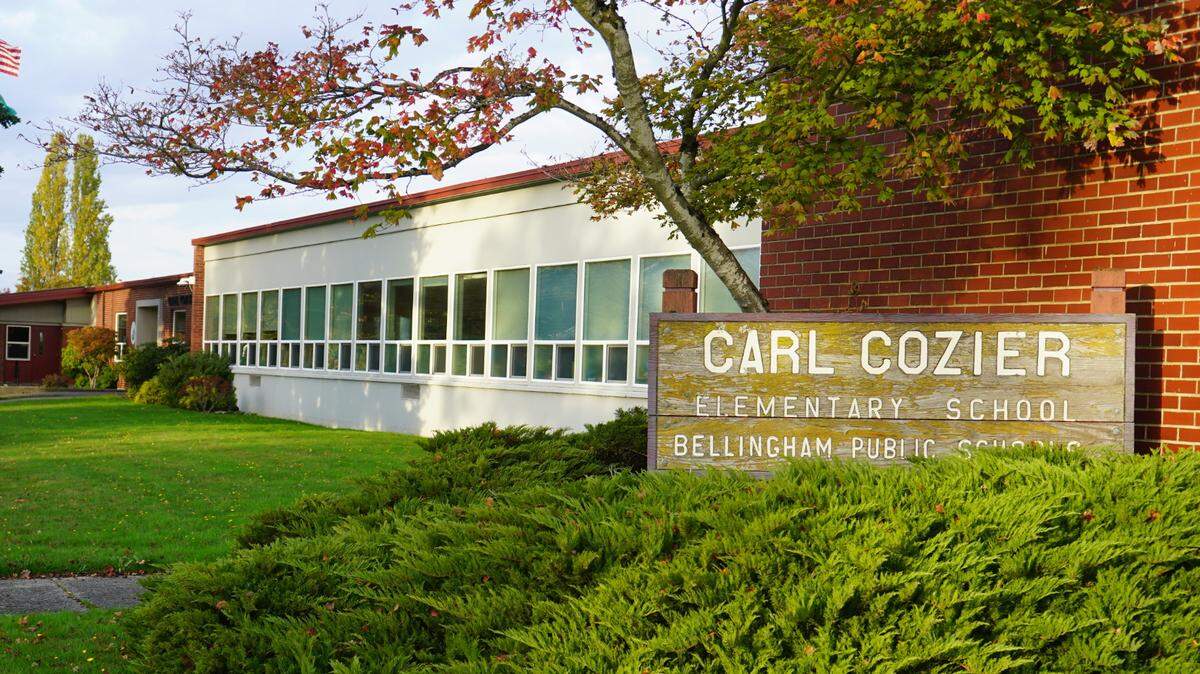
I have spent the past several years standing in Bellingham elementary classrooms, not as a parent of an elementary student, though I am one, but as a teacher educator. I teach science methods courses at Western Washington University, and every quarter I bring my students into Bellingham Public Schools classrooms for practicum placements. My research focuses on self-efficacy and sense of belonging, the conditions that determine whether a child believes they can succeed. So, when I read the Facilities Planning Task Force’s recommendation to close Carl Cozier and Columbia elementary schools, I read it both as a parent and as a researcher. Neither part of me is convinced this decision is being made on solid ground.
I understand the bind the district is in. Enrollment has dropped by roughly 1,000 students since 2018 (the district attributes much of that to falling local birth rates) and a $7.5 million shortfall has already forced cuts to nearly 60 staff positions. The task force estimates closing a school would save $750,000 to $1.5 million a year. These are real numbers and real constraints. But the justification offered to the public has shifted between budget crisis and demographic decline, and underneath both explanations sits a number that deserves much more scrutiny than it has gotten: the state’s “prototypical school” funding model, which assumes an elementary school of 400 students.
That figure is not a research-based optimum, but rather an accounting convenience. Washington’s model, codified in RCW 28A.150.260, exists to calculate how many teachers, counselors, and support staff the state will fund per pupil. The statute says that the model “does not constitute legislative intent that schools should be operated or structured” according to this formula. The statute was never meant to tell districts what size a school should be. Yet that is exactly how it is being used in budget conversations across the state, Bellingham included, where smaller schools start to look “inefficient” simply because they fall under a funding threshold.
This matters because the legislature itself has started to question whether the model is fair. The 2025 legislature passed HB 2049, creating a K-12 Funding Equity Workgroup specifically to examine, among other things, “the impact of the prototypical school funding formula on K-12 funding distribution.” In its first report to the legislature, that workgroup found the model under-funds small and rural schools and suggested a correction towards a student-weighted approach instead, one that follows the needs of actual children rather than an assumed building size. In other words, the state’s own policy apparatus is actively rethinking the 400-student assumption Bellingham is actively pursuing and treating as a settled matter.
And the research on school size doesn’t support the idea that bigger is better, especially for younger children. Decades of research consistently find that elementary students in smaller schools report a stronger sense of belonging, higher academic self-concept, and more positive relationships with teachers and peers than students in larger schools. This isn’t just a fringe theory. Sense of belonging is one of the most consistent predictors of academic self-efficacy in elementary-age children, and self-efficacy, in turn, predicts whether a child persists through solving a hard math problem, reading a challenging sentence, writing a difficult passage, or instead, simply shutting down. Nothing in the literature even suggests that elementary school children do better, academically and emotionally, in larger buildings. Research on optimal elementary school sizes has referenced the 300-400 student range, but explicitly refers to that number as a ceiling, rather than an aspirational goal. Beyond the 400 student range, young children start to lose the relational closeness that helps them learn.
Research on school closures themselves is sobering in a different way. Research demonstrates that when schools close, receiving schools absorb real disruption: increased mobility, strained school climate, decreased test scores, falling attendance rates, and spillover effects on students who were never displaced at all. The district would be closing functioning schools and asking already stretched receiving schools to absorb hundreds of displaced children. There is no research suggesting this would help anyone. This consolidation situation illustrates the situation is not simply a Columbia and Carl Cozier issue; every single Bellingham Public School student will be affected.
None of this means the district can ignore its budget. It means the district owes families a more honest accounting, instead of a closure plan grounded in a state-funding formula the legislature is actively reconsidering. Before the school board votes, I’d ask them to do what I ask my own students to do before they walk into a classroom: go back to the evidence, and let it, not a convenient number, guide the decision.
Lauren Dudley holds a PhD in education and teaches in the Chemistry and Science, Mathematics, and Technology Education (SMATE) departments at Western Washington University, where her courses place pre-service teachers in Bellingham Public Schools classrooms.