The wet January set up this unique scenario that led to Whatcom flooding
Too much rain fell in little more than a day on Super Bowl weekend, flooding parts of Whatcom County from the Canadian border to Bellingham Bay with an intensity not seen in nearly 20 years.
More than a month of almost daily rain had saturated the ground, and when heavy rain hit the mountains, it surged in a raging torrent toward lowland communities along the Nooksack River.
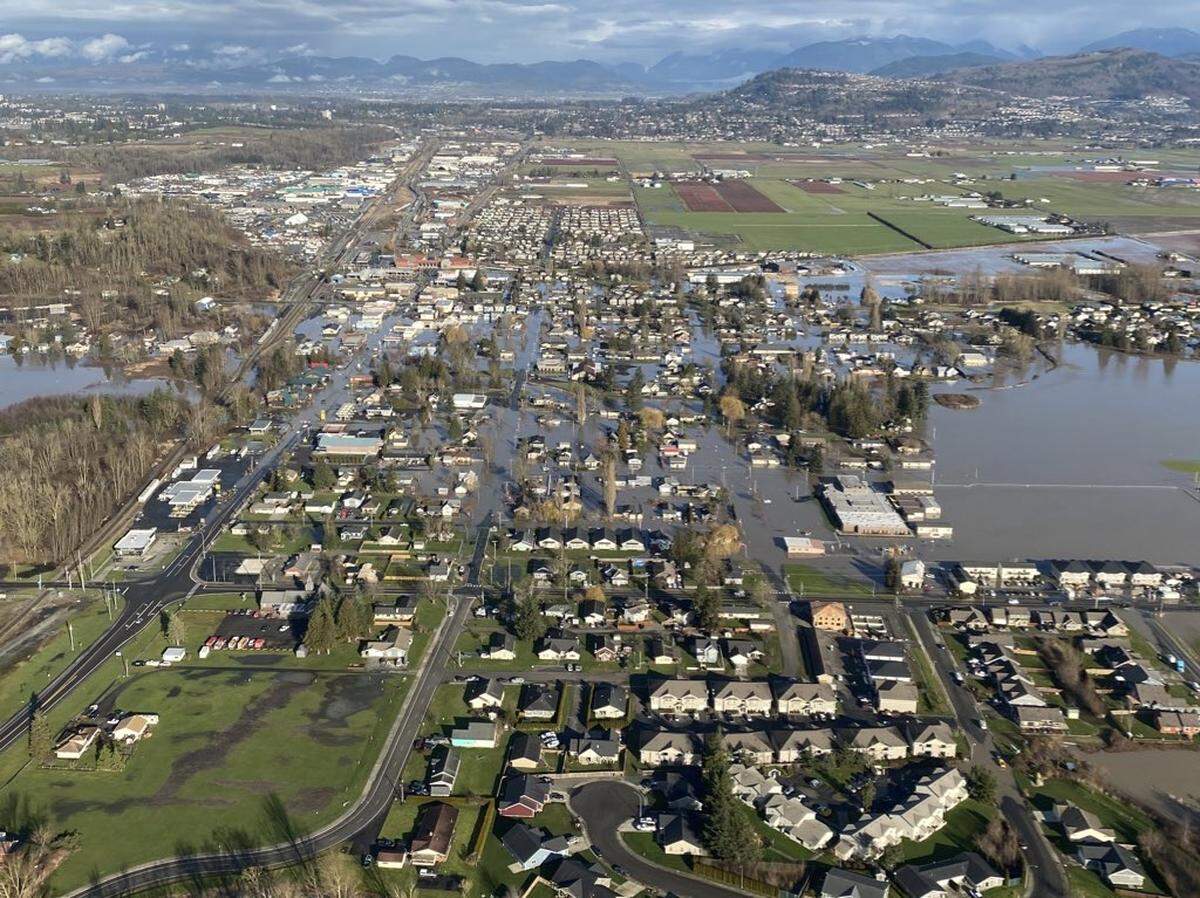
Ultimately, the Nooksack sloshed over its dike in Everson and onto a floodplain that sent water north into neighboring Nooksack and finally Sumas, via Johnson Creek and the Sumas River Saturday and Sunday, Feb. 1-2.
“In those surrounding fields, the soils were saturated,” said Jon Hutchings, director of the Whatcom County Public Works Department.
“Every low point was filled with water,” Hutchings told The Bellingham Herald. “It was amazing how suddenly the water came up and headed north. It was like the difference between emptying a bottle of water on your countertop instead of your lawn.”
Floodwaters 2 feet deep or more inundated parts of Everson, Nooksack and Sumas northeast of Bellingham, and Marietta and Lummi Nation near the Nooksack Delta, said John Gargett, deputy director of the Whatcom County Sheriff’s Office Division of Emergency Management.
Water was so high in Marietta that an evacuation order was issued Feb. 1, Garrett said.
About 120 homes and two dozen businesses suffered significant damage countywide and damage estimates could exceed $1 million, he said.
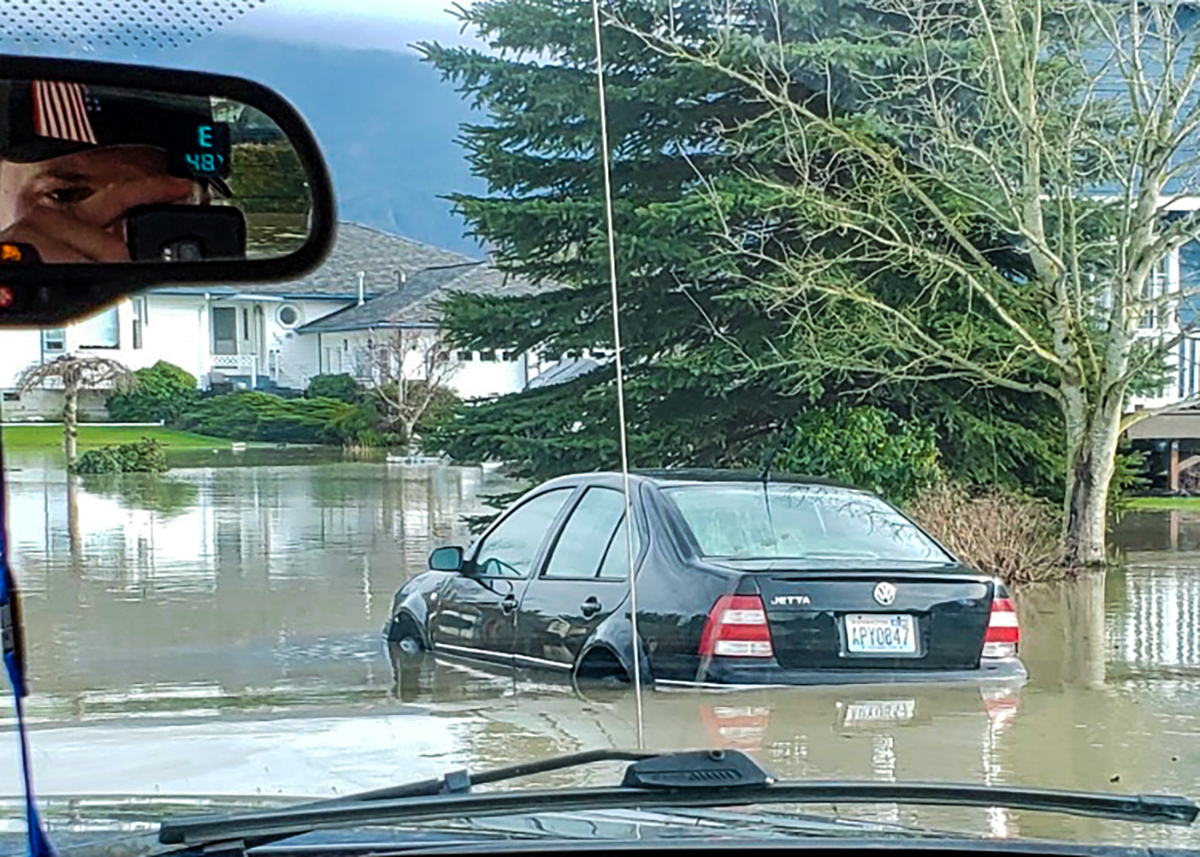
Firefighters and search and rescue volunteers made 42 rescues, most of them of people who drove around roadblocks and became trapped in raging water, Gargett said.
American Red Cross officials opened a shelter in Bellingham and provided free cleaning supplies and other assistance to residents of Marietta and Sumas.
Gargett said the volunteer Whatcom County Search and Rescue Council teams proved invaluable.
Teams from the state were assessing the situation on Thursday and formal damage assessment begins Monday, he said.
Saturday meeting
State, county and federal officials discussed the situation with about 200 people during a special meeting Saturday at Nooksack Valley High School in an effort to speed the recovery process for residents and business owners affected by last weekend’s flooding.
Questions included permits for rebuilding, flood relief and a concern that many residents had little advance knowledge.
Leea Heeringa, who lives with her family on a farm southeast of Sumas, said she and her husband heard the Sumas emergency siren and watched the water approaching from across their fields.
“Not knowing anything, my neighbor not knowing anything — it was really scary,” Heeringa told The Bellingham Herald.
Their barns filled with water and their furnace ducts flooded, but water stayed mostly out of their house.
Sumas hit worst
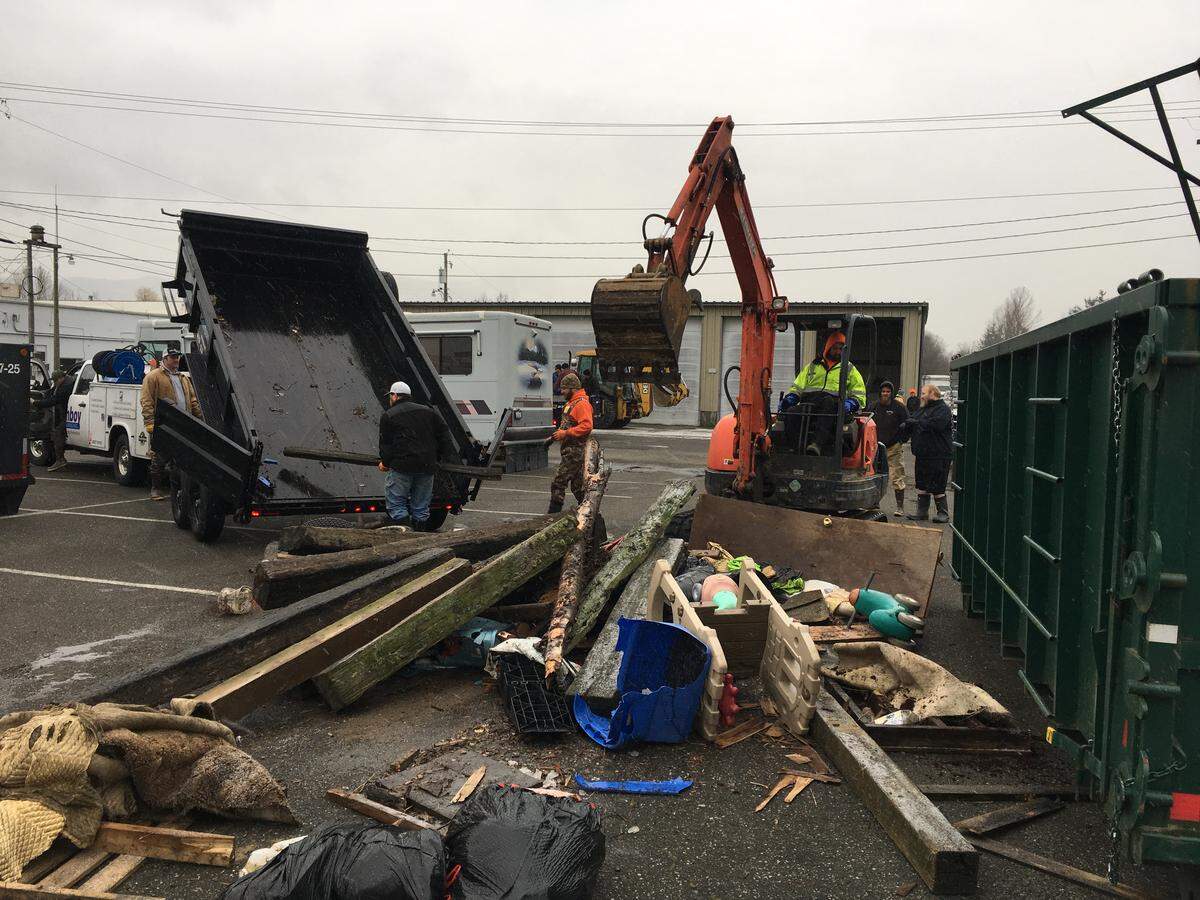
Sumas was hit worst of all, with some 50 homes suffering extensive damage.
Much of downtown was inundated and the U.S.-Canada border crossing closed.
BNSF Railway lost a track siding that served Sumas’ industrial area, Gargett said.
Mayor Kyle Christensen thanked Sumas city workers and community members for sandbagging and other preparations to minimize damage before the flood, and for volunteering to remove sodden building materials and personal items from homes and yards as the water receded.
“It takes a team effort to accomplish and go through what we’ve done and still be standing — especially for a small town,” he told The Bellingham Herald.
Why it flooded
More than 3 inches of rain fell at Bellingham International Airport, the National Weather Service’s official site, in the seven days from Sunday, Jan. 26, to Saturday, Feb. 1.
Everywhere, the ground was soaked.
That drenching was part of a classic Pineapple Express, an “atmospheric river” of warm, wet storms from the South Pacific.
And because the storms were from the tropics, snow levels rose and rain fell in the mountains — that’s what boosted downstream river flows.
Nearly 7 inches of rain was measured that week in the mountain village of Glacier, according to the Community Collaborative Rain, Hail and Snow Network.
And a 5.24-inch torrent of rain soaked Glacier from Jan. 31 to Feb. 1.
National Weather Service meteorologist Steve Reedy told The Bellingham Herald that Whatcom County’s waterlogged soil simply couldn’t absorb that much rain.
“We had a fairly unique scenario set up,” Reedy said. “Because January was so wet, already the soils were full, so there was no place for the water to go. That water just went straight into the river.”
Salmon habitat ravaged
Such deluges can doom young salmon and ruin fish runs in the years ahead.
“Too much rain at once can spell trouble for a river and its fish,” the Nooksack Salmon Enhancement Association wrote on its Facebook page.
“High flows can wash away gravel beds containing incubating eggs,” NSEA wrote. “Rapid increases in flow can also bury and suffocate eggs with fine sediment or even sweep young salmon prematurely out to sea.”
Rachel Vasak, NSEA’s executive director, said in an email that the effects of this storm can’t be measured immediately.
Landslide fears
Landslides loomed as a danger during the heavy rain, and meteorologists had been warning for several days that waterlogged cliffs and steep hillsides could shed tons of mud and rock, as they did during storms of the early 2000s.
A rockslide was reported Feb. 1 near Mount Baker Highway and Mosquito Lake Road, and a slide closed northbound Interstate 5 for eight hours the same day.
State Department of Transportation crews were still monitoring several slide-prone areas along I-5, The Bellingham Herald reported Friday.
Rain, snow, damaged roads
Whatcom County Public Works Department road crews were working around the clock through the flood emergency, enduring persistent rain and brief downpours, said Joe Rutan, the Whatcom County engineer and assistant director of Public Works.
Dozens of roads were closed because of flooding and many will need repair.
“Currently county crews are opening roads as floodwaters recede,” Rutan wrote in an email. “Many roads have damage such as eroded shoulders, damaged pavement and debris throughout the drainage systems. We need daylight to inspect the roads and assure they are safe for use. Bridge inspection teams are also visiting each bridge impacted to assess any damage incurred. Many recently opened roads may have crews performing repairs. Drivers should use caution and obey any traffic signs and flaggers.”
Before the storm, public works crews placed closure signs near locations that historically flood during periods of heavy rain, Rutan wrote.
“Besides reviewing where the floodplains and floodways are we have some very seasoned staff,” he wrote. “Many can even tell you the sequencing of the road closures we experience as the flood moves downstream. Many of our staff are long time locals who grew up around the river and bring that knowledge with them to Public Works.”
And then as floodwaters receded on Monday and Tuesday, several inches of snow fell in many parts of Whatcom County, including near Lake Samish and in the North County — forcing road crews to plow and spread sand.
On Wednesday, fields from Bellingham to Lynden remained soggy and dotted with patchy snow.
Rutan wrote that Public Works’ River and Flood Division is still analyzing data collected during the disaster.
‘A wakeup call’
Speculation on social media claimed the flood was so bad because the Everson dike burst or because the Nooksack River became engorged with silt, rocks and gravel.
Hutchings said the levee held — it was inspected for damage — and officials can’t definitively say that buildup in the river caused flooding.
“The river system is very dynamic and it puts out a lot of gravel,” Hutchings told The Bellingham Herald. “You can’t really predict where those globs of gravel will show up. It’s definitely a consideration, but who knows?”
He said newer residents of Everson, Nooksack and Sumas weren’t around for heavy floods in 1990 and the early 2000s, and they were surprised by the speed and intensity of floodwaters.
“Those people aren’t going to know what to expect,” he said. “This was a bit of a wakeup call.”
Personal loss in Sumas
Mayor Christensen said many Sumas residents were just starting to face the reality of cleanup and recovery, but they were grateful for an outpouring of help from Whatcom County residents and government agencies.
“It’s mixed emotions,” Christensen told The Bellingham Herald. “People in the community feel like they have support. We’re at the point now where people are going through their personal property. We’re doing what we can. There’s a lot of stuff that got damaged that’s irreplaceable.”
Some residents had flood insurance that only covered structural damage, not personal property, and they also face high deductibles.
Christensen, who’s also a volunteer firefighter in Sumas, said his own home was damaged.
“My house was affected as well,” he said. “I’m balancing city business and at the same time I’m hanging in there.”
Everson
Everson Mayor John Perry said volunteers started sandbagging on Saturday morning as the Nooksack rose rapidly.
“It’s impressive when it really starts flowing. It’s surprising,” he told The Bellingham Herald. “For some people, it was the worst they’d seen since the early 2000s.”
He said that the waters receded fairly quickly.
“I just heard from a lot of people, the overwhelming sentiment was how grateful they were for the volunteers who came out,” Perry said. “Everyone was thankful that their neighbors stepped up.”
Ferndale
City spokesman Riley Sweeney said Ferndale officials prepared for the worst, but damage was minimal.
Flooding on the Nooksack River closed Hovander and Tennant Lake parks south of the city and VanderYacht Park near downtown, but the floodwaters crested Feb. 2 at 21 feet, just above moderate flood stage. Hovander reopened Saturday, Feb. 8.
Sweeney said with Slater closed and other roads flooded, drivers were forced to find alternate routes.
“Traffic was terrible, but in terms of other impacts, they were pretty minor,” he told The Bellingham Herald. “Some people’s front yards got wet. We really didn’t feel the impact, which we’re thankful for.”