Deadly January storm kept Whatcom’s utility, civic staffers busy. Here’s what it cost
Bellingham and Whatcom County weathered the mid-January snowstorms fairly well, and no appeal for disaster aid is planned, public works and emergency management officials said.
But at least one Whatcom County resident’s death was blamed on the extreme cold, and others were treated for weather-related injuries, according to police, fire and public health officials.
State, county and city governments budget for winter emergencies like the recent cold snap, which was caused by a seasonal “nor-easter” pattern that sometimes funnels frigid air through the Fraser Valley of British Columbia.
That blast of arctic weather canceled many schools, closed some businesses and delayed some meetings.
But it wasn’t anything like the storms of 2007, the brutal winter of 2016-2017, or even last year’s February Freeze, officials said.
No temperature records were set, but on Jan. 13 and Jan. 14 the daytime highs were in the 20s — 10 degrees colder than the normal nighttime low temperature for mid-January in Bellingham.
Budgets account for snow
Whatcom County budgeted $530,000 for snow and ice removal in 2020, said Joe Rutan, the county engineer and assistant director of public works.
“This event is within the range for what we traditionally would experience, although we are still early in 2020,” Rutan wrote in an email to The Bellingham Herald.
Amy Cloud, spokeswoman for the Bellingham Public Works Department, said the city includes operating expenses for “snow and ice events” into the street operations division’s budget.
“It is one of several types of weather-response activities that the division plans for when budgeting for labor, materials and equipment,” Cloud wrote in an email. “While (the) weather has been interesting, it is what we plan for every year.”
In mild years, unused funds are used for other street maintenance work, she said.
Snowfall varied across Whatcom
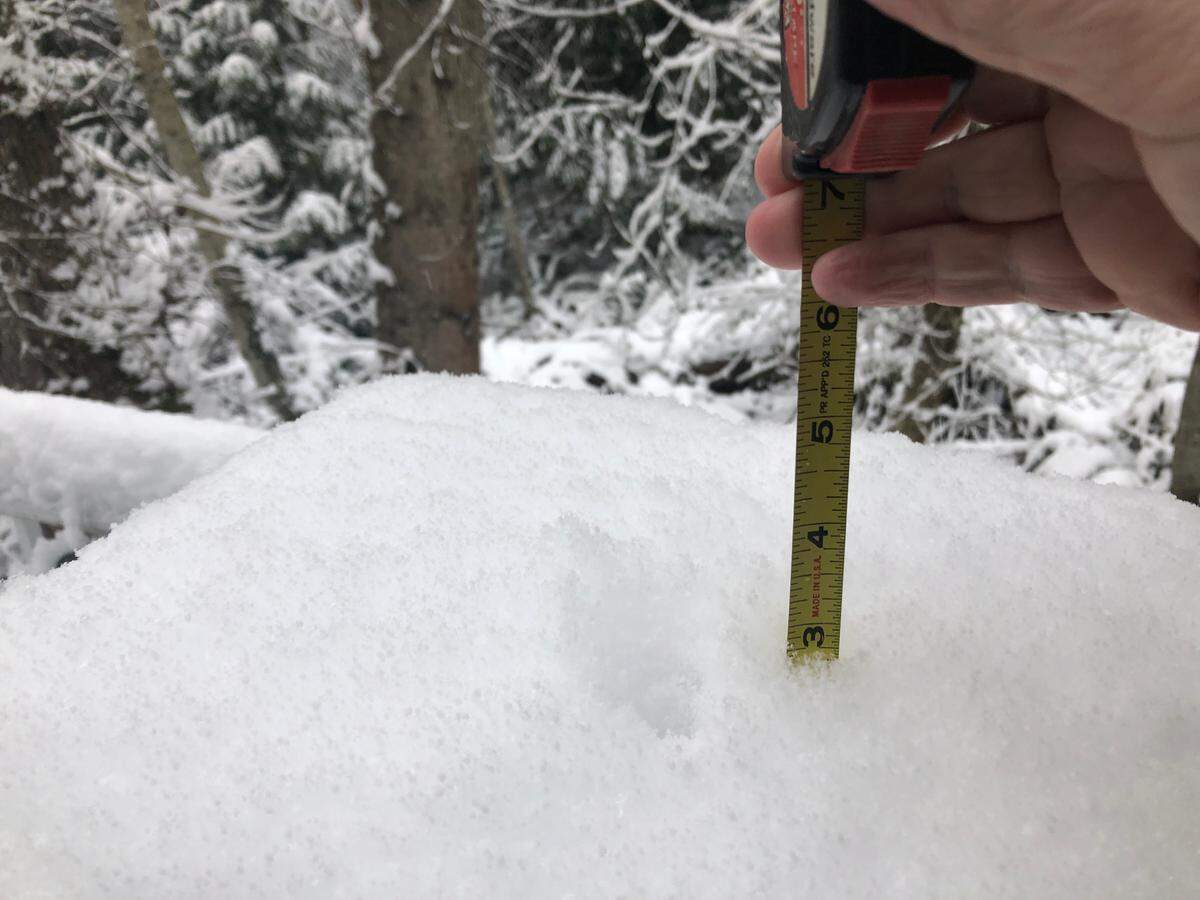
Lowland Whatcom County received varying degrees of snow from Sunday, Jan. 12, to Saturday, Jan. 18, according to measurements from the Community Collaborative Rain, Hail and Snow Network, a collection of trained citizen scientists who report precipitation amounts nationwide.
Bellingham International Airport, where official National Weather Service readings are taken, doesn’t measure snowfall.
But the network’s measurements found:
▪ 6.9 inches near downtown Bellingham.
▪ 13 inches in Bellingham east of downtown.
▪ 15.3 inches near Sudden Valley.
▪ 18.3 inches near Deming.
▪ 31.7 inches near Maple Falls.
Exact locations of the network’s measuring stations weren’t available.
Heavy snow in the Cascades
USDA’s Natural Resources Conservation Service showed the North Cascades’ snow water equivalent was 99 percent of normal on Jan. 24, a sharp rise from December readings.
Mt. Baker Ski Area measured 238 inches of snow from Jan. 1-22, according to the ski area’s website.
That’s nearly 20 feet of snow in three weeks.
“We had an amazing stretch where we had an average of 11.6 inches of new snow per day for 18 days,” said Amy Trowbridge, marketing manager. “We had several days with very cold temperatures and lots of fresh snow that people have said were in their top five all-time best days ever. This is definitely going to be considered one of the best Januarys we’ve ever had.”
Only 125 inches of snow had fallen through December at the ski area, which averages 663 inches of snow annually.
No disaster funds likely
In his final briefing on the storms, John Gargett, assistant director of the Whatcom County Sheriff’s Office Division of Emergency Management, said a disaster declaration was unlikely.
“The state has said this event is well below the federal threshold for assistance and it is not likely any preliminary damage assessments will be requested,” Gargett wrote in an email.
Rutan said county public works crews will make some adjustments to their operations after the recent round of storms.
“We are always learning, always seeking improvement,” he wrote in an email. “This storm has emphasized our need for the capability to store more salt instead of relying upon replenishing stocks from vendors during the event.”
He said the 2020 budget includes $90,000 for new salt storage facilities on Point Roberts and in central Whatcom County.
4x4 volunteers
Gargett praised the efforts of the volunteer Whatcom County Search and Rescue 4x4 Unit, whose members brought 911 dispatchers to work and made sure that residents made it to key medical appointments.
“They were able to respond to over 40 requests for assistance” over seven days, Gargett said in an interview.
“There are always lessons to be learned. That was one of the things that worked really well,” he said.
Injuries, deaths
One death is being attributed to the snowstorms, said Dr. Gary Goldfogel, Whatcom County medical examiner.
A frail 85-year-old woman was found dead outside her home, Goldfogel told The Bellingham Herald in an email.
“She probably fell and was unable to extricate herself,” he wrote. “I will likely certify her death as weather-related, although secondary to age and pre-existing natural disease.”
A Whatcom County woman died in a trailer fire that might have been linked to the freezing temperatures, fire officials said, and a Ferndale boy was injured when his sled and a car collided.
St. Joseph hospital’s Emergency Department didn’t see a noticeable rise in weather-related injuries or illnesses, spokesperson Bev Mayhew told The Bellingham Herald.
But the ER’s “volume has been heavy,” she said during the storms.
Police, fire responses
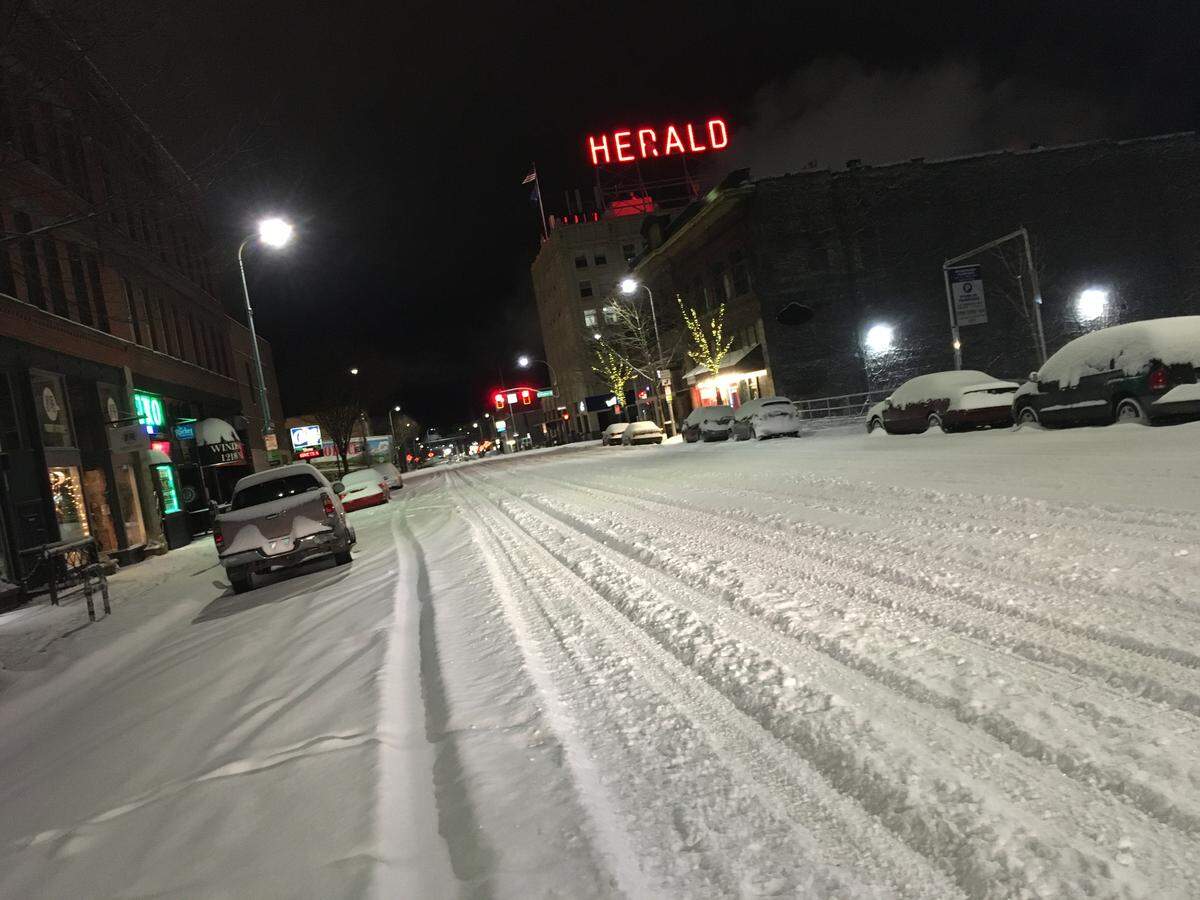
Bellingham Police officers took a woman to the hospital Jan. 17 from the 1200 block of Cornwall Avenue “for her own protection due to exposure,” according to the Police Department’s online activity reports.
Bellingham Fire answered 449 calls for service from Jan. 13-19, an average of 62 calls per day, according to its Facebook page.
Daily average was 53 calls per day in 2019, the department said.
Capt. Dave Pethic, Fire Department spokesman, said there wasn’t hard data about weather-related injuries.
But snow and ice posed special problems for firefighters, Pethic told The Herald via text message.
“What I can say is that calls generally take longer in the snow and ice,” Pethic wrote. “The total out-of-service time increases for a couple of reasons. The first is driving. Obviously we slow down when conditions warrant, as well, when the rigs are chained up we are limited to how fast we should be driving. The second reason has to do with moving the patients. The snow and ice make it difficult to move our gurney so we are often taking a few extra moments to ensure the safety of our crews and patients. This might mean clearing off the stairs or driveway prior to moving the patient. This is a big reason we put a fifth medic unit into service.”
Power outages
Power was out in several locations around Whatcom County, including extended outages in the Lake Samish and Glenhaven-Cain Lake areas, Puget Sound Energy reported on its website.
Sudden Valley and areas around Lynden lost electricity for several hours at times.
Most outages were blamed on trees and limbs that fell onto power lines, or limbs that were weighted down by snow and touched power lines.
“We would also like to remind people that small storms like the one we experienced (recently) are a great time to evaluate your family’s emergency preparedness,” Pethic wrote. “Did you find yourself scrambling for flashlights or heat when the power went out? Where you able to drive out of your neighborhood or did the hills present challenges to you? These are the little things that the public should be paying attention to so that when the next event happens. You can learn more about emergency preparedness at WhatcomReady.org.”
Winter isn’t over
School districts and colleges across Whatcom County canceled classes during the cold snap, but some are waiting to announce makeup plans because winter isn’t over.
Western Washington could still see more snow: NOAA’s Climate Prediction Center sees an equal chance of above- or below-normal temperatures and rainfall through mid-February.
“Snow and Ice events are always challenging,” Rutan told The Herald. “They put a lot of strain on people and equipment. We also see increasing development and the associated traffic, sometimes in more remote areas of the county. In addition, the expectation of citizens, including myself, to be provided relevant real-time information via the Whatcom County web page, radio, newspaper, as well as social media platforms continues to increase. These issues certainly present challenges to staffing and training needs.”