
Strawberry moon, meteors and a mini planet parade. Here’s when to look up in WA
June doesn’t just bring the official start of summer.
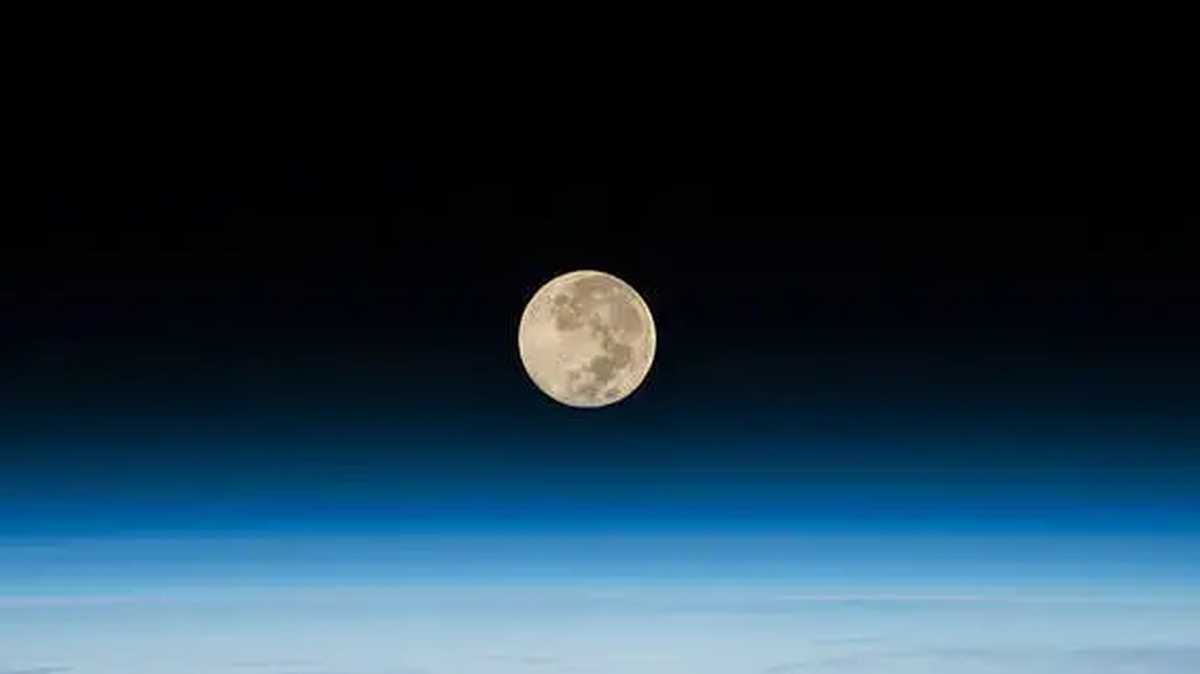
The month also means the arrival of numerous astronomical events, from a strawberry moon and meteors to a miniature planet parade.
Here’s what skywatchers in Washington state can expect to see — and when:
When can I watch planetary parade in June 2026?
A planetary parade occurs when multiple planets will appear close together in the sky when viewed from Earth.
A mini planet parade will take place in June.
It starts with the conjunction of Venus and Jupiter around Tuesday, June 9. You can see the planets by looking west shortly after sunset, according to NASA.
“They are two of the brightest planets in our sky and around June 9, they’ll appear close together after sunset,” NASA’s Raquel Villanueva wrote in an article published June 1. “This is called a planetary conjunction — when two planets appear near each other from our point of view on Earth, even though they’re still millions of miles apart in space.”
While you may be able to spot the bright planets with the naked eye under the right conditions, you can also view them with a low-power telescope, according to Astronomy.com.
From Thursday, June 11, through Monday, June 15, Mercury joins the duo to form a mini planet parade in the western sky, according to NASA.
“This happens because the planets orbit the sun along nearly the same path in our sky, called in the ecliptic,” Villanueva said. “So from our point of view on Earth, they sometimes appear to gather in the same part of the sky.”
Villanueva said Venus will be the easiest planet to spot, shining the brightest of the three. Jupiter will be nearly, and Mercury will be closer to the horizon.
“You will need a clear view to the west to catch it in the glow of twilight,” Villanueva said.
When is the first day of summer solstice?
In 2026, the summer solstice falls on Sunday, June 21.
It marks the start of astronomical summer.
Meteorological seasons reflect temperature cycles and align with calendar months. According to the National Oceanic and Atmospheric Administration, meteorological summer begins in June and lasts through August.
In contrast, astronomical seasons are based on the earth’s position relative to the sun, with solstices and equinoxes marking the start of each season.
Astronomical summer officially starts at 1:24 a.m. on June 21, according to NASA.
The longest days and shortest nights of the year occur around the solstice in the Northern Hemisphere.
However, the longest day often doesn’t perfectly line up with the earliest sunrise or latest sunset times.
What is the Summer Triangle of stars?
A favorite target for stargazers will be visible this month. Dubbed the “summer triangle,” bright stars Vega, Altair and Deneb can be seen in the night sky. These stars are surrounded by fascinating deep sky objects, according to NASA.
You can find it by looking east and finding a sparkling blue-white star, according to EarthSky. That will be Vega, the brightest of the three stars. Looking to the lower left will reveal Deneb, and the lower right to find Altair.
All three stars are bright enough to see with the naked eye, even with light pollution, according to EarthSky.
Will meteors be visible in Washington state?
In 2026, the Bootid meteor shower will be active between Monday, June 22, and Thursday, July 2, with peak activity on Saturday, June 27.
According to In The Sky, shooting stars should be visible in Washington state.
You have the best chance of spotting the Bootids by looking at the sky between dusk on June 27 and the following dawn, with a peak around 10 p.m.
Meteors will rain vertically downwards, according to In The Sky.
What’s the best time to watch the June full moon?
The next full moon falls on Monday, June 29.
The moon will reach peak illumination at 4:56 p.m., according to online clock Time and Date.
Why is June’s full moon called the strawberry moon?
June’s full moon is known as the strawberry moon, but the name has “nothing to do with the moon’s hue or appearance,” according to the Old Farmer’s Almanac.
Instead, the term “strawberry moon” has been used by Native American Algonquin tribes as well as the Ojibwe, Dakota and Lakota peoples to “mark the ripening of ‘June-bearing’ strawberries that are ready to be gathered,” Old Farmer’s Almanac astronomer Bob Berman wrote in a June 1 article.
Other names for the June full moon include the blooming moon, green corn moon, egg laying moon and hatching moon, according to Berman.
One name hails from the Pacific Northwest. The Tlingit refer to June’s full moon as the birth moon, relating to the time of year when certain animals are typically born.
This story was originally published June 5, 2026 at 5:00 AM with the headline "Strawberry moon, meteors and a mini planet parade. Here’s when to look up in WA."