Watch: Endangered orca pod makes rare visit to Tacoma area with newborn calf
AI-generated summary reviewed by our newsroom.
- Rare J Pod sighting draws attention as endangered orcas pass Tacoma with calf
- Orca Network confirms early migration linked to salmon availability in region
- Officials urge minimal boat noise to avoid disrupting orcas' echolocation hunting
Some were lucky enough to see a pod of Southern Resident killer whales pass through the Tacoma area over the weekend, with a new calf in tow.
On Friday and Saturday, people flocked to Facebook to share photos and videos of five J Pod orcas splashing and jumping as they made their way south under the Tacoma Narrows Bridge to Fox Island.
Stephanie Raymond, co-director of the Orca Network nonprofit, confirmed the sightings Monday and said the pod swam to the San Juans on Sunday and were last reported to be seen in Bellingham as of Monday evening.
Although it’s not the first time the J Pod has been seen south of Point Defiance Park in the last 50 years, Raymond said other orca pods are more likely to frequent that area. Typically the animals would come down to the south end of Vashon Island and then head north or loop around the island, but that didn’t happen over the weekend, she said.
“We aren’t really sure exactly [how long it’s been] because the sighting reports were not as comprehensive for a while there. There was a big window where people weren’t tracking them as carefully as they’re tracked now,” Raymond said. “We do know that K Pod and L Pod went down into south Puget Sound, south of the Tacoma Narrows Bridge, a couple of times, but it was a really unusual thing. And people were really just pretty surprised to see J Pod go down there this weekend because that just has not happened in a really long time.”
The killer whales are a bit early this year — they are typically seen in the Puget Sound in early October, Raymond said. Southern Resident orcas, like the J Pod, eat salmon and follow the salmon runs, as opposed to Bigg’s orcas (also called Transient orcas), which eat larger mammals like porpoises, seals and sea lions, she said.
Southern Resident orcas are endangered because salmon runs have declined significantly over the years, Raymond said. In the 1960s and 1970s hundreds of orcas were killed and captured in the Salish Sea, and they continue to face assault due to overfishing, pollution, development, habitat degradation and climate change, as reported by the Seattle Times.
The range of Southern Resident orcas is between Vancouver Island and Monterey Bay in California and they spend a lot of their time in the summer in the San Juan Islands and just off the mouth of the Strait of Juan de Fuca near Swiftsure Bank, Raymond said. Currently there are 28 members of J Pod, including a new calf that was spotted last week. There are 74 total Southern Residents, not including the calf, Raymond said.
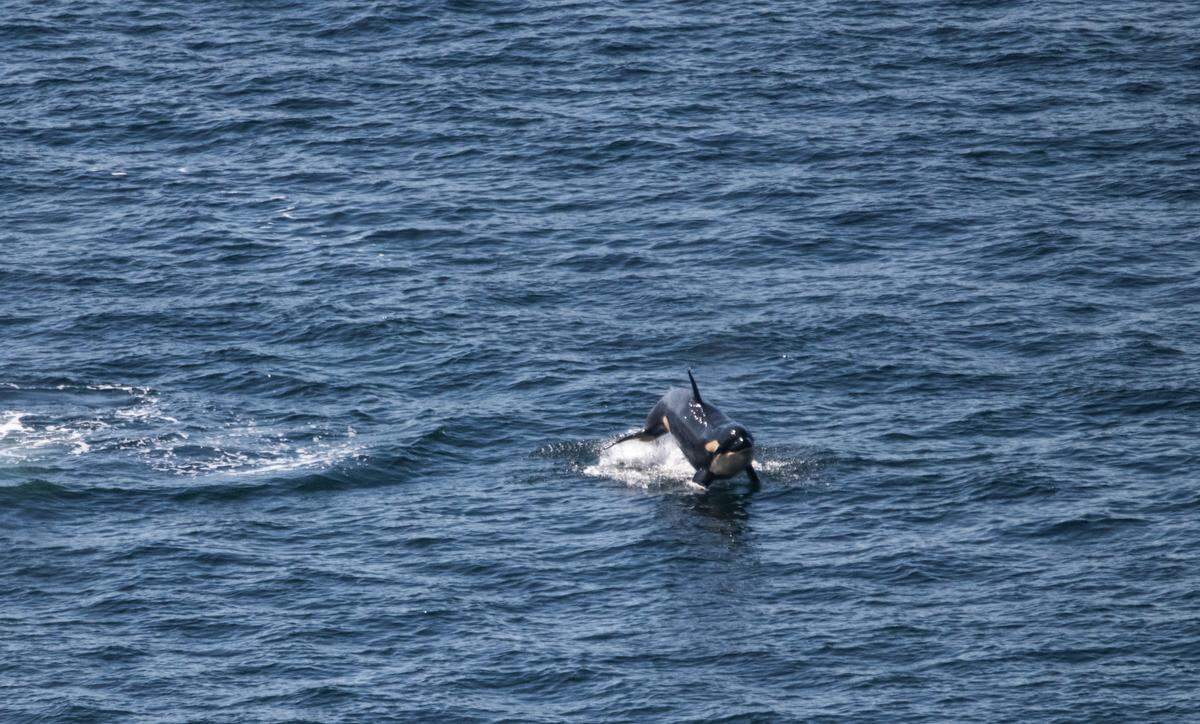
“Where they hang out really depends on whether or not they’re finding the food that they need. And the week-long stay so early in the season is a pretty good indicator that they were finding some good stuff to eat,” she said. “We never know what they’re going to do, this week does not necessarily predict what’s happening for the rest of the season.”
The Orca Network has an extensive sighting network and publishes reports of sightings on its Facebook page (which has nearly 88,000 members). The nonprofit also has a map of public shoreline access points so residents can find the closest spot to catch a glimpse for themselves. Additionally, Orca Network has a $25/month text alert subscription service that will inform you when there’s been a killer whale sighted in your region.
“On Facebook, people are going in and commenting on the threads as time goes by, so they can see in real time what the whales are doing,” Raymond said. “When the whales are down in the Central Sound — Seattle, Tacoma area — there’s always a lot of eyes on the water, and people can really see and track the whales pretty closely.”
Rachel Haight, an Orca Network Whale Sighting Network co-coordinator, saw the J Pod as it passed under the Tacoma Narrows Bridge on Saturday around 12:45 p.m. Haight, who shared her photos and videos with The News Tribune, said it was an emotional experience.
“I’ve been following orcas around Puget Sound for 13 years & this was definitely a top five moment for me — ‘tears and chills’ I told my friends,” she said via email on Tuesday.
The killer whales may return any time between now and February, depending on food availability, Raymond said.
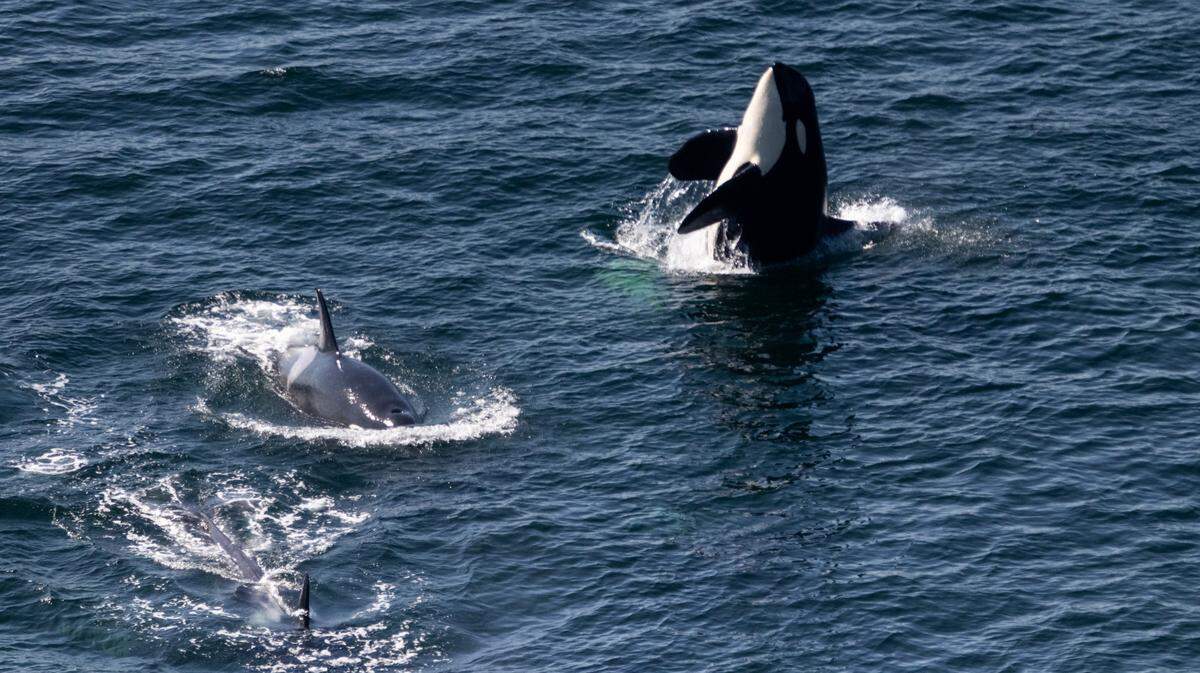
What does it mean when orcas splash and jump?
Experts don’t really know what it means when orcas do “percussive behaviors” like splashing, breaching the water, slapping their fins and tails or “spy hopping” (when they hold their head and upper body vertically out of the water), although it’s linked to social behavior, Raymond said.
She likes to think the orcas change their behaviors because they enjoy the reaction it garners from humans cheering from the shore.
“If you go to Lime Kiln Point State Park on San Juan Island — which is the place everyone thinks of to see the whales from shore — they would frequently change behavior as they pass by really close to shore,” Raymond said. “We don’t really know exactly what all these behaviors mean … I wish we could ask.”
What should you do when you see an orca?
Under Washington law no recreational watercraft (any boat, kayak or paddleboard) can be within 1,000 yards of any Southern Resident orca.
One of the biggest challenges facing Southern Resident orcas is their ability to successfully reproduce, and females in particular will stop foraging for food if they get within 400 yards of a boat, Raymond said.
“If people know that Southern Residents are in the area and they’re planning a boat trip, and they have any option to go someplace that’s away from where the Residents have been seen, that’s what they [should] do. You know, avoiding the area as much as possible,” she said.
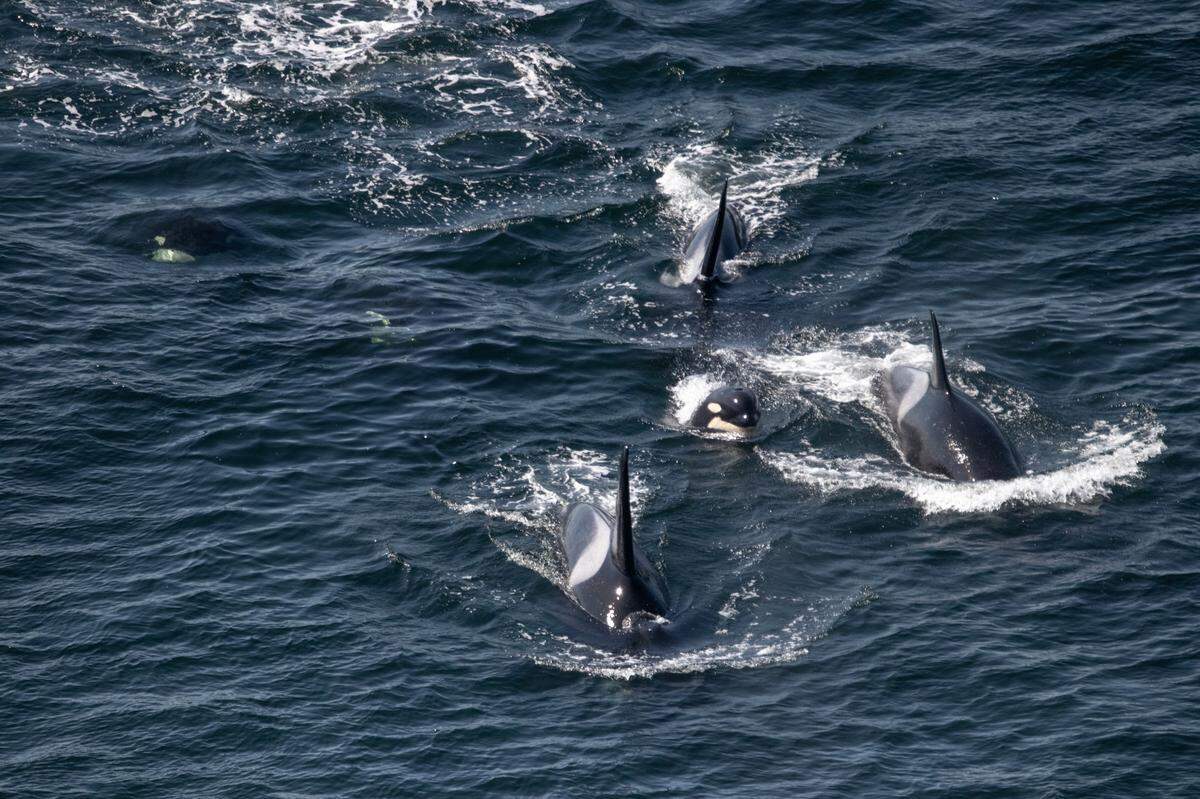
If you encounter an orca, safely shut off your boat’s engine, Raymond said.
“We really just want to disturb the whales as little as possible, remove as much sound from the environment as possible, because they are using echolocation to find food,” she said. “The closer a boat is, the faster a boat is, the noisier it’s going to be, the more noise that the whales are going to receive.”
Washington State Ferries and the Orca Network work with commercial boat traffic to keep a look out for killer whales, Raymond said.
“The thing about orcas around the world, each population has its own unique language, its own unique cultural practices and Southern Residents are among the most studied marine mammals in the entire world,” she said. “We’ve observed so many fascinating behaviors among them, and can see how closely connected they are. Even if they’re not closely related, they’ll share food with each other, which is kind of unusual in the animal world, right? We see these older females helping the younger ones learn how to hunt, even if they’re not part of their own natural line. And we see the males, they don’t pair bond the way some other animals do [and] the adult males will babysit and help.”
This story was originally published September 24, 2025 at 5:00 AM with the headline "Watch: Endangered orca pod makes rare visit to Tacoma area with newborn calf."