The Lost Season: Class of 2021 athletes struggle for exposure as recruiting offers dry up
READ MORE
The Lost Season
A subscriber-exclusive, four-chapter series that looks back at the effects of the pandemic on the high school sports scene in the South Sound
Expand All
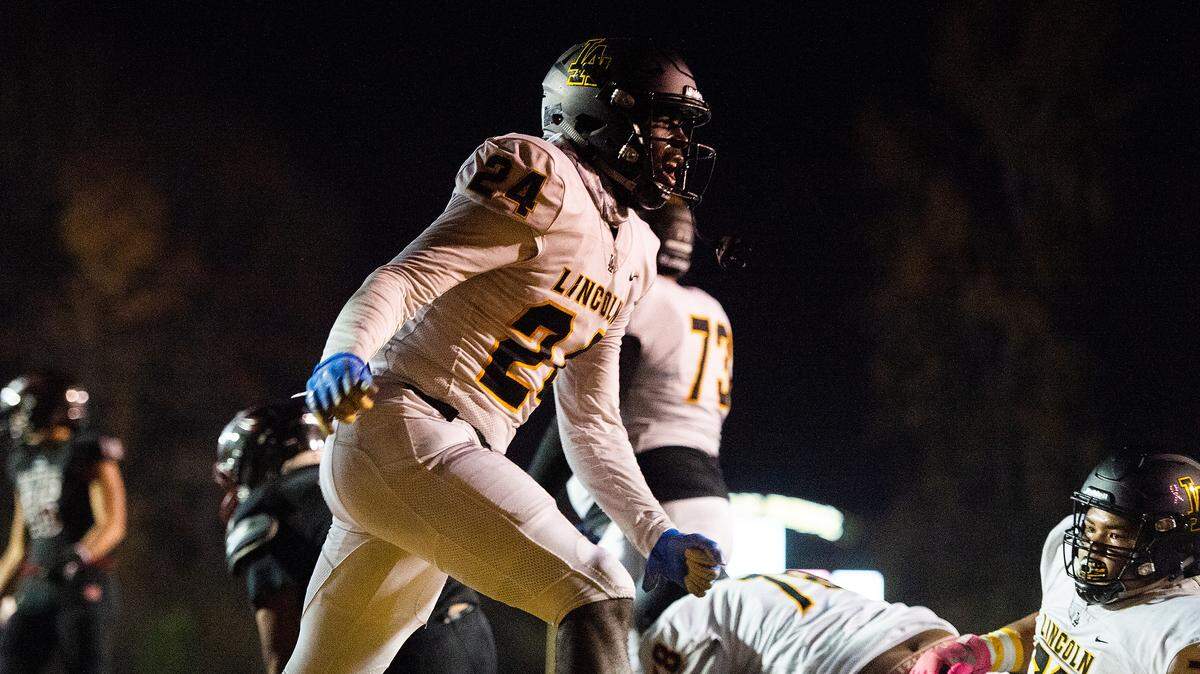
The Lost Season: Washington’s best high school football class won’t finish their careers together
The Lost Season: Coveted state records were poised to fall. Pandemic will prevent some from being broken
The Lost Season: Class of 2021 athletes struggle for exposure as recruiting offers dry up
The Lost Season: Pandemic robbed high school athletes of seasons, lifelong memories
This is the third chapter of ‘The Lost Season,’ a subscriber-exclusive, four-chapter series that looks back at the effects of the pandemic on the high school sports scene in the South Sound.
Robert Simon was just beginning to scratch the surface of his potential. As a high school sophomore, he took seventh place at the Class 4A state singles tennis tournament in Richland. He had no idea it would be the last state tournament of his preps career.
The last chance to push for a coveted state title, an important resume builder in his recruiting profile. His last chance to beat some of the state’s top competition in front of college scouts for his high school team.
The coronavirus pandemic forced the cancellation of spring sports in 2020, which includes the state tennis tournaments in Washington. And there will be no state tournaments in 2021, either, with shortened seasons and league-only play for most schools around the state this spring.
High school athletes in the South Sound and across the state have lost the chance to win state titles and put out fresh film for recruiters. While other states across the country have been playing since the fall, Washington student-athletes have been watching from the sidelines, biding their time. In years they would normally earn athletic scholarships, they’re being passed over.
“Really, for me, it’s really putting a huge strain on my ability to showcase my skills,” Simon said. “I’ve gotten so much better (since sophomore year), but it doesn’t show up in tournaments because there are none. Junior year, I’m thinking about what I could have done. It’s hard to showcase these skills to coaches, because a lot of them are so far away and they haven’t seen me play.”
Simon has been playing tennis since he was about five, when he lived in Jamaica, where he was raised. He recalls being entered in a tennis tournament in Jamaica when he was six years old. All the other kids were at least two years older. He didn’t win the tournament, but his love for the sport grew that day.
His family immigrated to the states when he was around seven years old. They moved first to Georgia and have bounced around, living in Spokane at one point before moving to the Olympia area. Wherever they were, Simon always played tennis.
“Tennis is a huge part of my life,” he said. “I want to go as with it as I possibly can. As I was growing up, my family didn’t have that much money. The way tennis is, it’s really hard to get good coaches, good practice in if you don’t have a lot of money to start.”
He was fortunate enough to have people who helped along the way, donating rackets, paying for bags. But he always felt he was playing catch up to kids who were more privileged.
“As I’ve grown, I felt like I’ve been able to close the gap a little bit,” Simon said.
Since the coronavirus shutdown has taken youth sports opportunities away, his chances to show his growth have gone away. Competitive tennis measures players with a metric called UTR: ultimate tennis rating. Currently, Simon’s is an 8.78. For reference, a UTR around 11 or 12 will have Division I teams calling, and anything above 13 is around professional level. The world’s best professionals have a UTR around 15. Rafael Nadal, the world’s No. 1 ranked pro, has a UTR of 15.98. Due to limited tournaments and chances to beat good competition, Simon’s UTR has remained stagnant.
“I remember for state his sophomore year, our attitude was, ‘No pressure, you’re going to get two more shots at this,’” said Olympia tennis coach Christopher Lewis. “We just wanted to treat it as a learning experience; I was thankful he qualified. He would’ve had a really good shot last year and this year, of going pretty deep. It’s definitely cost him opportunities to turn some heads.”
High-level tennis opportunities are difficult to come by in the Pacific Northwest. Many of the scholarships that do exist for Division I programs go to international students. The University of Washington’s men’s tennis roster, for example, has players from all over the world — Mexico, France, Canada, Scotland, India and more. Of the 12 listed roster spots on the Huskies’ 2020-21 team, only four are from the United States, and only one player is from Washington.
That means most high school tennis players in Washington who are hoping to play at the next level need to attract the attention of college coaches in different parts of the country. When a pandemic shuts down activity, that already-difficult task becomes nearly impossible.
There’s also an equity issue at play. While some club sports have continued during the pandemic, the cost of joining club teams or traveling to prestigious tournaments across the country isn’t financially feasible for many families.
Simon is still waiting for his first scholarship offer. He’s been talking with coaches from the University of Portland, Whitworth and a few others. He’s heard the same thing for the past year: The scholarships simply aren’t available right now.
“The Whitworth coach told me the scholarships are really drying up,” Simon said.
IT’S NOT JUST IN TENNIS
The NCAA recently voted to allow all Division I athletes to be given an extra year of eligibility because of the way seasons were affected by the pandemic. That means plenty of athletes who were on track to graduate will stick around for another year, holding onto a scholarship spot that in most years would have gone to either a high school senior or a college transfer student.
In Orting, wrestling is everything. Since 2005, the Orting High School wrestling team hasn’t placed lower than third in the state tournament. Orting coach Jody Coleman was talking to a friend who coaches at a Division II college in South Carolina. He expressed frustration at the lack of offers for Conor Goucher, an Orting senior who’s a 4.0 student and won a state championship in the 126-pound weight class as a junior in 2020 at Mat Classic XXXII at the Tacoma Dome.
“What are we doing wrong?” Coleman asked his friend. “In the past, we’ve never had trouble putting our kids out there. He told me that with the NCAA giving seniors an extra year, a lot of (college) kids that have a shot at being an All-American, they’re back for another year. There’s just less available. … And if you’re a college coach, you have a senior coming back, are you going to take him or an incoming freshman? You can’t blame them.”
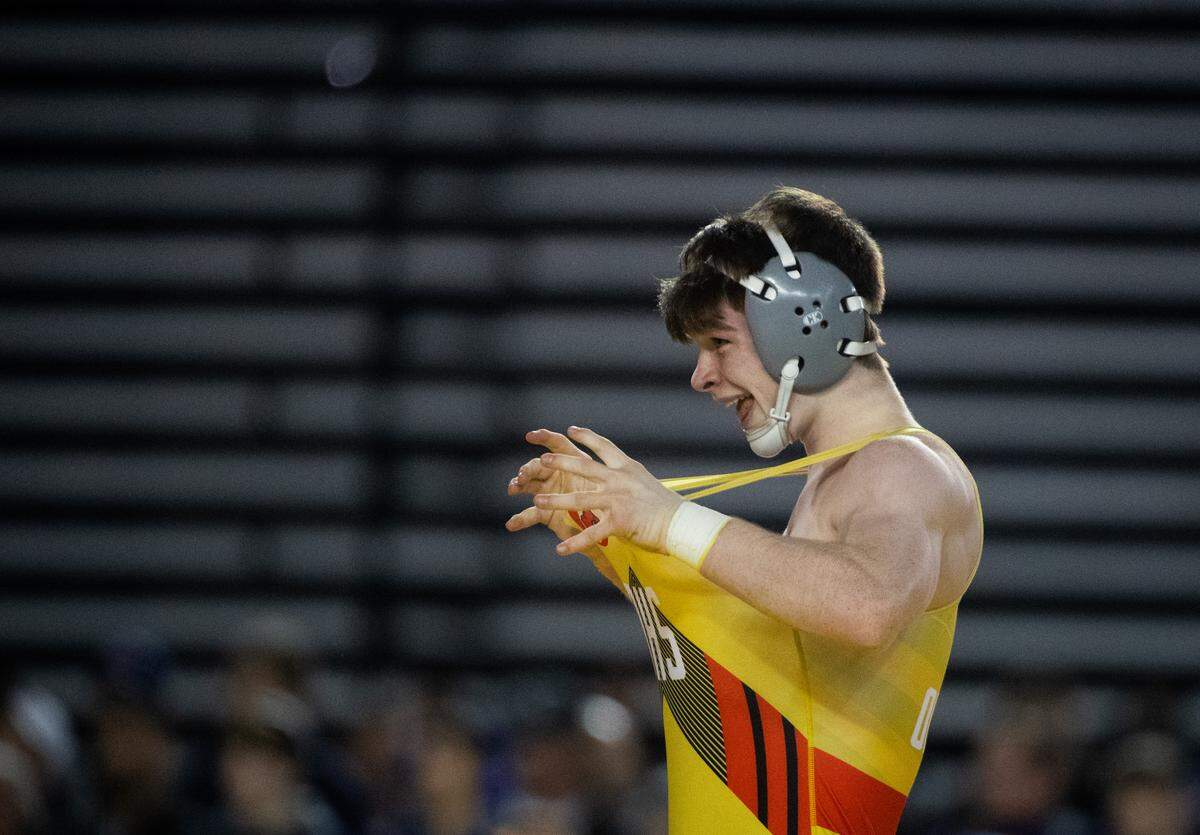
Just last week, Goucher signed with Colorado State Pueblo, a Division II school. He’ll have his full tuition paid for. He considers himself fortunate.
“I was talking to a few schools, and they said they just don’t have a lot of money,” he said. “It’s hard. Some schools, I’d start asking about scholarships or financial help and they just dodged the question. There wasn’t very much to go around. … Me and my family would start stressing out about it. I’m competing against (college) seniors that want to come back and wrestle, as well as seniors in high school that are trying to go up to the next level. It just increased the competition substantially.”
Barring injury, Goucher would have been a safe bet to defend his title at Mat Classic and leave Orting as a two-time state champion. He also would have had the chance to compete in the Walsh Jesuit Ironman Tournament, which would have been held in December in Cuyahoga Falls, Ohio. It’s arguably the top tournament in the country, littered with college coaches looking for the next big thing. It was cancelled in 2020 because of the pandemic.
“That’s one of the toughest tournaments in the country,” Goucher said. “Not being able to compete there, I didn’t get as much exposure. If I wrestled really well there, I would have opened a lot more doors in the long run for more colleges.”
All the recruiting benefits aside, there’s a sense of achievement on the line, too. Orting wrestlers who win two or more state titles get a large banner on the wall of the school’s wrestling room. Goucher won’t have his banner hung now.
“It’s a pride thing for me, not being able to get that second state title,” Goucher said. “A multiple-time state champion in Orting is routine. I’m not able to be up there on the wall with them.”
SOUTH KITSAP’S CANTON HEADING TO GONZAGA
Count South Kitsap senior center fielder Sam Canton among those who considers himself lucky. He’s signed with Gonzaga University on a baseball scholarship. He was an all-state selection as a sophomore, when he hit .384 for the Class 4A Wolves. But he didn’t get to play a junior season, and won’t be able to play in a state tournament in his senior season, even if the team had qualified.
During spring of his junior year, he waited for a Division I offer to roll in. But he worried that without a season, that offer wouldn’t come. Gonzaga eventually offered in July.
“Once it was getting into July, I was starting to get a little worried,” he said. “I was preparing for going (the junior college route). I was getting a lot of juco calls. It’s always been a goal of mine to go Division I.”
Originally, he had his heart set on playing for Oregon. But an offer from the Ducks never materialized.
“It was a combination of not being able to see me play, and they had more guys coming back for another year, so they just didn’t have enough money to offer me,” Canton said.
Canton was thrilled when the Gonzaga offer came.
“I feel really fortunate, especially with covid and everything,” he said. “That made me even more grateful for Gonzaga. Anybody who offers you scholarship money is taking a chance on you, investing their money and time in you. I just feel extremely lucky.”
FOOTBALL OFFERS ALSO LIMITED
Brandon Huffman, national recruiting director for 247sports.com, feels for the 2021 class. He’s seen offers across the country evaporate for this year’s senior high school class.
“1,000 percent,” he said. “I’ve had schools tell me, ‘We’re done. We’re done with 2021. We signed 17, 18 kids and we’re going to go hit the transfer portal.’”
Washington will start its fall high school football season in February. But for recruits hoping to improve their stock in their senior year, that’s much too late. Classes for power-five conference football teams across the country are mostly finalized at this point. And if many transfers aren’t necessarily proven commodities, they’re at least more experienced. At one point, they were highly-touted recruits.
“The majority of schools have moved onto 2022 classes,” Huffman said. “There’s going to be a lot of guys who would’ve been FCS signings, maybe late Pac-12 guys, who will end up at D-II and D-III schools. Coaches were so paranoid, they’d rather go to the transfer portal than take a chance. With a college kid, at least he was good enough to sign with a school. They’ll take that route.”
Again, there’s also the issue of college football programs needing to adjust to the possibility of athletes using their extra year of eligibility granted by the NCAA.
“If the school has 100, 95 guys on scholarship instead of the usual 85, the school is on the hook to pay for that,” Huffman said. “College coaches have told me, ‘We’re not LSU or Alabama. We can’t even afford that. We have a hard enough time paying for 85.’”
College football’s national signing day is Feb. 3. But more and more colleges have embraced the early signing day, which for the 2021 class was Dec. 16. There are few high school football players — only the elite prospects — who have the leverage to be able to drag out their recruitment as long as they want. Most high school football players sign during the early signing period.
“Most coaches want their class to be done in December, so they can start visiting juniors,” Huffman said. “For the 2021 kids, you lost your season, your opportunity. This was out of your control, there’s nothing they can do about it. It sucks for you, but the colleges are moving on.”
This story was originally published January 31, 2021 at 5:00 AM with the headline "The Lost Season: Class of 2021 athletes struggle for exposure as recruiting offers dry up."