Bellingham is considering temporary alley closures to deter drug crimes downtown
Bellingham city officials are asking for the power to close alleys downtown temporarily, in an effort to fight crime and drug use that has become “entrenched” in the city center.
An ordinance that is scheduled for discussion next week would give the Public Works Department director the authority to close certain alleys at the request of the police chief, according to agenda information provided by Forrest Longman, deputy administrator. The committee meets at 1:10 p.m. Monday at City Hall, 210 Lottie St., and the session is streamed live on the city’s YouTube channel. A vote is possible when the full council meets at 7 p.m. Monday in City Hall.
“Some alleys present challenges for enforcement actions against criminal activity because they are narrow, have limited access, and have various impediments to line of sight. This ordinance will provide an additional tool to disrupt the drug dealing and other illegal activity that has become entrenched in some alleys,” Longman wrote in a summary of the proposed measure.
Under the measure, the police chief could request a temporary alley closure using a fence at a cost of about $10,000, Longman said. The closure request would need to cite a reason and include data that shows why a closure is needed.
“However, the alleys where these issues are most acute require significant ongoing cleaning from our solid waste staff and keeping people out of such alleys will eliminate that expense,” Longman said. “There may be other impacts of alley closures on police, public works staff or others as activity is displaced. Staff will monitor any closures to quickly respond to unintended consequences,“ he said.
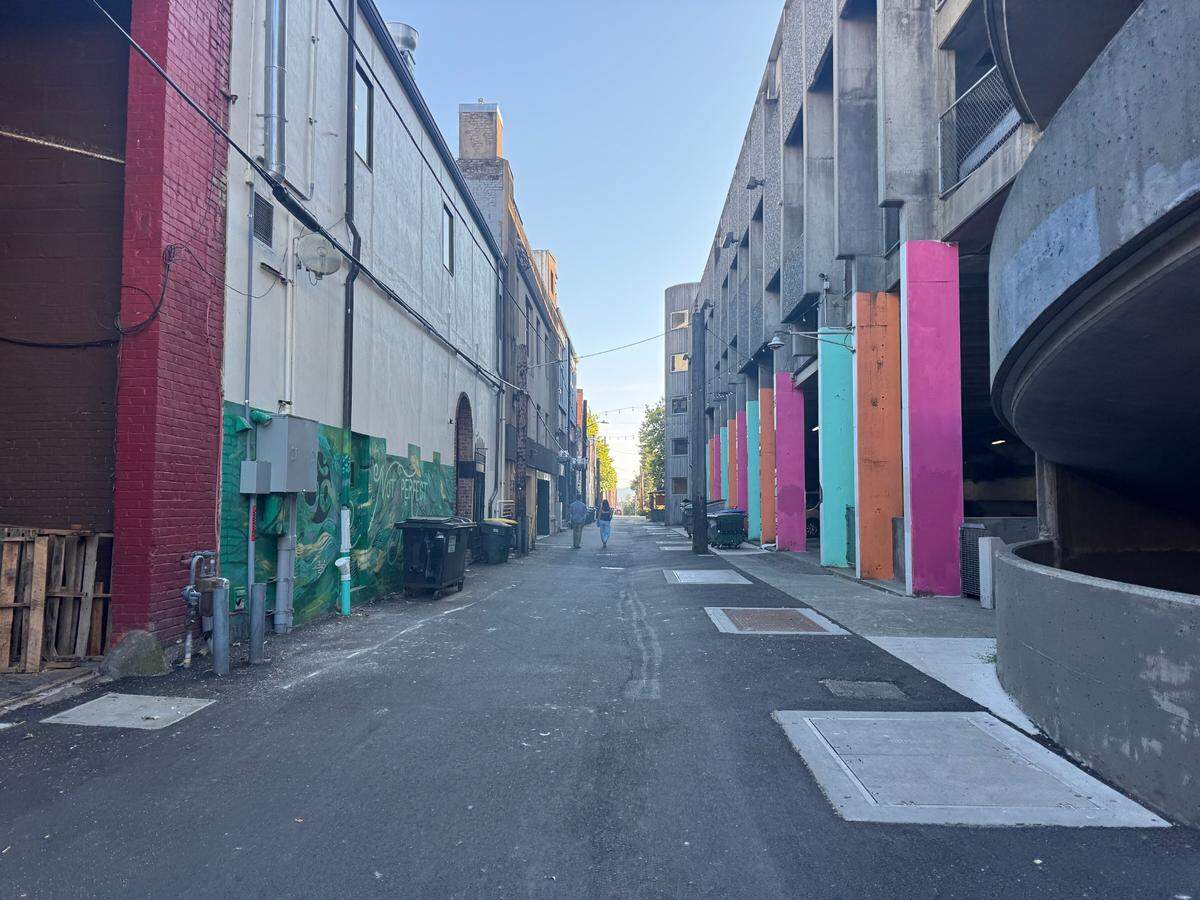
More than $500,000 is spent every year among various city departments on cleaning, litter and human waste removal, private security and the police bicycle patrol.
“Despite continuing investment, problem alleys continue to be magnets for unsafe activity, including open-air drug use, fires, encampments in trafficked areas, and public health and safety concerns. This program represents an additional tool to continue to make our downtown safe and to address the fentanyl crisis that prompted the mayor’s executive order,” Longman said.
As one of her first steps in office, Lund’s February 2024 order toughened the enforcement of drug laws, boosted police presence, expanded access to drug-treatment options and opened a downtown office to serve as a hub for police, firefighters and the Alternative Response Team of health care workers who handle 911 calls that don’t require a police or fire response.
Online Police Department data shows a sharp decline in overdose calls to locations in the city center last year, from 61 in 2024 to 24 in 2025.
Drugs and narcotics calls increased sharply last year in the city center, however, from 148 in 2024 to 342 in 2025.
Incidents regarding behavioral health concerns stayed about the same — there were 189 such calls in 2024 and 182 in 2025.
Other serious crimes against people, including robberies and felony assaults, remained about the same from 2024 to 2025. There were two homicides reported downtown in 2024 and none in 2025.
There’s no time limit set for an alley closure.
“Closure would also provide an opportunity to address conditions that provide concealment and limited visibility, which facilitates criminal activity. Closing an alley provides a more structural solution than a continued enforcement response and sends a clear message that hubs for illegal activity will not be tolerated,” Longman said.
During an alley closure, access still would be available for “business and property owners, their vendors, utility and sanitation workers, and government and emergency personnel,” Longman said.
Goals of the alley closures would be to disrupt the cycle of crime, give business owners and workers a measure of relief and “provide a stable alley environment to pursue crime prevention through environmental design improvements. Once identified alleys are closed and stable, staff and business owners will undertake an assessment of the areas and identify strategies to make them less appealing for criminal activity when reopened. This could include lighting, cameras, closure of vestibules, trash receptacle consolidation or other improvements.”
A conviction for violating the new ordinance would carry a fine of $1,000, 90 days in jail, or both.
In an effort to make some downtown alleys more inviting, the city and the business-oriented Downtown Bellingham Partnership have been encouraging art projects and other beautification efforts in the passageways behind businesses.
Gallery Alley features rotating exhibits between the Wild Buffalo music venue and the future home of Children of the Setting Sun on Holly Street, just east of Bay Street.
This story was originally published March 17, 2026 at 5:20 AM.