Whatcom County report shows depth of opioid crisis — and some promising numbers
Drug overdoses are continuing to decline this year in Whatcom County, reflecting nationwide data that suggest the opioid epidemic is easing but still of serious concern.
Local calls to 911 and emergency hospital visits for overdoses have dropped to about 2022 levels locally, according to information discussed at the Oct. 28 meeting of the Whatcom County Health Board. Even so, 911 calls for overdoses have not returned to levels seen before opioid overdoses and deaths began soaring in 2020, driven by the cheap and easily available synthetic opiate fentanyl.
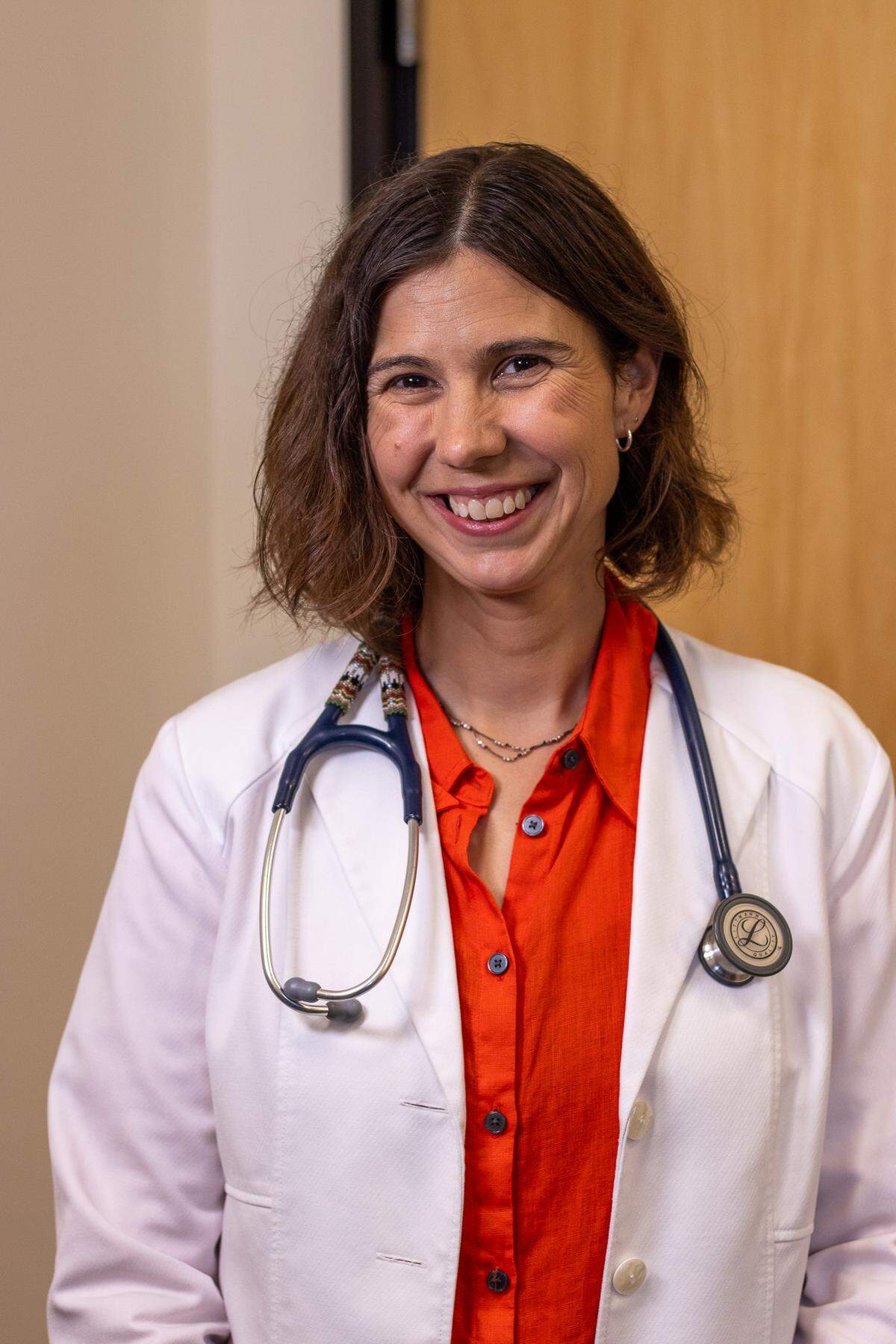
Overdose deaths in Whatcom County are declining at a rate close to the national average of 25% fewer than last year, Dr. Meghan Lelonek told the Health Board, which is composed of County Council members. Lelonek is one of the county’s two health officers — physicians who advise the Department of Health and Community Services.
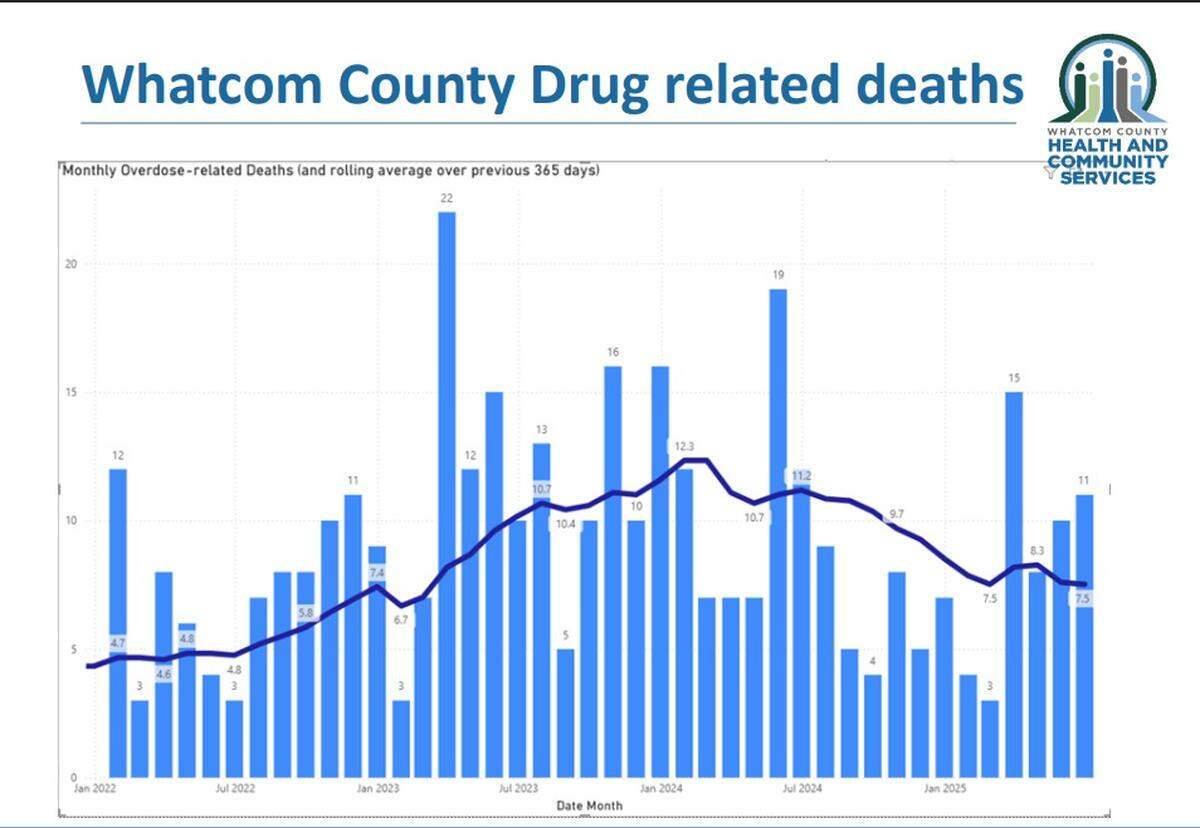
“If we really look back into numbers, in 2018 we had 11 deaths for the whole county that were deaths recognized as related to overdose. And then we went up to 12 deaths a month. And now we’re down to about eight deaths a month that are happening in our county,” Lelonek said in her presentation to the Health Board.
Detailed information about drug overdose deaths for this year is unavailable because the Whatcom County Medical Examiner’s Office has stopped reporting monthly numbers for “suspected overdose deaths,” in favor of filing an annual report of drug fatalities confirmed by toxicology.
In 2024 there were 83 confirmed or probable overdose deaths in Whatcom County, 54 fewer than in 2023, according to the Medical Examiner’s Office. A decade ago, one accidental overdose death was listed on the ME’s annual report.
Lelonek credited Whatcom County’s combined strategy with helping to ease the opioid crisis — especially its coordination of efforts among various city, county and nonprofit agencies. Narcan distribution to the public is a major factor, along with the increasing use of medications for opioid use disorder such as buprenorphine and methadone. Another key component includes drug-treatment programs and intervention by police, firefighters, medical professionals, social service workers and the courts.
“As we talk through these numbers, I really want everyone to just remember that these are people in our community. About 1 in 7 Americans will experience a substance abuse disorder, and these deaths really do represent lives lost,” Lelonek told the County Council.
Nationally and across Washington state, most deaths are caused by opioids, synthetic opioids and methamphetamine, with fentanyl accounting for 80% of all overdose deaths. Much of the methamphetamine used on the street contains fentanyl, Lelonek said.
The average age of an overdose victim is 47, and 25% of victims are unhoused — meaning the vast majority of overdoses are among people with housing.
Whatcom County is seeing an average of 80 calls a month to 911 for overdoses and 60 hospital emergency visits, and those monthly numbers help health officials track overdose trends.
“It’s important to note that these visits happen from all ZIP codes in our community, really they happen in all parts,” Lelonek said.