Hate those midnight train horns? You may soon be hearing fewer of them in Bellingham
Residents within earshot of the train tracks on Bellingham’s south side could be hearing fewer locomotive horns after the city announced it has completed requirements for a railroad “quiet zone” through the Fairhaven area.
Engineers normally are required to sound their horn when a train approaches a crossing, according to federal rules.
But such quiet zones add safety improvements to those crossings, allowing engineers to use their horns less frequently.
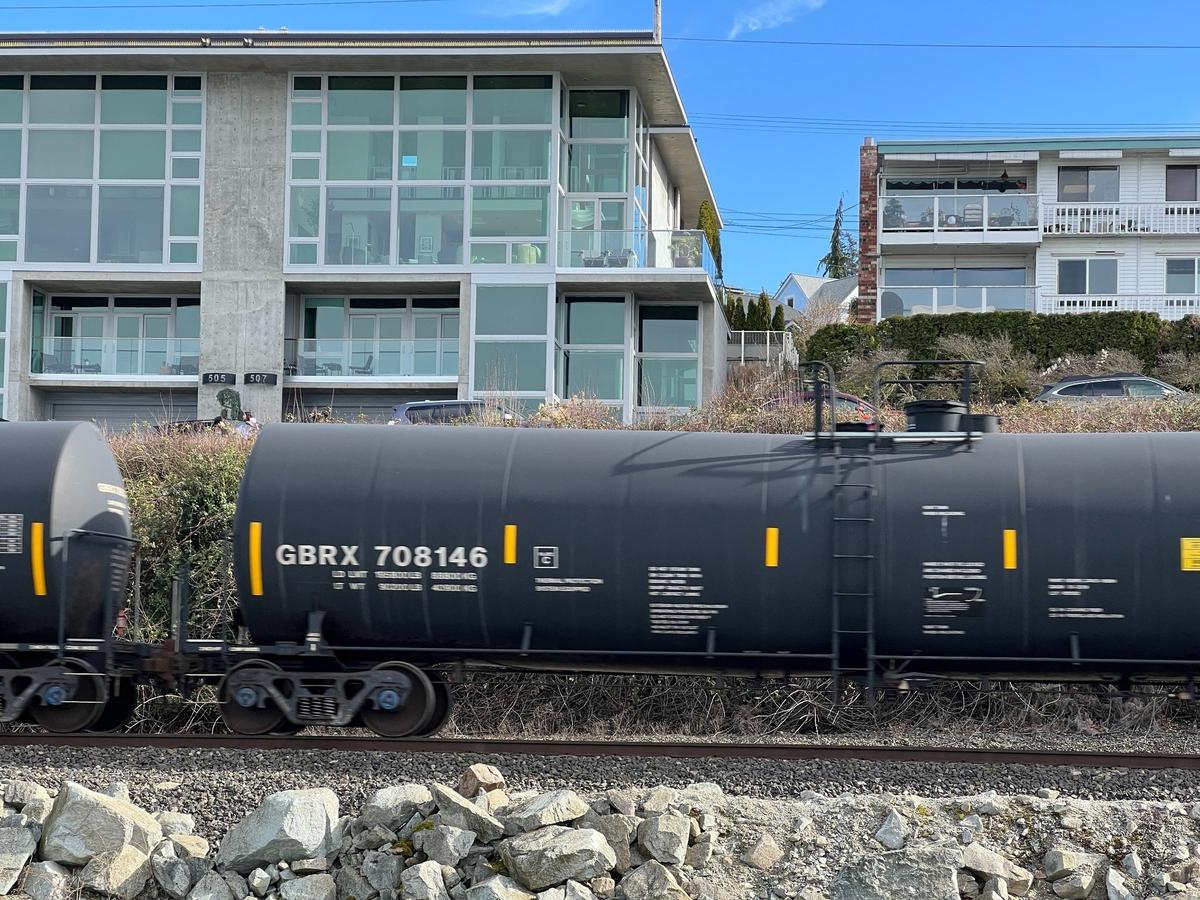
“This quiet zone is a testament to what we can achieve when we work together. Through careful planning and collaborative effort between the Port of Bellingham and the city, along with state and federal agencies and the local railway, we’ve delivered a meaningful change, and this achievement sets the stage for further improvements in other neighborhoods along our beautiful waterfront,” Bellingham Mayor Kim Lund said in a statement Monday.
A BNSF official confirmed that the new quiet zone has been approved.
Amtrak, which leases the tracks from BNSF, makes four daily runs through Bellingham. BNSF averages 13 trains daily — seven during the day and six at night — according to records filed with the U.S. Department of Transportation.
Bellingham began looking at quiet zones almost 20 years ago, after residents near the tracks complained about noise, especially at night. About five years ago, Whatcom County completed quiet zone work and received federal approval in residential neighborhoods along Cliffside Drive at the north end of Bellingham Bay, and Cove Road near Chuckanut Drive north of Larrabee State Park, according to previous Bellingham Herald reporting.
Bellingham is working on a second quiet zone, which extends along the waterfront and has six crossings through downtown and past the Old Town, Lettered Streets and Columbia neighborhoods.
Bellingham Public Works Department spokeswoman Stefanie Cilinceon told The Herald that the Fairhaven quiet zone spans five crossings over 1.25 miles, from where the tracks cross Harris Avenue to the South Bay Trail at the north end of Boulevard Park. Three of the five crossings are on Port of Bellingham Property:
▪ Alaska Ferry access road (Port property).
▪ Bayview Road at Boulevard Park crossing (city property).
▪ Harris Avenue crossing (Port property).
▪ Seaview south access private crossing (Port property).
▪ Boulevard Park pedestrian crossing (city property).
Safety additions at the crossings include extra signs, flashing signals, automated crossing gates that keep pedestrians and vehicles off of the tracks when a train is approaching or passing, and pedestrian exit gates, Cilinceon said in an email.
“The Federal Railroad Administration uses a complex calculation that considers all the safety measures in place and crossing characteristics for a certain group of crossings to generate a risk index. The risk at a crossing must be considered low for a quiet zone to be put in place at those crossings,” Cilinceon said.
Local governments are responsible for the cost of quiet zone infrastructure and must coordinate construction with the railroad.
This first quiet zone cost the city about $711,000, with funds from the real estate excise tax and street funds, Cilinceon said.
A Port of Bellingham official told The Herald that its Harris Avenue and Alaska Ferry crossings cost $1.56 million to meet Federal Railroad Administration requirements, with $315,000 coming from a grant. The private crossing on Seaview cost $53,000.
This story was originally published March 11, 2025 at 8:44 AM.