Bellingham changes limits for tiny home shelter encampments
The time tiny home communities are allowed in a single location was extended by the Bellingham City Council last week.
New rules allow for a two-year initial stay, followed by three one-year renewals for a maximum of five years for the encampments, which consist of hut-like enclosures about 8 feet by 8 feet or 8 by 12 feet in size.
The tiny homes have a bed, heat and light and are part of communities or encampments with common facilities to shower, cook and eat food, and use the toilet.
Services are provided to help move residents into permanent housing and get them health care and jobs.
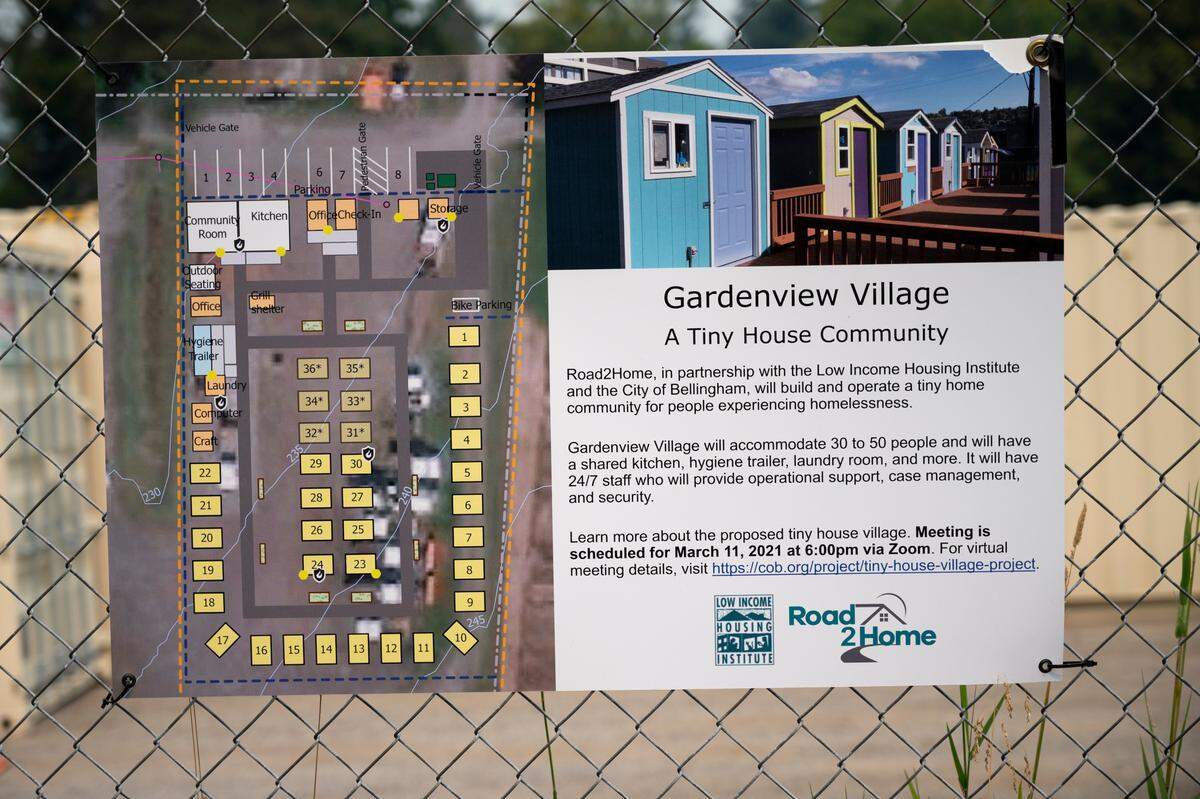
Bellingham has three such encampments — Unity Village in Fairhaven, Swift Haven near the Civic Athletic Complex and Gardenview Village at Lakeway Drive and Woburn Street.
Previous city ordinances, enacted in 2018, allowed for a maximum of two years at any one site according to a report on the proposed changes with the City Council agenda for Monday, Sept. 27.
Code revisions unanimously approved Monday provide better cost efficiency and ensure that such encampments are a step toward permanent housing, said Kurt Nabbefeld, development services manager for the Planning and Community Development Department.
“We’ve realized that the encampments require a substantial amount of up-front cost to the city as well as to the organization just to prep the site and provide utilities,” Nabbefeld said during a public hearing on the issue.
Only one person spoke at the session. Road 2 Home Director Melissa Bird told the council “We are already months into our current permit and no one has even moved in yet.” Her organization is building the Gardenview Village shelter and will operate it with the Low Income Housing Institute, which advocates for those without a permanent home.
Volunteers are working to assemble the tiny homes and make electrical and water connections.
Nabbefeld said that the previous tiny home communities, both operated by Homes Now!, have been accepted as good neighbors.
“What we have found is that when some of these villages go into the neighborhoods there’s a lot of fear about the unknown of what’s happening right away, but once they get there and they see how well some of these are operating, those fears are alleviated,” he said.
This story was originally published October 3, 2021 at 5:00 AM.