Teen shelter moves forward despite Bellingham neighborhood opposition
A shelter for up to 12 teens is moving forward despite opposition from some of its Samish neighbors who fear a rise in crime and a drop in home values.
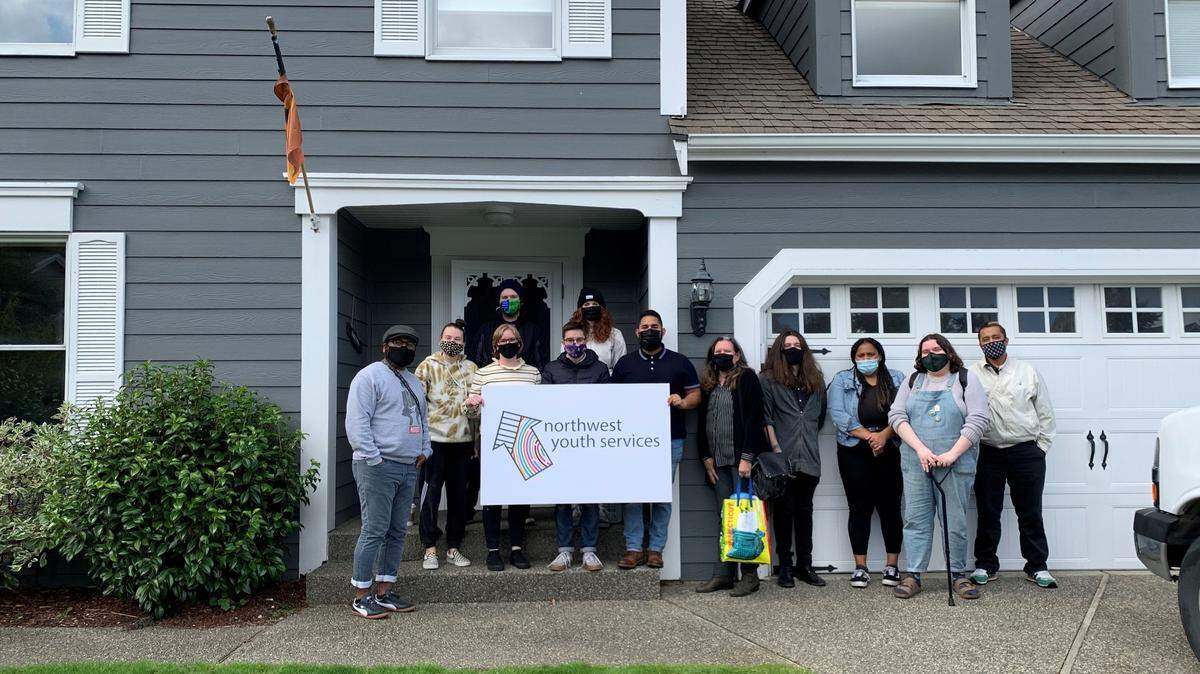
Northwest Youth Services’ PAD program last week closed on a four-bedroom house on 36th Street, with plans to move the PAD shelter from its current location on North State Street and into a residential area more suitable for youth ages 13 to 17 who have nowhere else to go.
PAD, an acronym for Positive Adolescent Development, keeps teens connected to their community despite situations that prevent them from living with their parents, said Jenn Daly, Northwest Youth Services director of advancement.
“This empowers young people to stay in school and stay in their community when they can’t be at home,” Daly told The Bellingham Herald.
PAD residents are children whose parents might be violent, or in jail, or who are shunned by family because of their sexual orientation or gender identity, Daly said.
“It’s important for them to have a home in a traditional neighborhood setting so that they know that they do belong,” she said.
The PAD has 24-7 supervision with a minimum of two trained staff members, Daly said.
Jason McGill, Northwest Youth Services executive director, said the agency serves as the legal guardian for those in its care.
“We ensure they are going to school, getting up for work, pursuing recreation activities that excite them, visiting the dentist and doctor, help them create a plan to improve their relationships with family, etc.,” McGill wrote in a letter to neighbors. “In short, and for a limited time, we get to provide stability and security to these youth in their time of need.”
Such shelters are allowed in residential areas by administrative action without a public hearing under a code change that the City Council approved in February 2020, said Kurt Nabbefeld, development services manager for the Planning and Community Development Department.
Opposition starts
Northwest Youth Services has been searching for some time in a highly competitive housing market to find the right house, Daly said.
But the complaints started as soon as they found the Ridgemont-area home and made an offer, she said.
“A lot of it was fear-mongering,” Daly said. “They included comments from neighbors who said some pretty vile things.”
Neighbors flooded the social media site Nextdoor with messages and sent emails to City Council members, protesting the planned purchase.
“Our neighborhood held a meeting (Sept. 16) and about 85 people attended the meeting,” said Susan Succee in a letter to the city. “Only a few of the people at the meeting supported the proposed purchase of the house by Northwest Youth Services, the majority of the people at the meeting strongly oppose it.”
Resident Walli Ann Wisniewski also urged the city to reject the Northwest Youth Services permit application, according to a letter on file with the city.
“A new home will only lead to increased criminal problems in our neighborhood. We are already seeing outsized negative effects from the few rental properties in the neighborhood. We are kept aware of these issues from our neighbors who serve in the Bellingham Police Department,” Wisniewski stated.
But the Samish Neighborhood Association board of directors hasn’t taken a position on the matter, said its president, Steve Abell.
“We are trying to keep lines of communication open between (Northwest Youth Services) and concerned neighbors,” Abell told The Herald in an email.
And not everyone was against the plan.
“Welcome,” Kristi Lee of Samish Hill said on a Nextdoor thread that had some 150 comments before the discussion was closed in mid-September.
“It takes a village. Happy to know that children have somewhere to be cared for and the support they need to thrive,” Smith said.
‘Misconceptions’ addressed
Nabbefeld discussed his department’s approval of the shelter application at a City Council meeting Monday, Sept. 27, because of the strong community opposition and to correct some misconceptions, at the request of City Council member Pinky Vargas.
“People have a perception that is different from reality,” Vargas said.
Nabbefeld said that neighbors were citing police statistics of 615 calls to 911 from PAD since 2016.
Many of those calls were made by Northwest Youth Services or PAD staff members themselves, either reporting situations nearby that required a police response or calling to record a curfew violation.
“There may be a misconception or misunderstanding or maybe some misuse of facts,” Nabbefeld told the council.
“The vast majority of those calls were a report of juvenile runaways. The vast majority were about youth not returning to the facility,” he said.
Daly said staff members are required to call police when a resident fails to return on time, and it’s an administrative step that usually doesn’t require a police visit to the PAD site.
Most of those calls ultimately are canceled because the resident returns, she said.
Other shelters
Councilman Dan Hammill said similar facilities for recovering drug abusers or victims of domestic violence are located in neighborhoods a diverse as Birchwood, Lettered Streets, Columbia, Sehome and Happy Valley.
“There are fairly common throughout the community” and usually have little impact, Hammill said.
Northwest Youth Services received financial help from the city and the state in securing a loan of $935,000 to buy the four-bedroom, 2.5 bathroom house with a two-car garage and 3,400 square feet.
They’ll need to make changes for fire safety and to comply with the Americans with Disabilities Act and do some other remodeling before the home is ready to occupy.
Tara Sundin, the city’s community and economic development manager, said Bellingham helped Northwest Youth Services buy the house with a long-term loan of $574,647, mostly from the federal Community Development Block Grant program, and a bridge loan of $360,353 with reimbursement expected from the state Commerce Department.
“Additional bridge loan funding may be made available for upgrades necessary to meet licensing requirements, like increasing fire safety and ADA accessibility,” Sundin told The Herald in an email.
A ‘good neighbor’
Northwest Youth Services is a nonprofit organization established in 1976 for homeless youth ages 13-24.
McGill, who grew up in the south as a gay Black man, said he understands inequity and discrimination — and the fear that stokes it.
“This will be a licensed program that has very strict guidelines for our services for the children in our care — guidelines that we take seriously,” McGill wrote in a letter to Whatcom County officials.
Northwest Youth Services has helped more than 500 young people in its PAD program since it opened in 2010, and many have gone on to college, gotten good jobs and stayed in the area, McGill said.
“We want to be great partners. We want to be great neighbors,” McGill told The Herald. “It’s not a privilege, it’s a right to feel that you exist as part of the community.”
This story was originally published October 3, 2021 at 5:00 AM.