Man accused of supplying drugs in suspected jail overdose death enters homicide plea
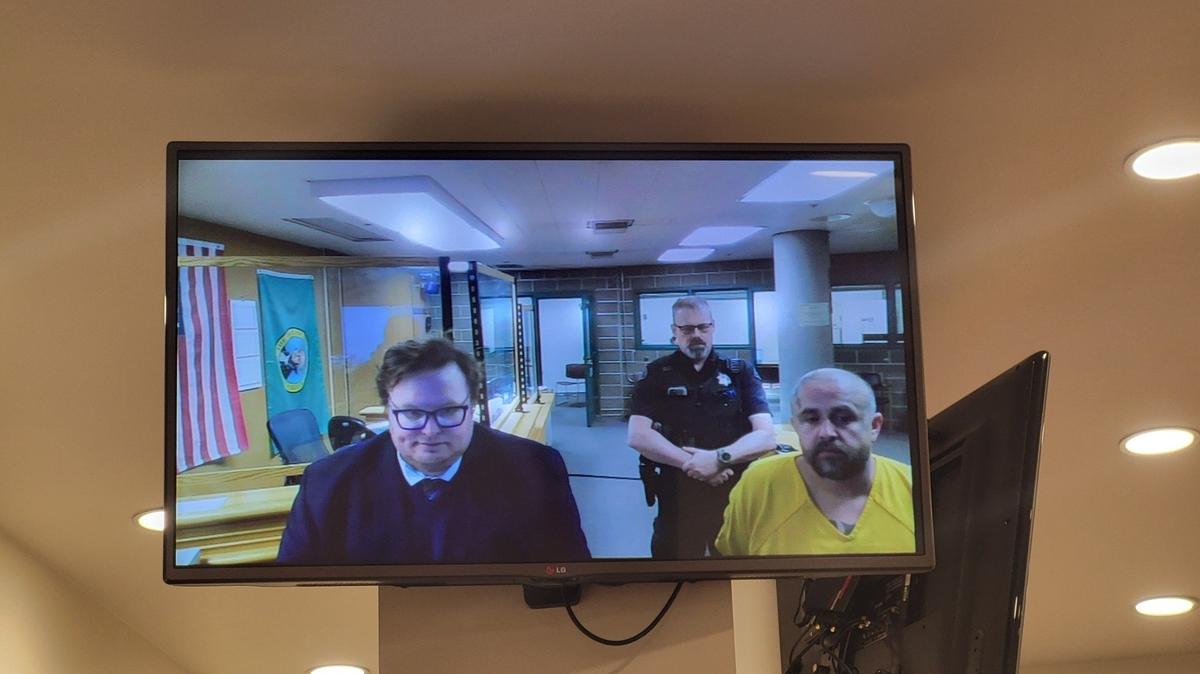
The Everett man accused of supplying fentanyl powder to two prisoners in his housing area in the Whatcom County Jail — resulting in the death of one man and the hospitalization of another following suspected overdoses — pleaded not guilty to multiple felonies Friday morning.
Angel Lewis Leffingwell, 38, pleaded not guilty March 29 in Whatcom County Superior Court to one count of controlled substance homicide (fentanyl); one count of possession of a controlled substance while in a correctional facility; and one count of unlawful delivery of a controlled substance, all felonies.
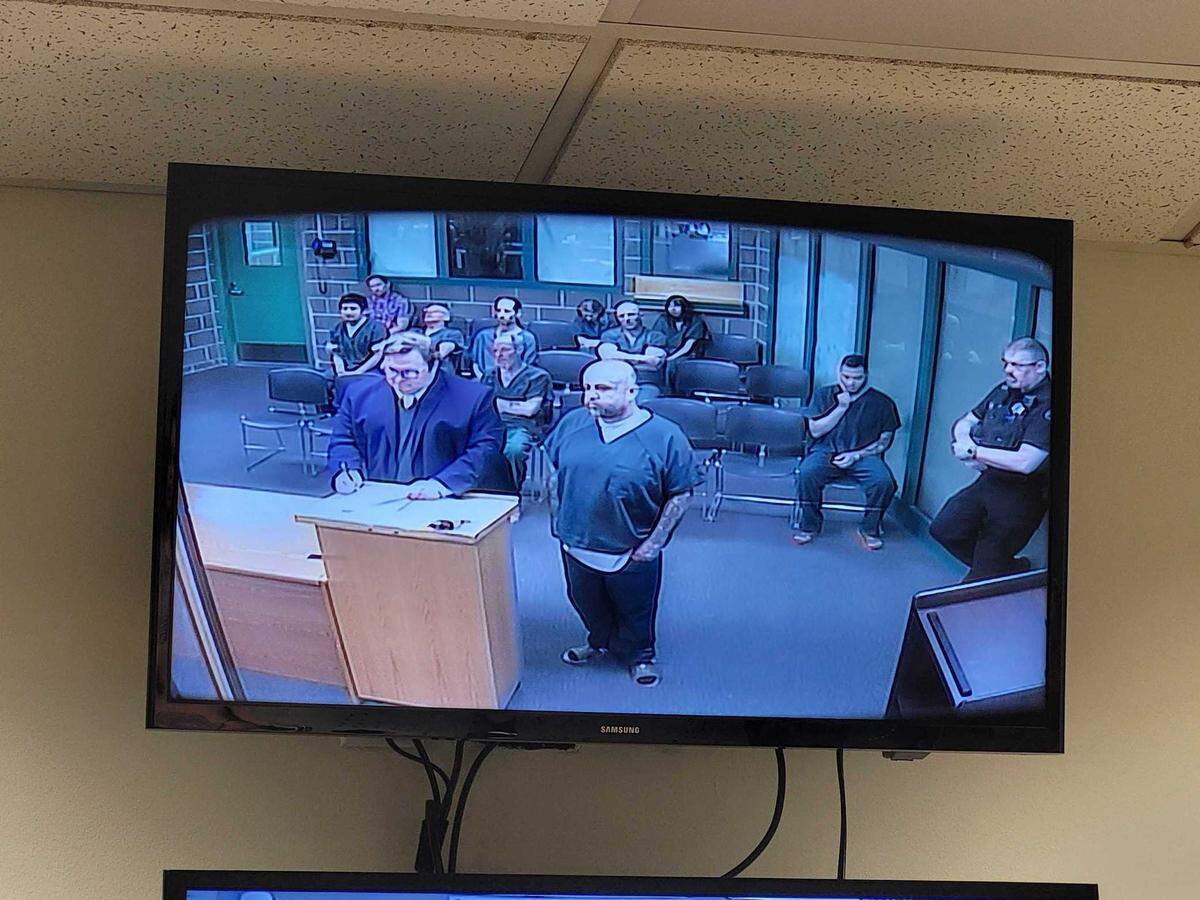
Leffingwell appeared Friday from the jail courtroom in a yellow-colored jail uniform with a sheriff’s deputy standing directly behind him. His defense attorney, Matthew Palmer, told the court that Leffingwell was unable to physically sign documents because of the way he was shackled for his court appearance.
Leffingwell’s not guilty pleas were accepted, and his jury trial was tentatively scheduled for May 20. His bail was set at $2 million in the homicide case at his first appearance March 18.
Twenty-eight-year-old Andre J. Haas was found dead in his cell in the downtown Whatcom County Jail around 10:30 a.m. March 13 from a suspected drug overdose. Haas’ cellmate, a 28-year-old man whom The Herald is not identifying publicly, was taken to PeaceHealth St. Joseph’s hospital for treatment of a suspected overdose. The man was treated and later released, The Herald previously reported. A no-contact order has been put in place between Leffingwell and the man.
Haas’ autopsy was conducted March 14 and preliminary toxicology results were positive for fentanyl. Samples were collected from Haas and his cellmate and were sent to the state crime lab for testing.
“The examination revealed no other indicators of medical conditions that would have caused Haas to die at this time,” court documents state.
Haas’ body was released to his family March 20 for burial purposes, according to court records. The Herald has asked the Whatcom County Medical Examiner’s Office whether it has ruled on time, cause and manner of death for Haas.
Haas’ death
Leffingwell is accused of sliding a piece of paper containing white powder on it underneath the door of Haas’ cell in the downtown Whatcom County Jail shortly before 10:18 a.m. on March 13. Haas’ cellmate told detectives that he and Haas snorted the powder substance, which is suspected to be fentanyl, within minutes of receiving it, and that the next thing he remembers is waking up in an ambulance, The Herald previously reported.
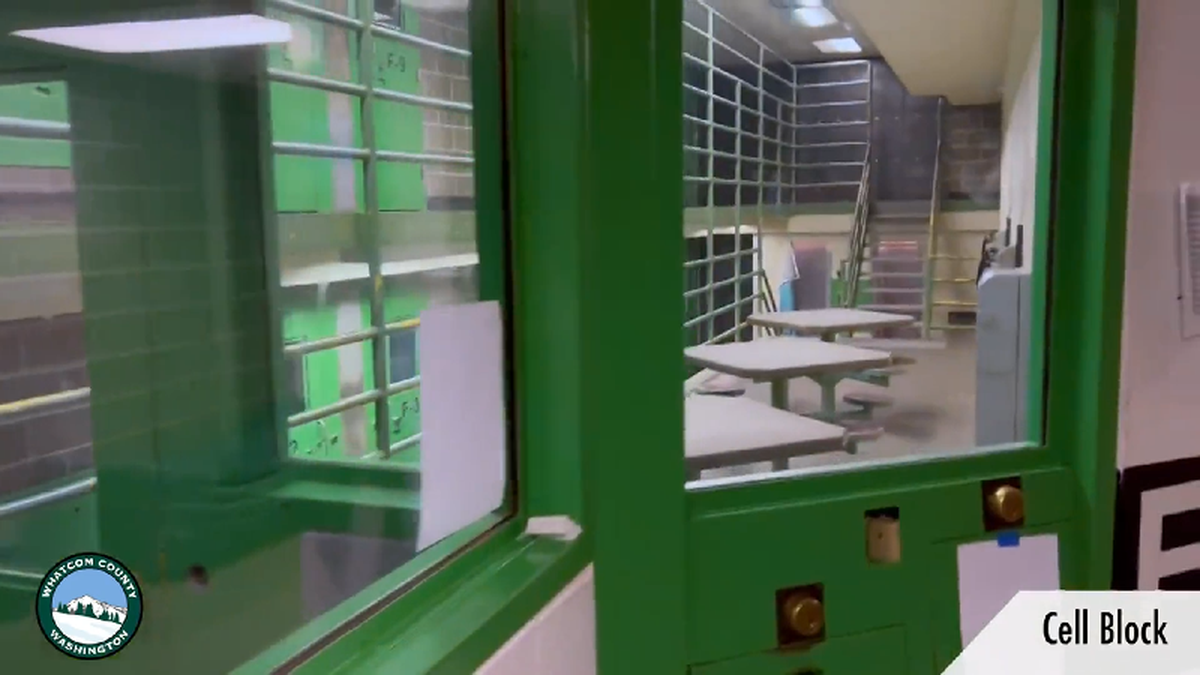
Jail staff responded to Haas’ cell — cell 1 in housing unit 2A — at 10:18 a.m. March 18 for a distress call. An incarcerated person in the cell next door had hit the intercom button and said there was a medical emergency occurring in Haas’ cell.
Whatcom County Sheriff’s Office corrections deputies responded to housing unit 2A, cell 1, and found Haas, who was “bluish purple” in the face, and his cellmate unresponsive on the floor.
Life-saving measures, including the use of an automatic external defibrillator, were taken and multiple doses of Narcan were administered. Narcan is a medication used to reverse the effects of opioids, such as oxycodone, heroin and fentanyl, and is often used during suspected opioid overdoses.
Haas could not be revived and was pronounced dead at the jail. Haas’ cellmate was revived following several doses of Narcan and was taken to a local hospital for treatment of a suspected overdose, and was later released.
The circumstances of Haas’ death and how Leffingwell obtained the drugs while incarcerated are under investigation by the Law Enforcement Mutual Aid Response Team, or LEMART, which is a multi-jurisdictional investigation team.
The results of the LEMART investigation are expected to be made public, according to a previous statement from Whatcom County Sheriff Donnell Tanksley released after Haas’ death. The Herald has asked for an update on the LEMART investigation.
Previous incident
Leffingwell was already incarcerated in the downtown jail on unrelated charges prior to the overdoses after he allegedly fled from Whatcom County Sheriff’s Office deputies following a traffic stop on Chuckanut Drive in late February. Following the traffic stop, law enforcement allegedly found a ripped-open bag of methamphetamine and two blue pills suspected to be fentanyl in Leffingwell’s vehicle. They also found suspected meth on Leffingwell after he was detained, The Herald previously reported.
He was booked into the downtown jail just before 5 a.m. on Feb. 25, jail records show.
Roughly 42 hours later, around 11:28 p.m. on Feb. 26, corrections deputies responded to the jail for a drug complaint involving Leffingwell. Deputies had received a report of drug involvement in housing unit, or cellblock, 2B, where Leffingwell was incarcerated.
Leffingwell was removed from housing unit 2B while deputies conducted a cell search. During a search of Leffingwell, he removed a bag of suspected fentanyl pills from a body cavity and an additional suspected fentanyl pill from his mouth, according to court records.
In total, Leffingwell had roughly 7.9 grams of suspected fentanyl-laced pills while he was incarcerated in the Whatcom County Jail, court documents state.
When a person is booked into the jail, they are asked medical questions, including inquiries into drug use and mental health, in a secure booth in an attempt to alert corrections deputies, medical and mental health staff to any concerns. The person is then patted down and asked if they are bringing anything into the facility that is not allowed.
Most people surrender questionable items at this point, according to Deb Slater, a spokesperson for the sheriff’s office.
Depending on the charges, the inmate can then be strip-searched or scanned using a full body scanner.
“There have been instances where inmates have wrapped and swallowed or inserted suspected opioids into their body cavity to get them into the facility. The Whatcom County Jail never performs cavity searches. Industry wide, correctional facilities, including the Whatcom County Sheriff’s Office Corrections Bureau, are evaluating the capabilities of scanner detection systems,” Slater told The Herald.
The body scanners in the downtown jail and the minimum security work center on Division Street are failing, and are allowing drugs and other contraband into the facilities, The Herald previously reported. Sealed proposals for two new full-body scanners are being accepted by the county until April 16, according to county documents.
When asked when the scanners began failing or how the sheriff’s office identified the scanners were failing, Slater told The Herald that “the Whatcom County Sheriff’s Office is continually identifying the various ways drugs enter our correctional facilities. Most methods of introduction are intercepted using the protocols in place. It would not be in the best interest of operational security or safety to both inmates and staff members to disclose the security capabilities of the jail for obvious reasons.”
Hour allotment
A little more than two weeks after he was previously found with drugs while incarcerated, Leffingwell allegedly provided the fentanyl powder that is suspected to have led to Haas’ death and the hospitalization of Haas’ cellmate. Leffingwell had been moved into the housing unit the night prior, The Herald previously reported.
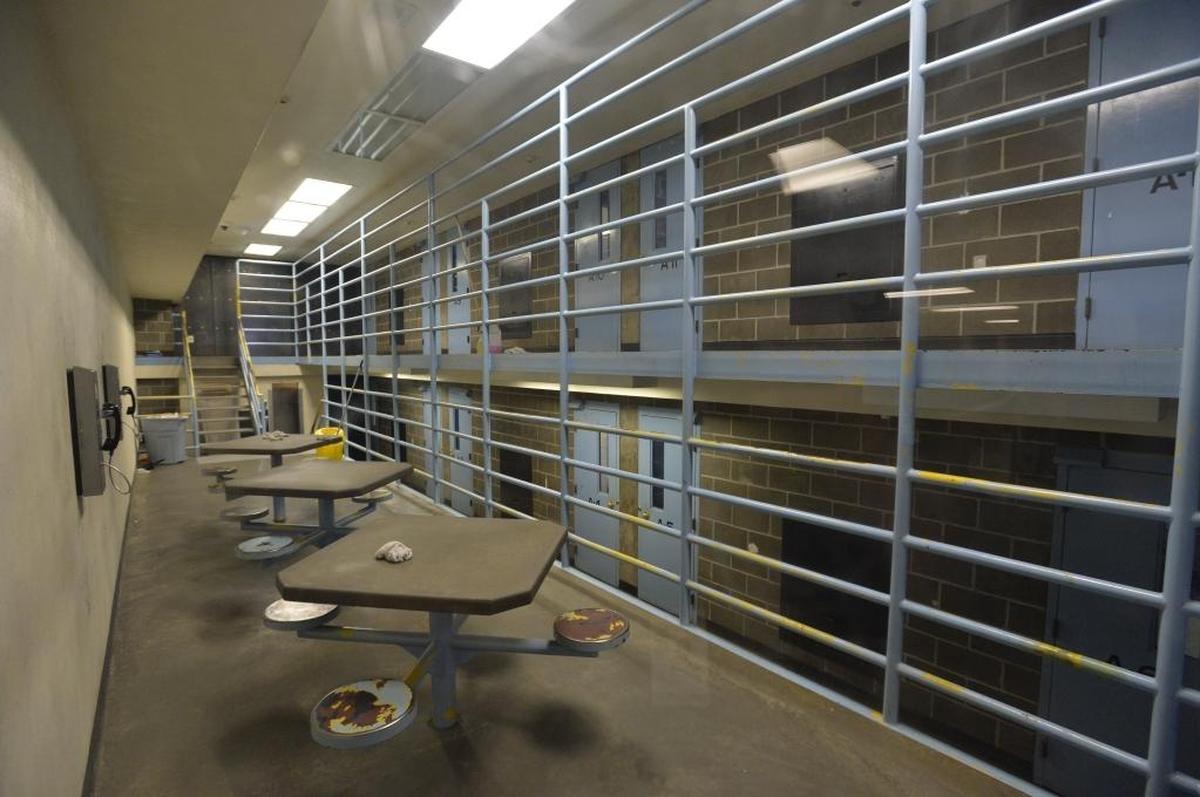
Leffingwell was incarcerated in a housing unit where inmates are required to be in their cells for 23 hours a day. They are only allowed out of their cells one hour each day, where they are allowed to be in the common area of the cellblock and the recreation area. Each cell in the housing unit contains a maximum of two incarcerated people, but some cells only have one person in them, according to court documents. Checks of the 23-and-1 housing units occur at least every hour, sheriff’s office spokesperson Slater said.
There are 10 23-and-1 housing units with 102 beds in the Whatcom jail. Whether an inmate will be placed in one of those housing units depends on their criminal and behavioral history, Slater said.
The location of the unit, staffing and whether incarcerated people have appointments, such as for court or medical purposes, will determine when their one-hour allotment out of their cells occur. Those hour time frames occur mornings, afternoons and early evenings, Slater said.
Only one cell is out at any given time, and only two people are allowed out at a time per housing unit. The inmates are monitored during this time.
At the time of the overdoses on March 13, Leffingwell was out of his cell in the common area of the 2A housing unit for his one-hour of allotted time. The Herald has asked questions related to what time Leffingwell’s hour started, how jail staff monitors inmates while they are out of their cells for that one-hour time frame, and when the hourly checks for housing unit 2A were expected to occur the day of the overdoses.
The Herald has also asked questions regarding whether the housing unit, Leffingwell’s cell and Leffingwell himself were searched following the overdoses on March 13.
Prior to Haas’ death, the most recent death in the Whatcom County Jail occurred on Nov. 11. The cause of death for the person was determined to be of natural causes, Slater said.
Nine incidents involving 13 overdoses occurred in 2023, and four incidents involving five overdoses have occurred so far in 2024 in the Whatcom County Jail, Slater said.
As of March 10, the jail had 75 people who were taking medications for opioid use disorder as part of the jail’s medication-assisted treatment program, Slater said.
“As the potency and availability of these drugs (opioids) increase, the importance of protecting incarcerated individuals and jail staff members also increases. The opioid epidemic is affecting our whole community and we will continue to do everything we can to keep it out of our correctional facilities,” Sheriff Tanksley said in a statement provided to The Herald.
This story was originally published March 29, 2024 at 12:15 PM.