Formal charges filed in Whatcom County Jail overdose death; additional details released
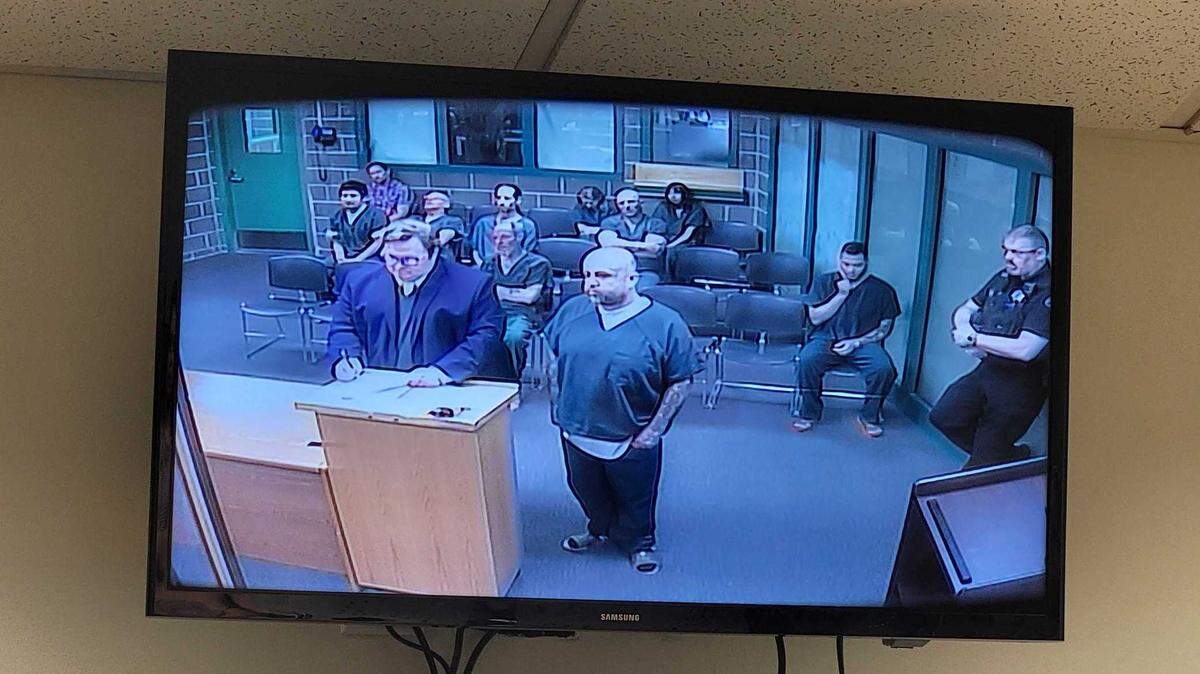
Formal charges have been filed against an Everett man accused of providing fentanyl to two other prisoners in his housing area in the Whatcom County Jail, resulting in the death of one man and the hospitalization of another following suspected overdoses last week.
Angel Lewis Leffingwell, 38, was charged Monday, March 18 in Whatcom County Superior Court with one count of controlled substance homicide (fentanyl), one count of possession of a controlled substance while in a correctional facility and one count of unlawful delivery of a controlled substance, all felonies.
A court commissioner set Leffingwell’s bail in the case at $2 million at his first appearance hearing Monday afternoon.
His arraignment is scheduled for March 29.
Leffingwell was already incarcerated in the downtown Whatcom County Jail on unrelated charges prior to the overdoses after he allegedly fled from deputies following a traffic stop on Chuckanut Drive in late February. Following the traffic stop, law enforcement found a ripped-open bag of methamphetamine and two blue pills suspected to be fentanyl in Leffingwell’s vehicle. They also found suspected meth on Leffingwell after he was detained, The Herald previously reported.
He was booked into the downtown Whatcom County Jail just before 5 a.m. on Feb. 25, jail records show.
Roughly 42 hours later, around 11:28 p.m. on Feb. 26, corrections deputies responded to the jail for a drug complaint involving Leffingwell. Deputies had received a report of drug involvement in housing unit (or cellblock) 2B, in cells 8 and 9. Leffingwell was removed from housing unit 2B while deputies conducted a cell search, The Herald previously reported.
During a search of Leffingwell, he removed a bag of suspected fentanyl pills from a body cavity and an additional suspected fentanyl pill from his mouth, according to court records.
In total, Leffingwell had roughly 7.9 grams of suspected fentanyl-laced pills while he was incarcerated in the Whatcom County Jail, court documents state.
A little more than two weeks later, Leffingwell allegedly provided the fentanyl powder that resulted in the March 13 suspected overdose death of 28-year-old Andre J. Haas and the hospitalization of another 28-year-old man.
Haas was found dead in his cell around 10:30 a.m. March 13 from a suspected drug overdose. Haas’ cellmate, a 28-year-old man whom The Herald is not identifying publicly, was taken to PeaceHealth St. Joseph’s hospital for treatment of a suspected overdose.
The man was treated and released, according to a hospital spokesperson.
“Mr. Leffingwell denies the accusations and will enter a plea of not guilty at arraignment,” Matthew Palmer, Leffingwell’s public defense attorney, said in a statement provided to The Herald. “Until we can thoroughly examine medical reports and any evidence that may exist, any comment would be prematurely speculative.”
The overdoses
Court records provide some details on how the overdoses occurred and why Leffingwell is the person suspected of supplying them, but do not provide answers regarding how Leffingwell obtained the drugs or got them while in the facility.
At 10:18 a.m. March 13, Whatcom County Jail staff responded to housing unit 2A, cell 1, for a distress call. An incarcerated person in the cell next door had hit the intercom button and said there was a medical emergency occurring in the cell next to them.
Whatcom County Sheriff’s Office corrections deputies responded to housing unit 2A, cell 1, and found two men unresponsive on the floor. One of the men, whose face was “bluish purple,” was identified as Haas. The second man was also unresponsive.
Life-saving measures were taken, including the use of an automatic external defibrillator, and multiple doses of Narcan were administered. Narcan is a medication used to reverse the effects of opioids, such as oxycodone, heroin and fentanyl, and is often used during suspected opioid overdoses.
Haas could not be revived and was pronounced dead at the jail.
Haas’ cellmate was revived following several doses of Narcan and was taken to a local hospital for treatment of a suspected overdose. The man was treated and later released, according to a hospital spokesperson.
The sheriff’s office then requested assistance from the Bellingham Police Department in investigating Haas’ death and the overdoses, the court records state.
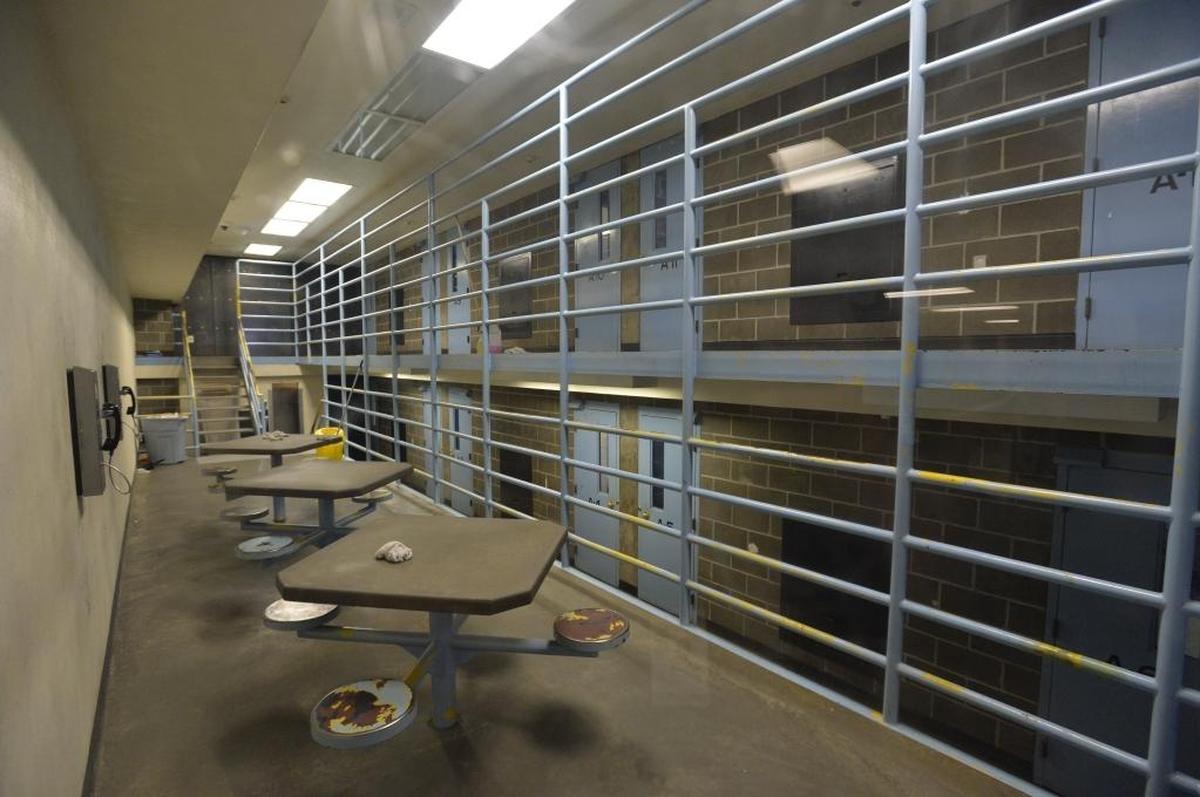
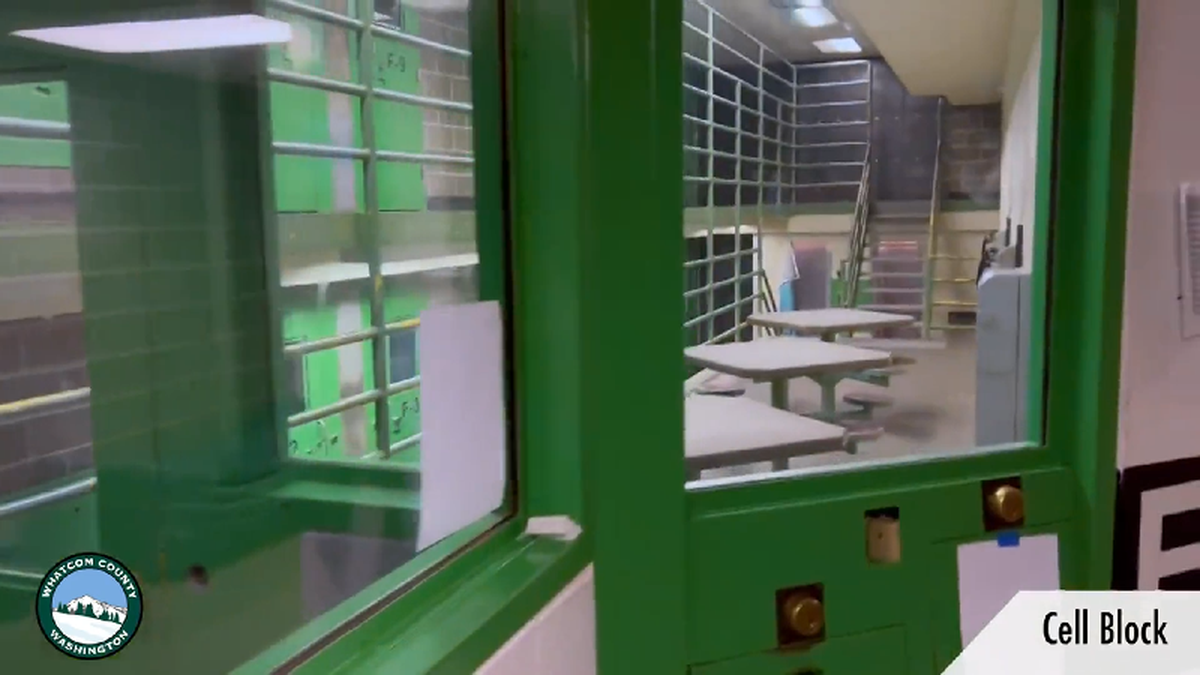
The overdoses occurred within a single housing unit inside the downtown Whatcom County Jail. The 2A housing unit, or cellblock, is a unit where inmates are required to be in their cells 23 hours a day. They are only allowed out of their cells one hour each day, where they are allowed to be in the common area of the cellblock and the recreation area. Each cell in the housing unit contains a maximum of two incarcerated people, but some cells only have one person in them, the court documents state.
At the time of the overdoses, Leffingwell was out of his cell in the common area of the 2A housing unit. Leffingwell had access to all the cell doors, the bathroom, shower area and seating area. Leffingwell’s cell was left open during this time and he was able to go in and out freely.
Leffingwell’s movement was only restricted by the outer doors that provide access to the entire 2A housing unit. Other inmates who were in their cells at this time would not be able to see any of the incident. Leffingwell would have been the only one who could have seen into Haas and the other man’s cell, according to court records.
Aid summoned
The incarcerated person who hit the intercom button summoning aid for Haas and his cellmate told detectives that he saw Leffingwell go to Haas’ cell door several times leading up to the overdoses.
The man told detectives that Leffingwell would leave and come back several times. He also said Leffingwell rattled the door of Haas’ cell at one point, and told detectives he overheard Leffingwell say “Hey, hey, guys, I need you to say something,” according to court records.
The man said Leffingwell would walk away to visit another cell, tell something to one of the inmates in that cell, and then would come back and rattle the door to Haas’ cell again. The man then asked Leffingwell what was going on, to which Leffingwell said “They aren’t responding. One of them is moving and the other isn’t responding,” court documents state.
The man told detectives he again asked Leffingwell what was going on, and Leffingwell responded “well I don’t want to get them in trouble.”
Leffingwell then told the man Haas and his cellmate were moving, but were not verbally responding, according to court records.
The man was concerned about Haas and his cellmate but told detectives that the pair often stayed up all night. The man again asked Leffingwell what was happening, and Leffingwell again told him that he didn’t want to get Haas and his cellmate into trouble. The man then hit the intercom button summoning a corrections deputy.
The man told the responding corrections deputy that Haas and Haas’ cellmate were unresponsive in the cell next door and needed help.
Leffingwell again banged on and rattled Haas’ cell door, and said “they’re moving.” Two corrections deputies who were responding to the aid call then found Haas and his cellmate unresponsive.
The man told detectives that Leffingwell again told him he didn’t want to get Haas and his cellmate into trouble, and that Leffingwell made a sniffing motion indicating the pair had used drugs, according to court records.
The man asked Leffingwell repeatedly what it was, but Leffingwell would not answer. The man told detectives he believed Haas and his cellmate knew what they were getting and said he believed the pair got the drugs from Leffingwell.
Receiving drugs
Detectives interviewed Haas’ cellmate after he returned from the hospital. The man told detectives that Leffingwell was put into the housing unit the night before, on March 12. Leffingwell spoke to him and Haas through the door and offered to give them narcotics.
Leffingwell told the man and Haas that “the whites hang with the Hispanics in prison. I got you.”
Leffingwell, who is Hispanic, then gave the man and Haas a white powdery substance, which he passed under the cell door, according to court records. The man and Haas snorted the substance, but told Leffingwell the intoxicating effects were minimal.
The following morning, on March 13, the man and Haas had their hour in the recreation room and then returned to their cells to take a nap. They woke up to Leffingwell at their cell door. The man and Haas asked for more drugs, to which Leffingwell responded “I got you,” court documents state.
Leffingwell stepped away and returned to the man and Haas’ cell and slid a piece of paper under the door. The paper had white powder on it, the man told detectives.
Haas and the man split the powder into two lines and snorted it within minutes of receiving it. The man told detectives he “doesn’t remember much after that until he woke up in the ambulance,” according to court records.
A blood sample was taken from the man and is expected to be sent to the Washington State Patrol Crime Lab for toxicology results to determine if the man was experiencing fentanyl intoxication.
Camera footage
The closed-circuit television footage used to record housing unit 2A corroborated much of the man’s statements given to detectives.
A review of the footage, which does not contain audio, surrounding the incident revealed that Leffingwell was out in the common area for his allotted hour. He made several stops to a few other cells before he was seen speaking to Haas and Haas’ cellmate through their cell door around 10 a.m. Leffingwell left Haas’ cell, returned to his own cell for a few moments, and then went back to Haas’ cell, the court documents state.
Leffingwell is then seen bending down and sliding something under the door to Haas’ cell. He then moves around the housing unit common area.
Several minutes later, Leffingwell is seen at Haas’ cell door again and appears to be talking. Leffingwell then alternates between Haas’ cell and another cell several times, before looking at the bottom of Haas’ cell door.
Leffingwell leaves, grabs a towel from his cell and then wipes the floor outside of Haas’ cell. Leffingwell then rinses the towel in the shower and rings it out before taking it back to his cell, court documents state.
In order to rinse the towel, Leffingwell had to walk past Haas’ cell multiple times.
“The crime scene revealed that Haas and (Haas’ cellmate)’s cell had vomit on the floor around the door and toilet area. The volume of which was enough that it was most likely running out of the cell into the walkway area,” according to court records.
Leffingwell is then seen speaking to the man incarcerated in the cell next to Haas.
After the man in the cell next to Haas pushed the alert button, Leffingwell returned to the seating area in the housing unit. A responding deputy, who was waiting for another deputy to assist him, motioned to Leffingwell through the glass a “thumbs up or thumbs down” to assess the situation. Leffingwell allegedly stood there “expressionless and never indicated back” to the corrections deputy, the court records state.
The corrections deputies then responded to Haas’ cell, where they began first aid on Haas and Haas’ cellmate.
Autopsy conducted
Leffingwell was moved after the overdoses and “was uncooperative” with corrections deputies, the court documents state.
When asked about the incident, Leffingwell allegedly told the deputies, “I don’t know anything. I slid a piece of paper bag under the door with a note asking for a note pad,” court documents state.
Detectives returned to Haas’ cell once crime scene investigators had finished processing it, but found no note, court documents state.
Haas’ autopsy was conducted on March 14 and preliminary toxicology results were positive for fentanyl.
Samples were collected and sent to the state crime lab for testing.
“The examination revealed no other indicators of medical conditions that would have caused Haas to die at this time,” the court records state.
When asked about the cause, manner and time of death for Haas, the Whatcom County Medical Examiner’s Office told The Herald “we are not releasing any information at this time.”
Haas’ death and the circumstances surrounding how Leffingwell obtained the drugs are under investigation by the Law Enforcement Mutual Aid Response Team, or LEMART, which is a multi-jurisdictional investigation team.
The results of the LEMART investigation are expected to be made public, according to a previous statement from Whatcom County Sheriff Donnell Tanksley released after Haas’ death.
This story was originally published March 19, 2024 at 3:30 PM.