
Bellingham just banned junk fees. What can renters do if they’re charged anyway?
In late June, Bellingham’s city council passed a pair of ordinances – one for apartments and one for mobile home lots – aimed at protecting renters from excessive fees.
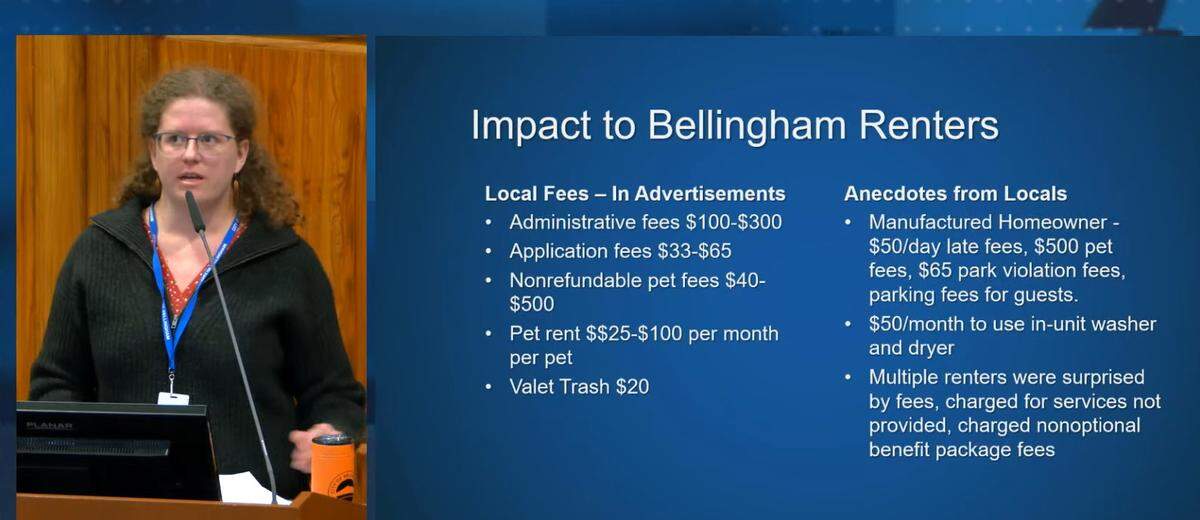
The ordinances, which go into effect Aug. 1, ban what they describe as excessively high late fees, security deposit and pet fees, among others.
But what exactly is included in the ordinance and what recourse does it give renters who believe they’ve been unlawfully charged? Here’s what it says.
Which fees are prohibited by new Bellingham ordinance?
More than it lists the kinds of fees that aren’t allowed, the ordinance lists the fees that landlords are allowed to charge (up to a certain amount) and bans everything else.
Here are the fees landlords are allowed to charge to the tenant of an apartment or rental home:
Application screening fees, (capped at $50 and adjusted each year for inflation)
A security deposit, capped at the price of one month’s rent
A pet damage deposit, capped at 30% of one month’s rent
A utility fee that doesn’t exceed the actual cost of utilities
Fees for any optional good or service that the tenant can easily opt into or out of
Late fees, capped at 2% of the amount owed
A fee if a payment bounces, capped at the cost of the situation to the landlord
A fee for lease violations, capped at $75 each month
Under the ordinance, it’s illegal for a landlord to charge any of those fees if they exceed the stated amount, or charge a fee for any of the following:
Use of in-unit appliances
Access to the common areas of an apartment building
Paying rent by check or using third-party rent payment system
Mail pickup or distribution
Change the tenants on the lease upon the end and renewal of the lease
Pet fees over 2% of one month’s rent, if the landlord also requires a pet damage deposit
Any other fees for something the landlord is required to provide under RCW 59.18.060
Mobile homes and junk fees
The list of allowed fees is slightly different for mobile home lots. Move-in fees are allowed but capped at one month’s rent. The security deposit, pet deposit and lease violation provisions don’t apply, while late fees are capped at 1% of a month’s rent instead of 2%.
Meanwhile, the list of prohibited fees is almost entirely different for mobile homes than apartments. Here’s the full list:
Fees to have a guest that don’t comply with RCW 59.20.060 or exceed the added cost to the landlord
Fees for parking a car within a tenant’s own lot
Fees to access a common area
Charging a tenant extra for not renewing or extending their lease
Pet fees
Fees to pay by check or through the landlord’s preferred third-party payment system
What can a tenant do if their landlord charges junk fees?
If your landlord charges you a fee that you believe violates the new ordinance, you can notify them and ask them to adjust the charge.
But if you opt to take legal action, the ordinance outlines two options. First of all, you can take your landlord to court. If the fee in question is found to violate the ordinance, the law states that you’re entitled to three times the damages caused by the fee or $2,000 ($1,000 for prospective tenants), whichever is higher. The landlord is also liable for twice the amount of any illegal deposit charged, as well as the tenant’s legal fees.
If a tenant refuses to pay the fee and their landlord opts to proceed with an eviction, the new ordinance allows the tenant to defend the eviction on the grounds that the fee was excessive.
The ordinance also prohibits landlords from retaliating against a tenant who brings a complaint related to an excessive fee, as long as it’s done in good faith.
If you’re concerned about navigating the legal system or the cost of legal help, several organizations provide subsidized or free legal resources for tenants.
Law Advocates of Whatcom County offers legal counseling and a hotline to low-income locals. Tenants Union of Washington State runs a hotline dedicated to tenants’ rights.
You can find a statewide list of resources on landlord-tenant law on the Washington State Attorney General’s website, or a local list on the Bellingham Tenants Union website.
Does the ordinance apply to existing leases?
The ordinance states that “any provision of a rental agreement or lease that is entered into or renewed after the effective date of this chapter” is unenforceable. But what about leases that were signed before the ordinance goes into effect?
According to the city’s “frequently asked questions” portion of the city’s webpage about the ordinance, it only applies to leases that start on or after Aug. 1.
This story was originally published July 3, 2025 at 3:12 PM.