
How can rest of Whatcom County help Point Roberts during US-Canada trade war?
Of all the towns and cities that have been affected by the budding trade war since President Donald Trump announced a series of tariffs on imports to the U.S. from Canada, Point Roberts, Washington might have a claim to the title of most impacted.
The exclave, south of Vancouver, British Columbia, is located where the tip of the Tsawwassen Peninsula dips just below the 49th parallel — the cutoff between the U.S. and Canada. As a result, it’s only accessible to the rest of the U.S. by land if you first cross the northern border.
“I maintain, and have for some time, that Point Roberts is unique,” Brian Calder, a Point Roberts resident and former president of the Point Roberts Chamber of Commerce, told the Bellingham Herald in a phone call. “And unique means singular.”
A community of just over 1,000 people, Point Roberts residents need to cross a border or two for some essential services.
“There’s more things we don’t have here than what we do have,” Calder said. “So we don’t have a vet, a drug store, a department store, car wash, fast food outlet, you know, the list goes on and on. We have a part time-doctor here. No dentist. No physiotherapist”
The Point was already struggling to recover from the COVID-19 pandemic, which Calder said changed the travel patterns of Canadians who had previously made a habit of going to Point Roberts on weekends and over the summer.
“Early months of COVID, we thought, ‘OK, this won’t last long,’” Calder said. “I said at the time, if it does last more than six months, we’re not going to reverse our people, our visitors, which are totally our market. Unfortunately, I was proven right.”
Prior to the pandemic, Calder estimates that The Point’s marketplace would get 5,000 visitors on a given weekend. But the border closure changed that, and the visitors haven’t come back.
“It changed people’s habits,” Brian said. “Historically, and this goes back literally four generations, when Canadians discovered Point Roberts and started building small cabins here in the ‘30s and ‘40s, and Point Roberts became the default place they went every summer.”
As The Point was trying to recover from its last setback, the trade war has set its economy back again.
How U.S.-Canada trade war is impacting Point Roberts
Tamra Hansen, who owns two of the three restaurants on The Point, said that early numbers indicate she’s lost over half of her cross-border visitors.
“I’m going on to my 10th year at the Saltwater Cafe, and I’m down 55% in through-border, through my reports in February,” Hansen said in a phone interview.
The reduction in visitors has been a result of emotions as much as policy, according to Allison Calder, a Point Roberts resident who leads Whatcom County’s Point Roberts Community Advisory Committee.
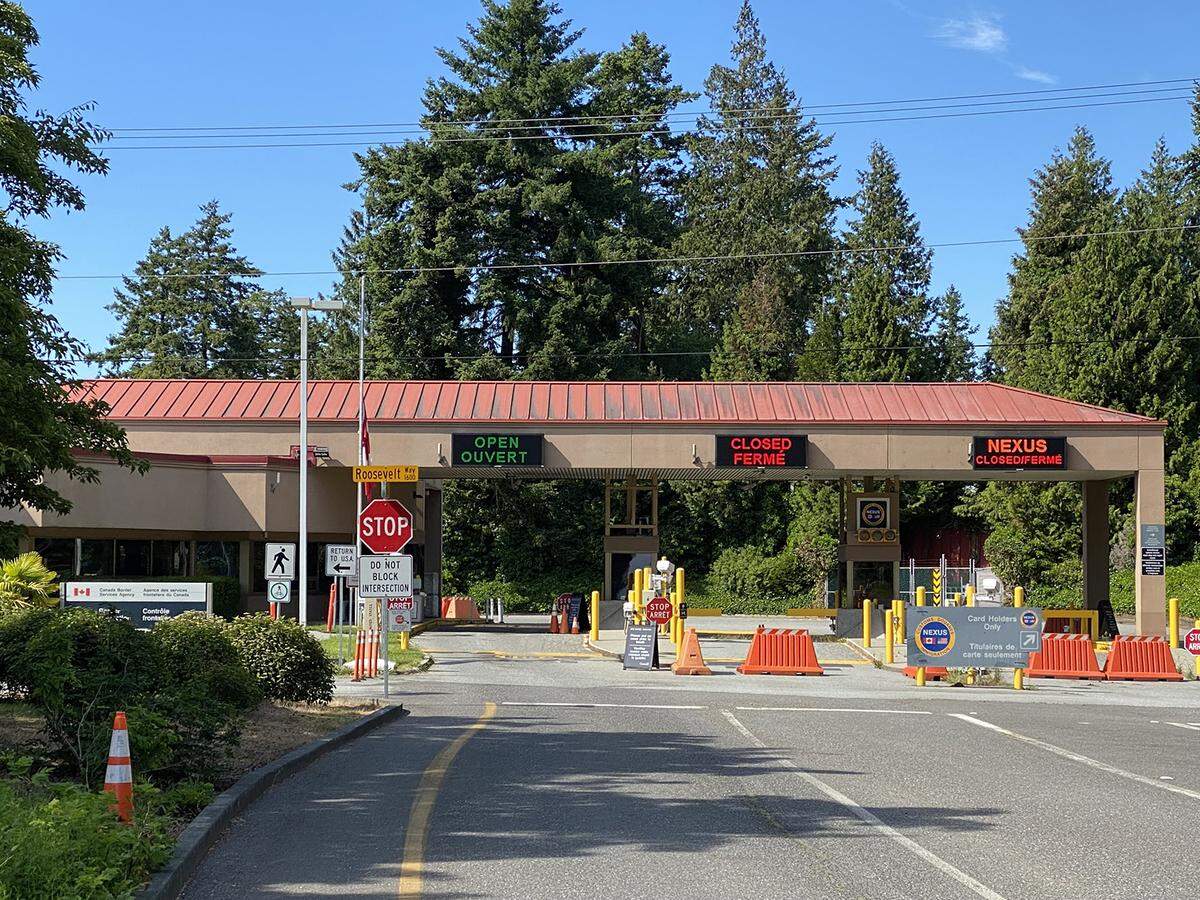
“It’s mainly the emotional aspect of the tariff war, where you have some Canadians saying, ‘I’m not going to the U.S., period,’” Calder, who’s a relative of Brian’s through her husband’s family, said in a phone interview.
However, the tariffs play a role as well. The Point’s parcel depots, once a mainstay of the local economy, have been hit particularly hard, according to Allison Calder.
“The tariffs going back into Canada is stopping people from buying things, having them shipped to the local parcel depots, coming and picking them up, because when they go back into Canada, they’re getting a duty and tariff,” Allison said.
The retaliatory tariff imposed by the Canadian government on U.S. goods currently stands at 25% for most categories. Should that number increase significantly, Brian said he thinks it could damage Point Roberts beyond recovery.
“Half of us here are dual [citizens]. And then 70% of our property is owned by Canadians. Ninety percent of our economy, all of our water, all of our power … I mean, if they ever retaliate to the extent of cutting us off, we’re done,” Brian said.
Point Roberts’ complicated relationship with Whatcom County
As The Point searches for solutions, some have turned to the county and state government to help resolve the crisis.
“I’m really concerned because I am not getting any support from Whatcom County,” Hansen said. “I talked to the Governor’s Office last week through the chamber, and they said they were going to reach out and help us, but then they were asking, ‘Well, what kind of help do we need?’ I don’t need to go into further debt by any kind of loan with a low percentage. I need a solution where they can work with the B.C. government to alleviate the angst that’s going on between Point Roberts, between the border.”
Brian said he had a similarly frustrating experience trying to contact Washington authorities.
“We’re trying to be proactive. I certainly am proactive but we’re getting precious little support from our own governments. Whatcom County and Olympia, the state reps, we’re getting nothing. We’re getting the lip service, but nothing,” Brian said.
Brian has had better luck working with government officials in B.C. He said he’s met with the mayor of Delta, B.C., who passed along his concerns to the premier of British Columbia.
“Mayor George Harvie saw my appeal, and he called me up: ‘Can we meet at Saltwater Cafe Friday at 9?’ So we sat at Tamra’s cafe for two hours and discussed how he can further help Point Roberts,” Brian Calder said. “He has no jurisdiction here, and he has the heart to think of us, ask for a meeting, come down.”
According to Allison Calder, however, Whatcom County has been receptive to Point Roberts residents’ concerns.
“This has really only been over the last three or four years that we’ve actually started to get a good working relationship with Whatcom County,” Allison said. “Prior to that, we had no relationship with Whatcom County.”
Calder said that the seven-member advisory committee, which meets once a month, had been working with the county on ways to mitigate the impacts of a potential border disruption even before the trade war began.
“We’ve actually been working on things prior to the trade war to try and make Point Roberts, after COVID, a more sustainable community, just in case something again like COVID happened,” Allison Calder said.
Much of that work has focused on building a more sustainable local economy that doesn’t rely entirely on cross-border traffic. Allison said that getting residents access to high-speed broadband and developing Point Roberts’ drainage infrastructure have been two of the top priorities of the committee so far.
“We’re getting more and more people that work for Google, Microsoft. They have part-time homes here, but would like to make them full-time and they can’t because of our internet,” Allison said. “So that’s partly why we’re pushing the internet, because we are getting a lot more people wanting to move here, and actually younger people wanting to move here that can telecommute.”
Brian Calder, however, said that some residents of the area are skeptical of the advisory committee and its work.
“It’s appointed by them,” Brian said. “It’s not elected here. And I’ve made the argument if you want to have this kind of thing at all, and I’m not sure we should, but if you do, elect it.”
Allison said that she understands the reluctance to believe that Point Roberts’ relationship with Whatcom County is improving but that focusing on the past issues is unproductive.
“I don’t think [it’s] going to take us that long to have the relationship we need,” Allison said. “I think over the next year or so, if we continue and have people who are willing to work with the county, there are members of the county that are willing to work with us.”
Whatcom County Executive Satpal Sidhu said he’s hopeful the county can find ways to assist Point Roberts and foster relations with the county’s Canadian neighbors.
“We have one of the most unique communities in the nation in Point Roberts,” Sidhu told The Herald through a spokesperson. “And we cannot let our residents become victims in this international conflict. We must protect our people and local businesses in Point Roberts, and ensure they have the support they need to weather this storm. ... No matter the national news, know that our relationship with our Canadian neighbors is long and deep, and I hope we can restore our shared connection. Not just for Point Roberts but for the sake of all our residents.”
On Monday, Sidhu met with Gov. Bob Ferguson’s team in person and raised the specific challenges facing Point Roberts, according to a member of Sidhu’s staff. Sidhu has also been in contact with our federal delegation since Trump’s trade war began. Key concerns include the ability for Point Roberts residents to travel through the border during times of increased tension and the impacts of tariffs on the day-to-day expenses of Point Roberts residents and businesses.
How Whatcom County residents can help Point Roberts
So what do Point Roberts residents want to see from their Whatcom County neighbors?
According to Allison, the best thing that Whatcom County residents can do to help Point Roberts is simply to visit.
“What I would like to see is maybe people in Whatcom County venturing and making the 30 [to 50] minute drive to Point Roberts, exploring our lovely little town, checking out our parks, and enjoying something that is, I think, a hidden gem of Whatcom County,” Allison said.
Visiting from mainland Whatcom County requires crossing two borders, so Point Roberts businesses don’t expect too many visitors from northwest Washington, according to Hansen.
“There was a couple of people from Lynden that came in, and one from Ferndale,” Hansen said. “But it’s minimal, because they have to cross two borders themselves.”
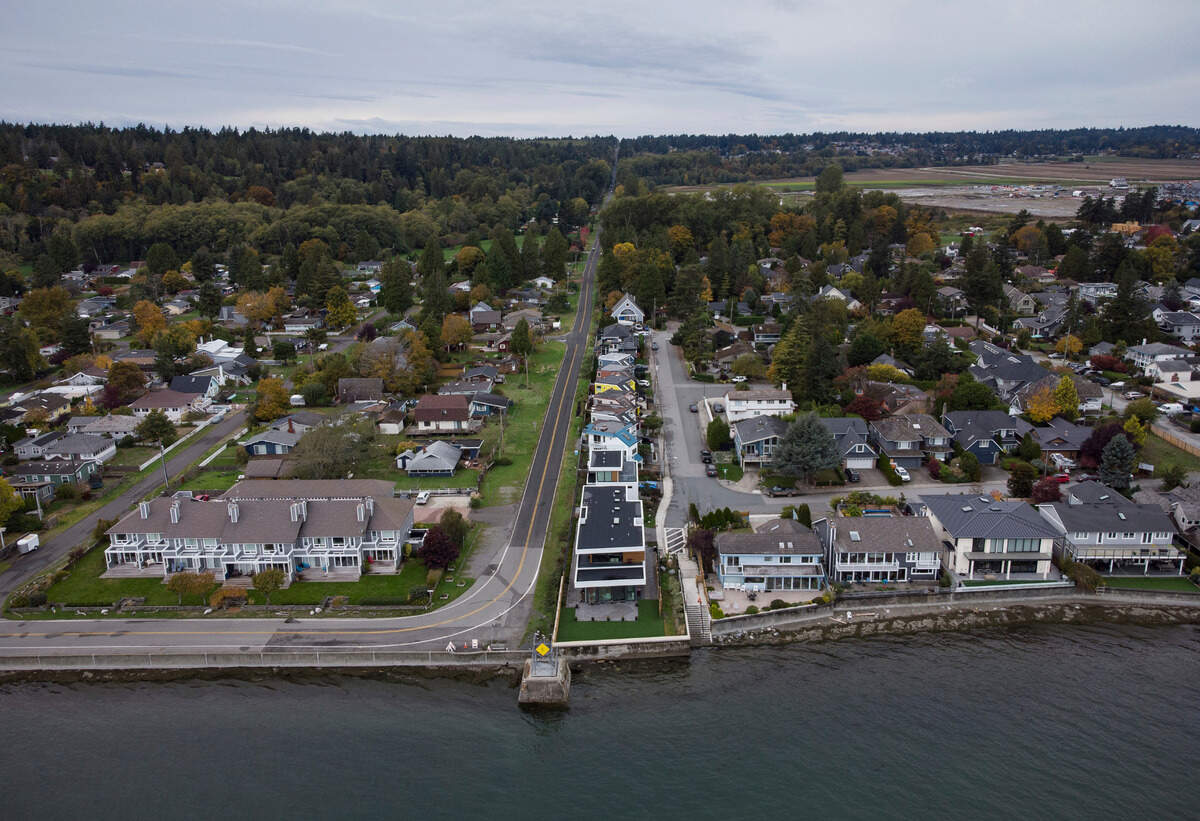
Much more commonly, British Columbia residents will make a trip to Point Roberts, especially when its struggles are getting media attention.
“I am seeing the Canadians are coming to support me as much as they can,” Hansen said. “I mean, they’ve got a dollar that’s weak right now, so that doesn’t help, but I will tell you, it’s been quite an emotional week [when the tariffs kicked in] when I had people coming up Canadians saying, ‘We are here to support you.’”
However, visitors from Bellingham and even further south aren’t unheard of.
“Last summer, I had people coming up from Seattle,” Allison said. “I did have some people come over that were from Whatcom County, ‘I saw point Roberts on the news. Never been there. Decided to come.’”
According to Allison Calder, Point Roberts has a lot to offer Whatcom County residents who are willing to give it a try due to its quiet, isolated nature, its coastline, views and sense of community. The main problem, according to Calder, is that Point Roberts is out of sight and out of mind for most of the county.
“A lot of people don’t know we exist. They don’t know we’re part of Whatcom County,” Allison said. “I’d like them to just come visit. Come see us. Enjoy what we have to offer that is not anywhere else in Whatcom County.”
This story was originally published April 17, 2025 at 5:00 AM with the headline "How can rest of Whatcom County help Point Roberts during US-Canada trade war?."