Bellingham, Whatcom officials race to fight fentanyl crisis. These are the numbers
A new Bellingham law criminalizing drug use in public, the death of 15-year-old girl last month, and the arrest last week of three people for murder in the death of a 5-year-old girl illustrate the scope and humanity of the nationwide fentanyl epidemic that’s grown exponentially in recent years.
Total overdose deaths in Whatcom County increased to 89 in 2022, up from 50 in 2021, according to the Whatcom County Medical Examiner’s Office.
A little more than half those overdose deaths were linked to fentanyl, records show.
Accurate overdose and overdose death figures for 2023 were not immediately unavailable, but Bellingham firefighters are treating patients for suspected overdoses at the rate of 2.5 a day this year, Mayor Seth Fleetwood told the City Council last week.
As recently as 2019 — one year before the pandemic — there were 17 total deaths by overdose in Whatcom County, with four linked to fentanyl, according to data from the medical examiner.
“We’re in a crisis that has grown really, really fast,” Fleetwood told the City Council as they were discussing the issue during a Tuesday, April 11, committee meeting.
At the City Council meeting later that night, the parents and sister of the 15-year-old girl who overdosed March 8 implored officials to consider fentanyl a public health crisis.
“(Emily) died alone in a tent, in depravity,” said her mother, Julia Menke.
“I think we need to address children. Teenagers, by nature, are experimental, inquisitive, incredibly impulsive. And they think they’re immortal. They want go out and have fun, they want to party but they’re dealing with a whole new deadly drug,” Menke said.
In recent weeks:
▪ Emily, 15, died of a suspected fentanyl overdose.
▪ A 5-year-old girl died of a fentanyl overdose and three people are facing murder charges.
▪ Arne Hanna Aquatic Center was closed for a day after a man died of an apparent overdose.
▪ Bellingham City Council, at Fleetwood’s urging, passed a law making public drug use a misdemeanor subject to arrest, in the same way that using alcohol or marijuana in public is a civil infraction. The measure takes effect Tuesday, April 25.
Deadly drug
A total of 71,238 people died across the U.S. of fentanyl overdoses in 2021, up from 51,834 in 2020, according to the U.S. Centers for Disease Control and Prevention.
Fentanyl, which was nearly unheard of five years ago, has now become the street drug of choice because it’s cheap, easy to get, and easy to use.
It’s a synthetic opioid, a prescription painkiller that’s about 50 times more powerful than heroin, according to the FDA.
It comes in pills that can be taken orally or smoked, and doesn’t need to be injected like heroin, according to the National Library of Medicine.
But its euphoric high also suppresses the respiratory drive and users can simply stop breathing.
‘Therapeutic court’
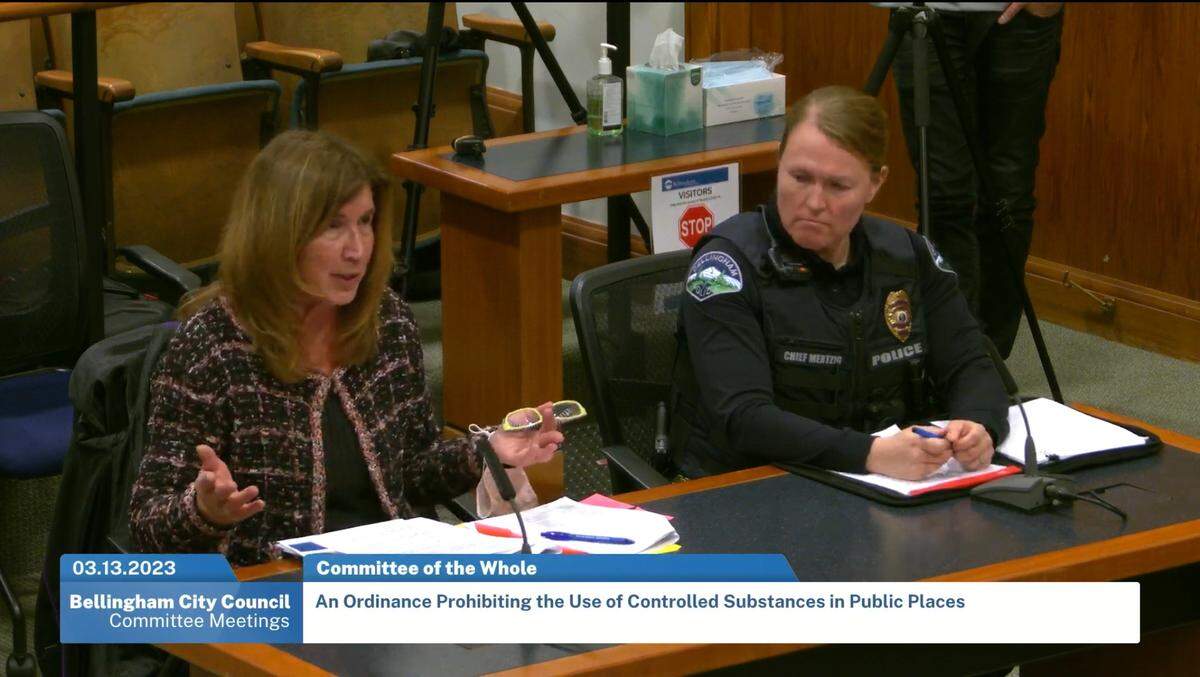
Fleetwood, working with Municipal Court Judge Debra Lev and others in the legal system, hopes to create a “therapeutic court” that can help drug users, especially those living on the street, get free of addiction, find work and a place to live.
“Community courts generally take an individual and trauma-informed approach rather than the traditional punitive approach typically seen in the criminal justice system,” Lev said in a statement at the city’s website.
“Community courts use a collaborative, problem-solving approach to crime. They provide practical, targeted solutions working to find housing services, education, employment, alcohol and drug rehabilitation, behavioral health services, veterans services and other social connections.”
Addressing the crisis
Officials at the Whatcom County Department of Health and Community Services are also seeing an alarming rise in overdoses.
Data reported statewide to public health officials show a rise in emergency room visits related to drug overdoses by Whatcom County residents, said Marie Duckworth, a Health Department spokeswoman.
Data collected from Whatcom County residents at all medical facilities in the state shows that In the last five months:
▪ Overdose-related emergency visits for any drug have increased by 60%.
▪ Emergency room visits for overdoses have doubled.
▪ Fentanyl-identified emergency visits have nearly tripled.
Erika Lautenbach, director of the county Health and Community Services Department, told The Bellingham Herald that her agency “has a multi-pronged approach to addressing substance use and overdoses” that includes prevention efforts, education and treatment.
“We recognize that this is both a national emergency and a local crisis,” Lautenbach said in an email.
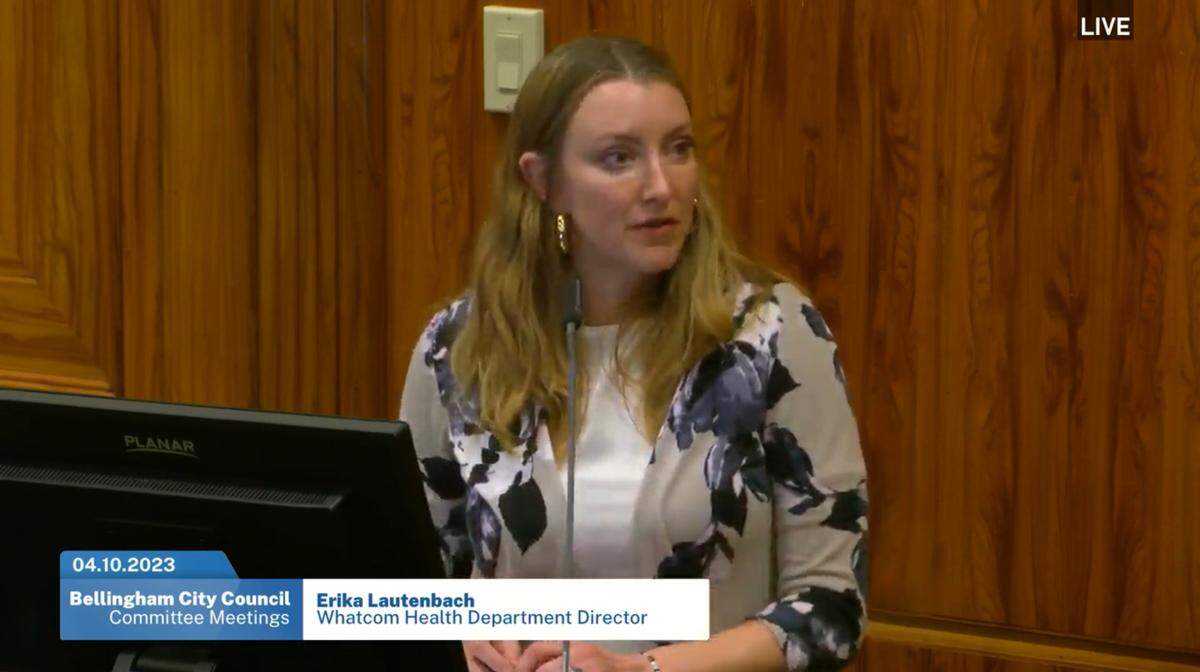
“Our strategies start with primary prevention services, which include partnerships with school and community-based organizations that deliver evidence-based programs to prevent substance use among youth. The department also works with a number of prevention coalitions to promote risk reduction strategies. This includes efforts such as promoting safe medication storage, proper disposal, and asking parents and caregivers to talk with youth about the risks and harms of substance use,” Lautenbach said.
Health Department workers also train people to recognize when someone may have overdosed, and their Harm Reduction Program provides free Narcan, an easy-to-use nasal spray that can reverse an overdose.
In 2018, they gave away 487 Narcan kits, Duckworth said.
Last year, that number was 1,195.
This year so far, they’ve distributed 816 kits of two doses each, she said.
In addition, the Health Department offers help to those who want to fight addiction, Lautenbach said.
“Our Response Systems programs also work with people who are familiar faces of emergency services to voluntarily get them connected with supports that can include treatment for substance use, along with other wrap-around care that they might need like housing, mental health, and other basic needs,” she told The Herald.
“We know that when someone’s basic needs are being met they are more likely to become stable and avoid relapse,” Lautenbach said.
This story was originally published April 16, 2023 at 5:00 AM.
CORRECTION:
The number of people who died across the U.S. of fentanyl overdoses in 2021 was corrected Monday, April 17, 2023.