More housing could be coming to Fairhaven. But what will that do to parking?
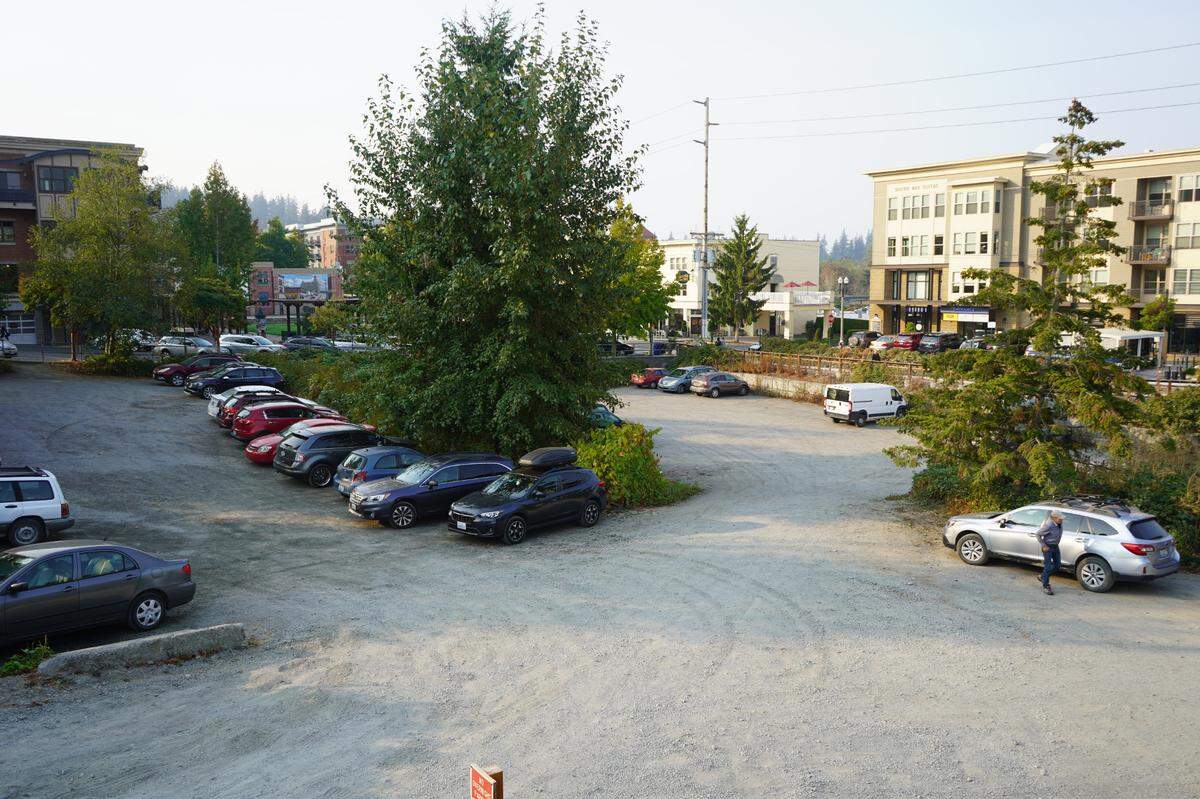
A gravel parking lot in Fairhaven is on track to be the site of a new mixed-use development project, but it’s unclear still exactly what that project will look like.
The proposed development lot sits between 10th and 11th streets and Mill and Knox avenues, along the South Bay Trail.
There are two possible design proposals — one that fits zoning requirements for the Fairhaven Urban Village, and one that doesn’t.
Both designs are about 15,000 square feet and include garage parking, commercial space and more than 100 residential units.
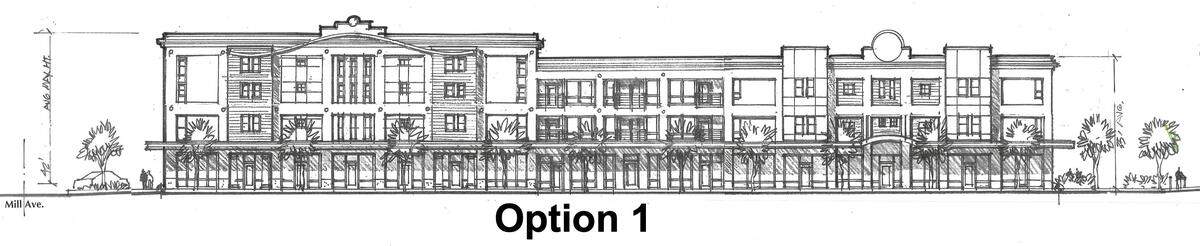
The first design option is one, three-story building with parking on the basement level, business spaces on the ground floor and residential units above.
It meets the area’s height zoning requirements by not exceeding three stories.
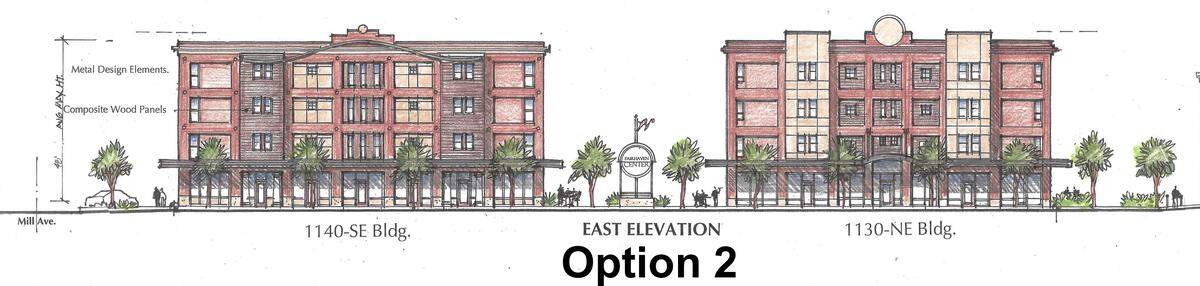
The second design option, the design preferred by project architect David Christensen, is about the same in terms of square footage, but it proposes four smaller buildings reaching four stories each.
It includes two levels of parking, adding paid parking stalls for the public, and an open corridor down the middle of the site to maintain a view of the waterfront from 11th Street.
It also adds pedestrian connectivity from the Fairhaven Village Green on Mill Avenue to the north and allows for the possibility of 20% affordable housing in the residential units, according to Christensen.
“Through multiple talks with the community, this sounds like the better option,” Christensen said.
The second proposal doesn’t meet the area’s zoning requirements because it exceeds three stories in height.
But, with local businesses and residents being mainly concerned about a loss of parking and a view, this design could better serve the community, according to Christensen.
Avenue Bread on 11th Street in Fairhaven is directly across from the proposed project site and stands to be impacted by the development. General manager of the eatery, Lanette Tualaulelei, said it would be tough to lose nearby parking, but it’s also expected as the community expands.
“It’s growing pains and it’s tough to lose parking but we’re a city now. Cities grow,” Tualaulelei said. “People will find alternate ways and we’ll adjust.”
Still, Tualaulelei said, she hopes the development will include options for nearby businesses to ensure parking for staff members.
The Historic Preservation Commission is expected to decide whether the proposals fit design standards at a meeting later this month. If both designs are recommended by the Historic Preservation Commission and the city Planning Director, the proposal that doesn’t align with existing zoning standards will be moved through the Planning Commission and eventually make its way to City Council for a final decision.
To approve the second proposal, a zoning text amendment will be required for the specific project. If the zoning amendment does not get approved, the first proposal will be moved forward instead.