What can be done to make housing affordable again? Whatcom officials consider these ideas
Andy Koch’s story about trying to find a place to live is a familiar one not only across the U.S., but in Whatcom County.
Koch, a performing artist and founder of the Badd Dog Blues Society band, is currently in the process of getting a Habitat for Humanity in Whatcom County home after completing 400 sweat equity hours building homes for others. The final 100 hours of sweat equity will go to his house.
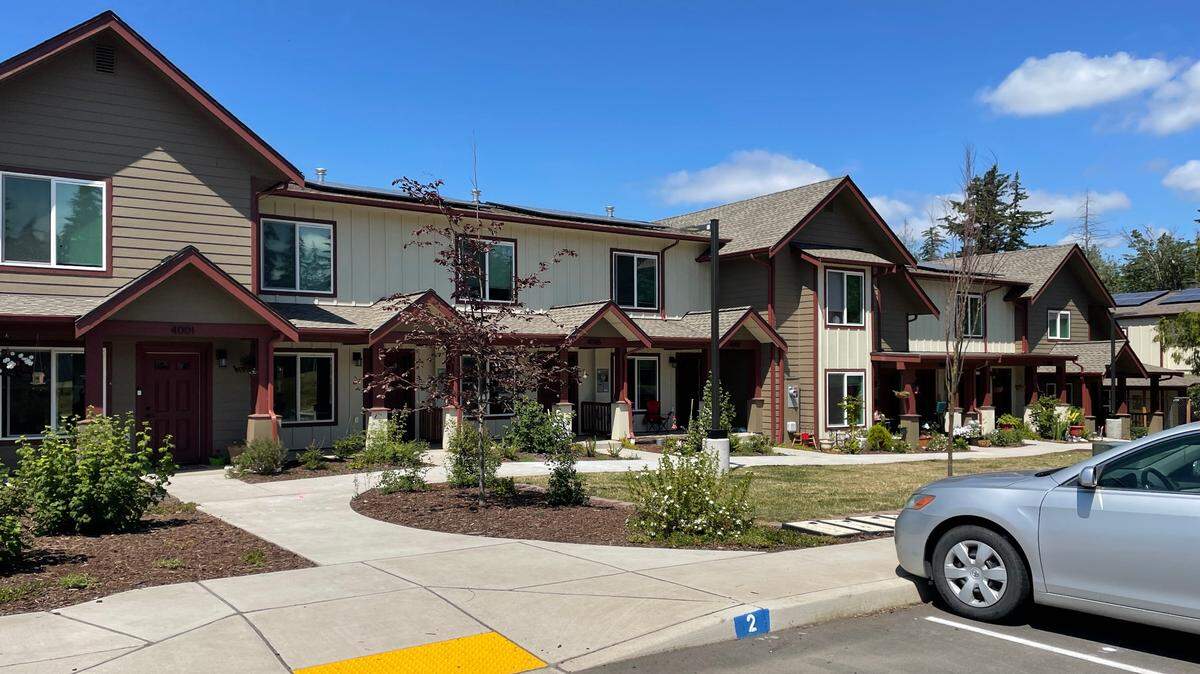
Koch was one of the many attendees of a ribbon-cutting ceremony held last month for the unveiling of four permanently affordable homes as part of a larger Telegraph Townhomes project headed by Kulshan Community Land Trust. Habitat for Humanity in Whatcom County and Whatcom Community Foundation also played major roles in the project that will have 23 townhomes.
Koch owned a home in Bellingham in the 1990s but sold it before the market really took off. He was renting until recently when the landlord died and the resulting change in ownership left Koch without a place to live. With the pandemic putting a crimp on live music performances, Koch turned to Habitat for Humanity and began building homes while living in an RV on property owned by friends.
While the idea of becoming homeless was scary for Koch, he knows he’s in a better situation than many others. Building homes while waiting for the pandemic to ease so he can resume his career turned out to be a huge deal.
“Pre-COVID, it would take a couple years. I’m in a holding pattern right now,” said Koch, referring to the opportunity of acquiring a new home through Habitat for Humanity. “But I’ve very happy to have had this opportunity. It has turned my life around.”
‘Housing wage’
Buying or renting a home on one income has become very difficult to do in Whatcom County. The National Low Income Housing Coalition recently released a report estimating that someone renting a two-bedroom home in the 98225 Bellingham ZIP code would need to have a “housing wage” of $25.19 an hour. The organization defines the housing wage as what a full-time worker must earn to afford a rental home without spending more than 30% of their income on housing.
That $25.19 an hour for a housing wage equates to nearly $52,400 a year. In 2021, the median hourly wage in Whatcom County was $25.48, according to data from the Washington State Employment Security Department. That means about half the workforce would need a spouse or roommate to generate a second income to be able to afford a typical two-bedroom home.
“As we’ve seen during the pandemic, many of our essential workers make less than that,” said Paul Schissler, a Bellingham business management consultant who has had a career in local community planning, particularly around affordable housing. “It’s a drag on the local economy when you have this housing cost.”
The Telegraph Townhomes project is one example of trying to create some permanently affordable housing options in the community, but it’s difficult to make a sizeable dent. Since 1999 Kulshan Land Trust has built more than 220 of these low- to moderate-income households that remain permanently affordable. As of July 2021 Whatcom County has nearly 102,000 housing units, according to U.S. Census data.
“It used to be that you could pay bills and save to buy a house, but property and homes are so expensive now,” Koch said. “Now it feels like the hamster wheel is spinning too fast. People are working hard but they can’t keep up.”
Outstripping supply
The housing crunch is particularly acute right now. Whatcom County is a desirable place to live for many, and the pandemic/rise of remote work made it even more so, said Dean Fearing, executive director at Kulshan Community Land Trust. Between the people already here and the number of moving into the area, demand is far outstripping supply.
Add in the higher interest rates and suddenly a wide range of people in different income brackets are finding it difficult to buy a place, pushing potential homebuyers into the rental market. In June, Whatcom’s affordability index was at 53.6, the lowest level in at least the past two decades. The affordability index measures the ability of a middle-income family to carry the mortgage payments on a median-price home at current interest rates. Anything below 100 means it is less affordable for a typical middle-income family.
A typical household in Whatcom County can afford a $320,000 home. The median price of a home in Whatcom County is almost double that, at $610,000 said local appraiser Braden Gustafson.
The Telegraph Townhomes near Home Depot are being priced between $165,000 and $235,000, with buyers needing to be within certain income levels to buy. That’s led to a record-long list of applicants, said Dean Fearing, executive director at the Kulshan land trust.
“Things will stay the same for the foreseeable future,” Fearing said at the Kulshan event last month, noting the pressure of people moving here remains very strong.
Community housing
In trying to ease the housing crisis in Whatcom County, officials are talking more about raising the number of permanently affordable homes in the community. Schissler believes around 10% of Whatcom County’s housing units are in that affordable, below-market-price category.
“The point is that a small fraction of homes are not market price, while over half of all workers in Whatcom need a home that is more affordable than market price,” Schissler said. “The long-term solution for a healthy economy and community is a variety of homes sizes, types, and prices that match the incomes and demographics we have here, including for essential workers and people with a low, fixed income.”
As government officials try to address this problem, one thing they are looking at is the idea of boosting the percentage of homes that are not market driven.
“Affordable housing is the latest buzzword, but we should be looking at building more community housing,” said Whatcom County Executive Satpal Sidhu, adding that this area should have more community housing options that work alongside private housing.
One example he gave is having Kulshan Land Trust work with a private developer where a percentage of the houses/apartments/townhomes built would be managed by the non-profit organization.
“I think nonprofits are the right organizations to do this,” Sidhu said in a telephone interview, adding that it shouldn’t be a government program, although governments can help in other ways, such as helping secure grants or provide land. “It should be people, not government, managing it.”
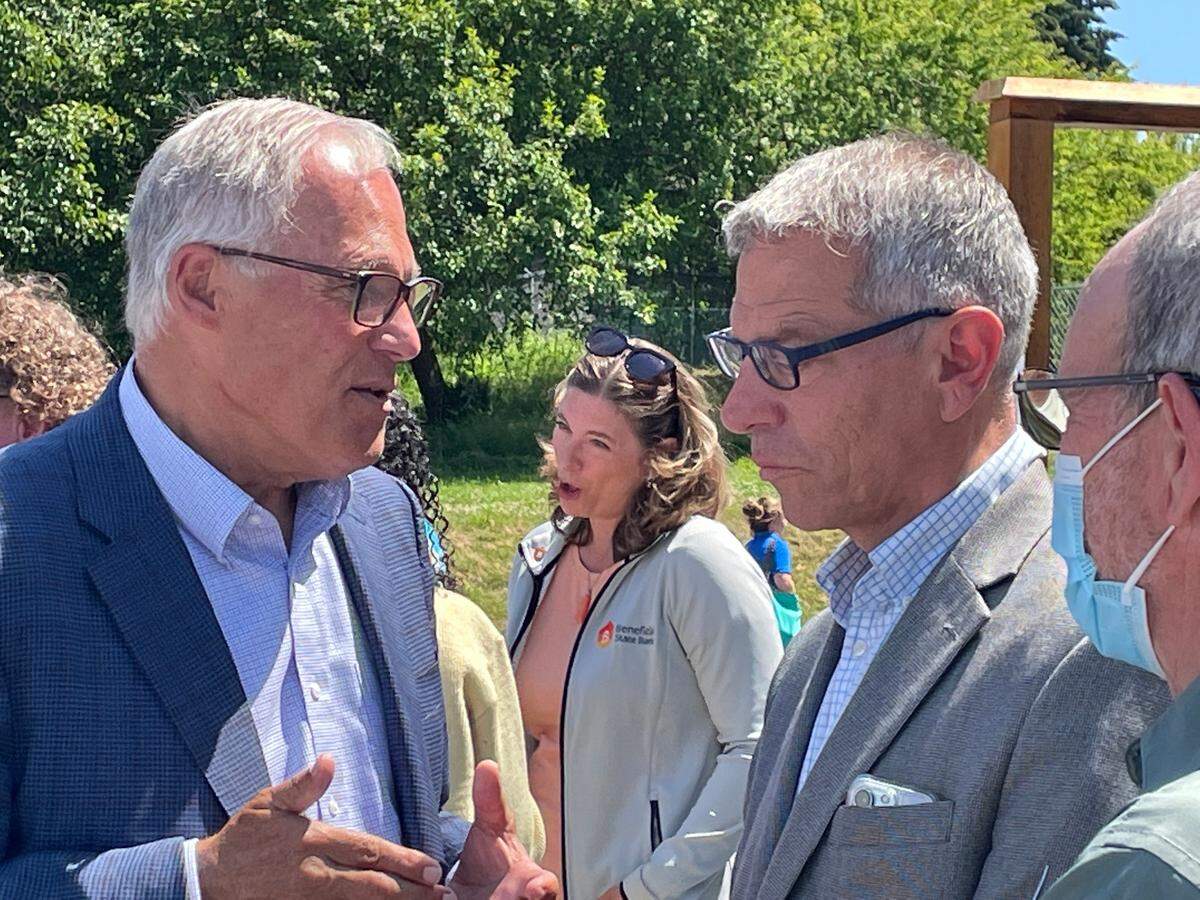
In his remarks at the Telegraph Townhomes grand opening event, Gov. Jay Inslee noted that not enough housing has been built across the state. He noted that government regulations prevent a lot of land from being developed, something he hoped will be addressed at the next legislative session.
Mix of homes
A recent study estimated that Whatcom County had around 4,700 fewer homes than it needed in 2019. That was up from just over 2,000 homes needed in 2018. The study came from Up for Growth, a Washington, D.C.-based nonprofit research group.
Another possible way of achieving a stable housing market is to improve the mix of homes in the area, said Bellingham Mayor Seth Fleetwood. An example would be adding more townhomes and duplexes in areas normally set aside for single-family construction. However, that could mean changing zoning or other regulations, something that’s a challenge in established neighborhoods.
“Balance is the key, and right now everything is unaffordable,” Fleetwood said. “We have high-level policy direction, but we have to do a better job actively implementing it. That will involve some political challenges.”
Along with supporting rules that would make it easier to build mixed-use housing like townhomes, Fearing noted programs like the Bellingham Home Fund and donations to permanently affordable housing programs.
As for Koch, he remains optimistic that while the process is slow, he will eventually have his own home.
“Right now I’m a happy camper,” Koch said.