Feeling inflation’s pinch? Bellingham Food Bank says you’re not alone, help is available
Despite being closed for the Independence Day holiday, the Bellingham Food Bank set a record for the number of families served during the first full week of July.
Spurred by increased demand as more Bellingham residents feel the impact of recent inflation, the Food Bank helped approximately 3,300 families July 3-9, Executive Director Mike Cohen told The Bellingham Herald. That is the highest weekly number in the 50-year history of the Bellingham Food Bank.
That’s not just a one-week spike. Business has been accelerating in recent weeks, Cohen said, after the Bellingham Food Bank helped approximately 2,000 families a week during COVID.
“We are seeing steady increases for, really, the last year, and the latest bit of inflation is certainly adding another push,” Cohen told The Herald. “Our Food Bank is about twice as busy as we were right before COVID started, and we saw big increases start at the turn of the calendar year when some of those pandemic benefits were ending, like the child tax credit.
“As summer has progressed, we have been getting increasingly busier.”
The Bellingham Food Bank is not alone in seeing that increase, as Cohen said other food banks in Whatcom County have experienced similar steep increases in recent weeks.
In fact, it’s a trend that’s being seen nationwide.
The Associated Press reported that with gas prices soaring along with grocery costs, many people are seeking charitable food for the first time. Inflation in the U.S. is at a 40-year high and gas prices have been surging since April 2020, with the average cost nationwide briefly hitting $5 a gallon in June. Rapidly rising rents and an end to federal COVID-19 relief have also taken a financial toll.
The food banks, which had started to see some relief as people returned to work after pandemic shutdowns, are struggling to meet the latest need even as federal programs provide less food to distribute, grocery store donations wane and cash gifts don’t go nearly as far, AP reported.
Food bank workers predict a rough summer keeping ahead of demand, as the surge in food prices comes after state governments ended COVID-19 disaster declarations that temporarily allowed increased benefits under SNAP, the federal food stamp program covering some 40 million Americans.
“It does not look like it’s going to get better overnight,” said Katie Fitzgerald, president and chief operating officer for the national food bank network Feeding America. “Demand is really making the supply challenges complex.”
Fitzgerald called on the U.S. Department of Agriculture and Congress to find a way to restore hundreds of millions of dollars worth of commodities recently lost with the end of several temporary programs to provide food to people in need, AP reported. USDA commodities, which generally can represent as much as 30% of the food the banks disperse, accounted for more than 40% of all food distributed in fiscal year 2021 by the Feeding America network.
Buying more food
“It’s tight,” Cohen said. “We’re forecasting a pretty significant deficit this year, because we’re buying more food than we have at any time in our history, which is great, because I think it shows the true cost of running a food pantry for hungry folks.”
This year, that means the Bellingham Food Bank is expecting to make $3 million in purchases, Cohen said. Last year the Food Bank spent less than $1 million, though Cohen said those numbers are not as comparable as they would seem due to the change in the way the Bellingham Food Bank is operating.
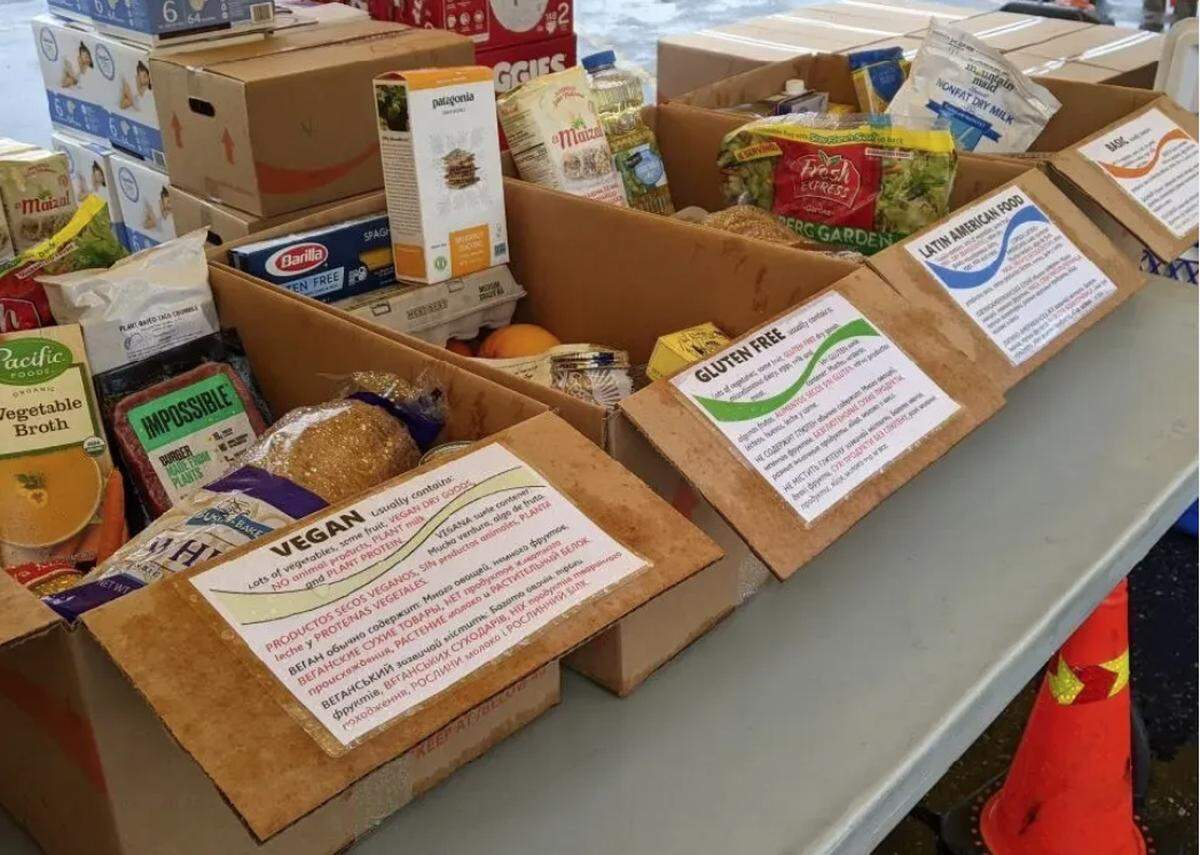
The Food Bank still gets as much donated food as it can, but is now focusing more on purchasing what is missing from those donations to meet what shoppers have told them they need and want.
Bellingham Food Bank shoppers said they needed more food and different options than what was previously being offered through donations and purchases, Cohen said, and the Food Bank has responded by trying to purchase food to fill those requests.
“We, like many food pantries, are recognizing that in other times in our history we haven’t done as good a job of giving people the food most familiar to them and the food cultures that they come from and are still used to eating,” Cohen said. “So we are trying to diversify the food that we offer.”
The Bellingham Food Bank also is attempting to make sure it offers food based more on what each family needs, rather than the food bank’s inventory, Cohen said.
“We’re now no longer limiting a family of five to one tomato per visit,” Cohen told The Herald. “We’re now buying as much as we think the families need, based on what the families are telling us and how quickly it’s leaving our Food Bank.
“I think we’re doing a better job in the community of giving lower-income folks the food that they really want and need, and not just what we can get in through (food) donations.”
Helping and getting help
Donations from the Bellingham community are still definitely needed.
“We have a really generous donor base for both food and monetary support,” Cohen said. “Honestly the thing we’re most short on right now is dollars to purchase the food that we know we don’t get enough of through donations and through other sources.”
Online donations can be scheduled through the Food Bank’s website, Cohen said, adding that monthly donations can be scheduled for those who wish.
For those who are feeling the pinch and need to turn to the Food Bank, the downtown location at 1824 Ellis St. is open from 10 a.m. to 6 p.m. Mondays, Wednesday and Fridays.
“We try to make our food bank as easy to visit as possible,” Cohen told The Herald. “We know it’s not where people want to turn to do their shopping, but we try to make this a friendly, upbeat place with a lot of really good, fresh, healthy food.”
Despite the increased demand, Cohen said the only time lines have been long is the first 30 to 40 minutes after the Food Bank opens.
Pre-packed food boxes also can be picked at the drive-up food bank Tuesdays from 3 p.m. to 6 p.m. in the parking lot outside Christ the King Church at 4173 Meridian St. Additionally, the Food Bank offers home delivery of food boxes, and currently is distributing approximately 500 deliveries per week.
“Another way that people can help, is that home delivery program,” Cohen said. “We are in desperate need of volunteer drivers. ...You can really help your neighbor out if you have the means.”
Boxes of food typically weigh between 25 and 30 pounds, and delivery shifts typically last an hour or two on Friday mornings, Cohen said. Volunteer sign up is available on the website.
If you are having trouble seeing or accessing the poll above, click on this link.