Here’s what you can do to help Bellingham remain a special place for trees
Bellingham city officials are asking for residents’ help as they create their first Urban Forestry Management Plan, a bible of sorts to guide the use of tree cover in the same way that the city sets goals for development of roads, sidewalks and bike paths.
Their first step was to publish a “State of the Urban Forest Report,” a 31-page document that examines the parts of Bellingham that have the most trees and explains the benefits trees provide for city residents.
Now comes the next step: Learning what Bellingham residents want.
Developing such an urban forestry plan is something that more U.S. and Washington state cities are doing, said Renee LaCroix, assistant director of the Public Works Department’s Natural Resources Division.
“It will provide us with a strategic plan and a road map moving forward for the vision that the community will help us create,” LaCroix told The Bellingham Herald.
“If we don’t have a strategic plan, we end up looking like Seattle,” and without trees in some areas, LaCroix said.
To promote the plan, the city is hosting an in-person open house from 1-3 p.m. Sunday, May 15, at the Bellingham Public Library, 210 Central Ave., and an online open house from 6:30-8 p.m. Wednesday, May 18.
It’s also using its Engage Bellingham website to spark a conversation about trees and their role in the urban environment.
“Our city is populated with magnificent trees, and they are an essential part of what makes Bellingham beautiful,” said Mayor Seth Fleetwood at the city’s website.
Why trees?
Trees provide habitat for creatures great and small, hold back stormwater, stop erosion, remove carbon dioxide and add oxygen to the air — among other benefits that are tangible and intangible, according to the city’s report.
“They give us shade, they give us food, they give us medicine. They give us so much and ask for so little in return,” said John Wesselink of Bellingham, a tree enthusiast who’s mapped the various tree species in about a dozen local parks.
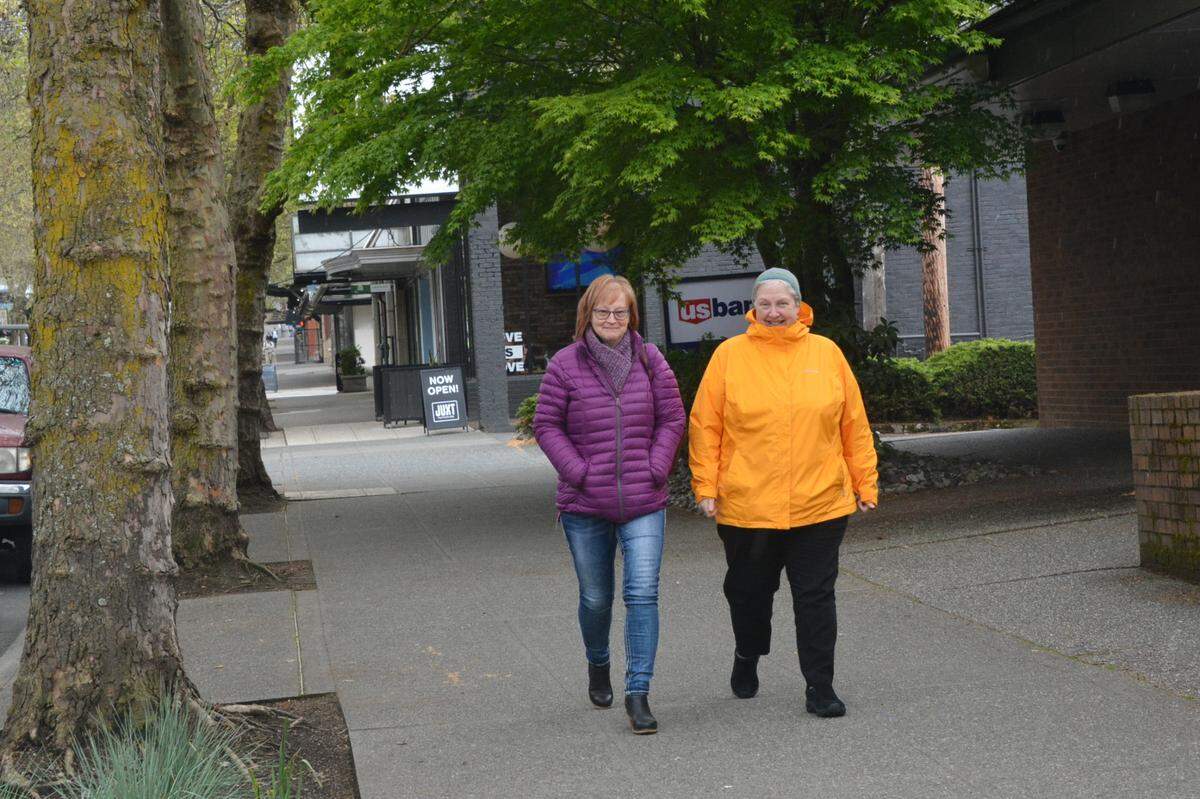
Members of the fledgling Whatcom Million Trees Project are anticipating the city’s management plan and have been planting and protecting trees for the past year, said Michael Feerer, the group’s executive director.
“We’re taking a more ‘boots-on-the-ground approach,’ ” Feerer told The Herald.
“There’s no reason to wait. We have a climate crisis on our hands,” Feerer said.
He encouraged Bellingham residents to be part of the process to draft the city’s tree plan.
“As a community, we’re pretty blessed in terms of parkland, but when you look at Whatcom County as a whole, we’re actually experiencing a loss,” Feerer said.
“Now is prime time for people to get engaged in the process. It’s time for community input,” he said.
Mapping the ‘forest’
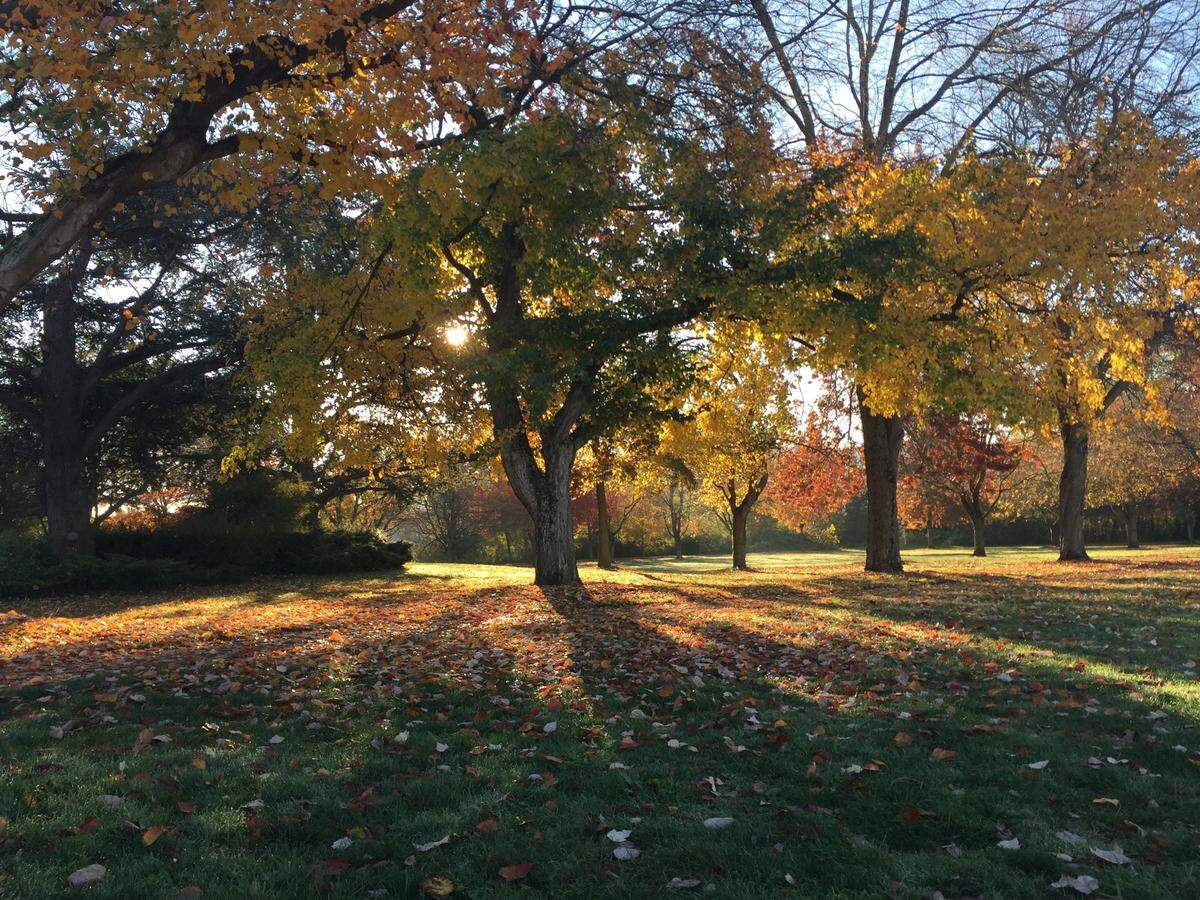
Bellingham’s urban forest includes all trees along streets, in parks, around houses and apartments, and includes the landscaping in other public and private spaces.
“The forests on the Coast Salish land and waters we call Bellingham today have been cared for by the peoples of the Lhaq’temish (Lummi) Nation and Nuxwsa’7aq (Nooksack) Tribe since time immemorial,” according to the city’s report.
“The forests of this region were much altered with Euro-American settlement and, today, forested parks and riparian areas intermingle with urban trees to create the mosaic of native and introduced tree species that make up Bellingham’s urban forest,” according to the report.
It mapped 8,445 acres of native forest in the city limits and its outlying urban grown area, mostly “young” trees.
Some 54% of the urban tree canopy was on private land and 46% was on public lands.
Public lands average 75% tree cover, the report said.
Bellingham’s tallest tree is a Douglas fir that stands 251 feet above Arroyo Park, a height that would dwarf the city’s tallest building, 15-story Bellingham Towers, which is 157 feet.
Tree ‘equity’
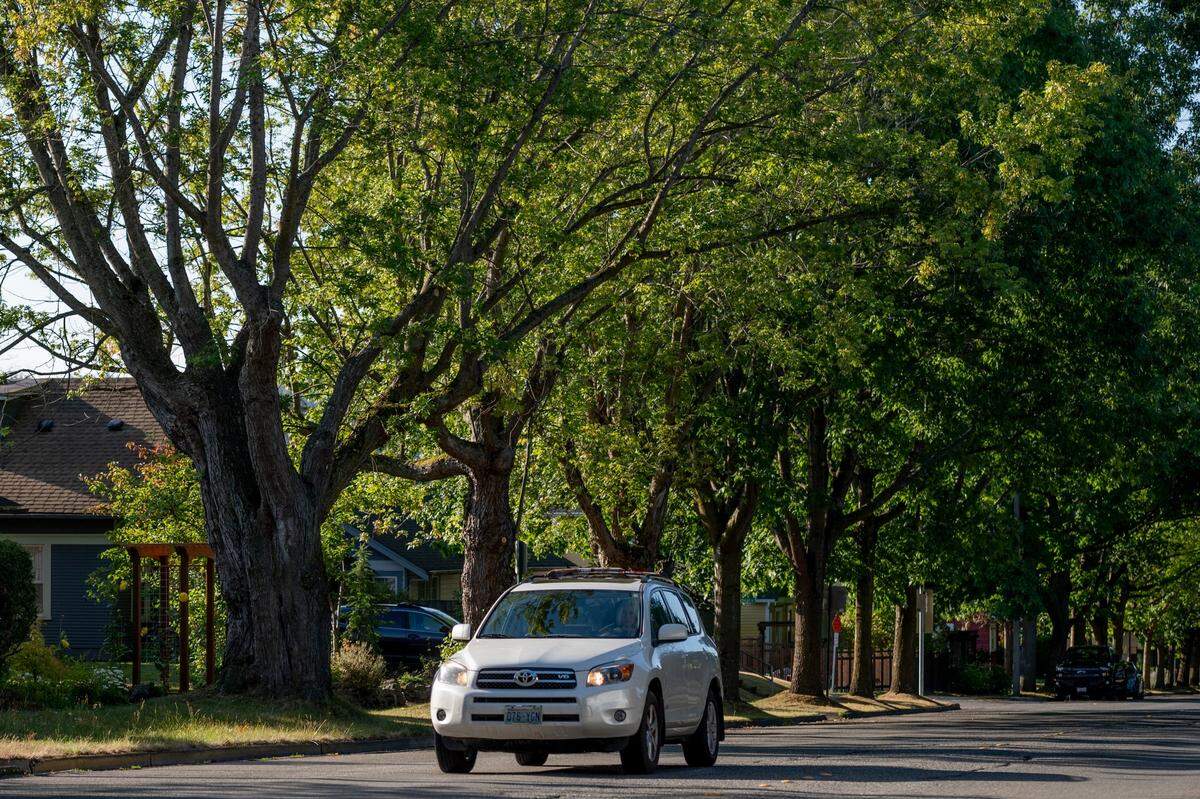
In its urban forest report, Bellingham mapped the tree canopy in all 25 neighborhoods and gave itself an overall “tree equity” score of 89 — higher than the 80 in Bellevue, the 76 in Auburn and the 78 in Vancouver, Wash.
But many neighborhoods lack tree cover, even though Bellingham is among 3,676 cities recognized as a Tree City USA.
Tree equity scores were lowest in Alderwood, downtown, Lettered Streets and York, where they dropped below the minimum mark of 75 recommended by the conservation group American Forests.
Neighborhoods farther from the city center have more trees, including King Mountain with 53%, Edgemoor with 51%, Samish at 66%, Whatcom Falls at 53% and South was tops at 73%.
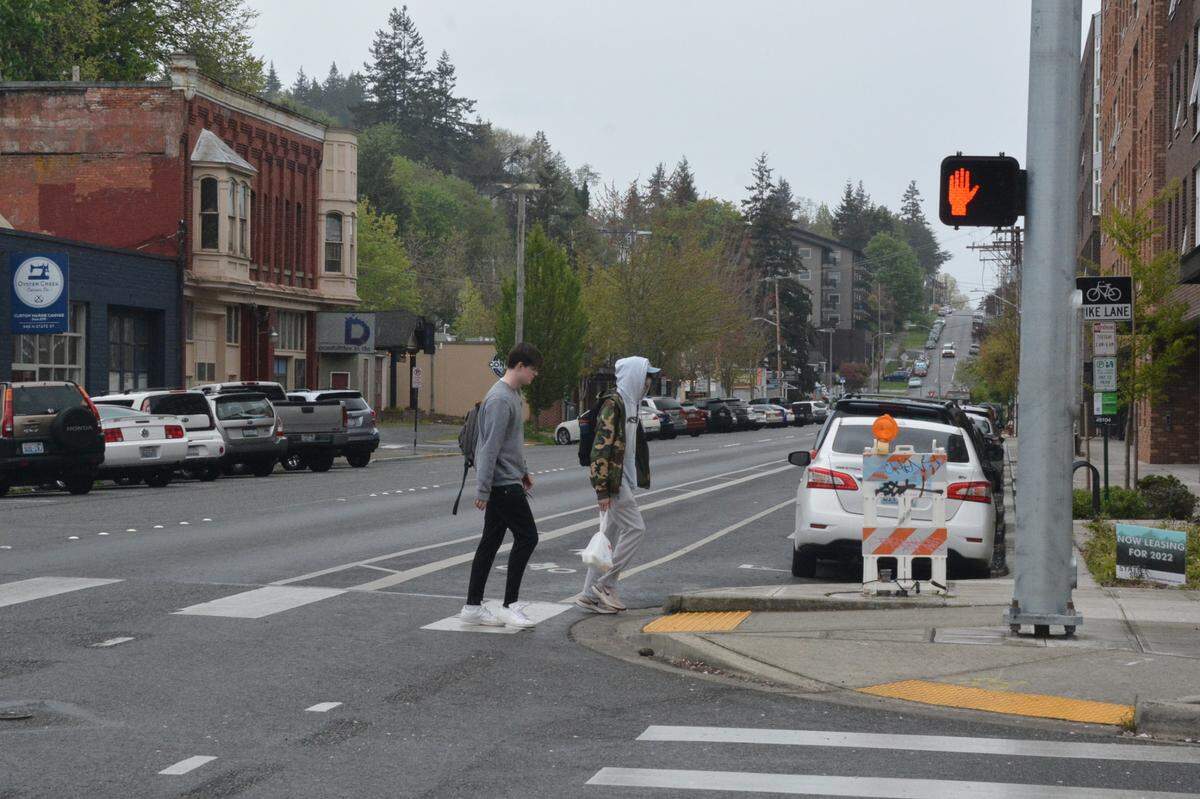
In contrast, downtown has the least tree canopy at 10%, Roosevelt at 18%, York has 18% and Sunnyland has 14%.
Most other neighborhoods averaged in the 25%-45% range.
Overall tree cover was stable at 40% citywide from 2006-2018, according to the report.
Western Washington University is among the greenest areas of the city at 63%, and Wesselkink considers it a gem.
“Western’s campus is far and away the best place to see Bellingham’s trees,” he said.
For those who want to know more about the city’s heritage trees, Wesselink is leading a tour of downtown trees on June 28, sponsored by the Park and Recreation Department.
‘Passionate’ about trees
Mapping tree equity will help set the city’s priorities, according to the “State of the Urban Forest Report.”
Feerer said he hopes that it will lead to new rules about when trees can be cut and he urged the city to protect trees like it does wetlands when development proposals are considered.
“(Trees) are so much of our community’s character,” he said.
To that end, several city departments are involved in the planning process for trees — including Public Works, Parks and Recreation, Planning and Community Development and Fire, LaCroix said.
“I think Bellingham is in a very good place. We’re not a complete concrete jungle,” she said. “People here are passionate about their trees. They touch people in so many different ways and they provide so many free natural services.”
This story was originally published May 9, 2022 at 5:00 AM.