Whatcom County takes action as environmentalists fight to preserve this century-old forest
The future of a century-old forest south of Lake Whatcom hangs in the balance as the state moves forward with its logging plans.
Opponents of the logging are buckling down on their efforts, and Whatcom County Council passed a motion on Tuesday, Jan. 25, to write a letter to the state Board of Natural Resources and Commissioner of Public Lands Hilary Franz asking the agency to reconsider its plans for the forest.
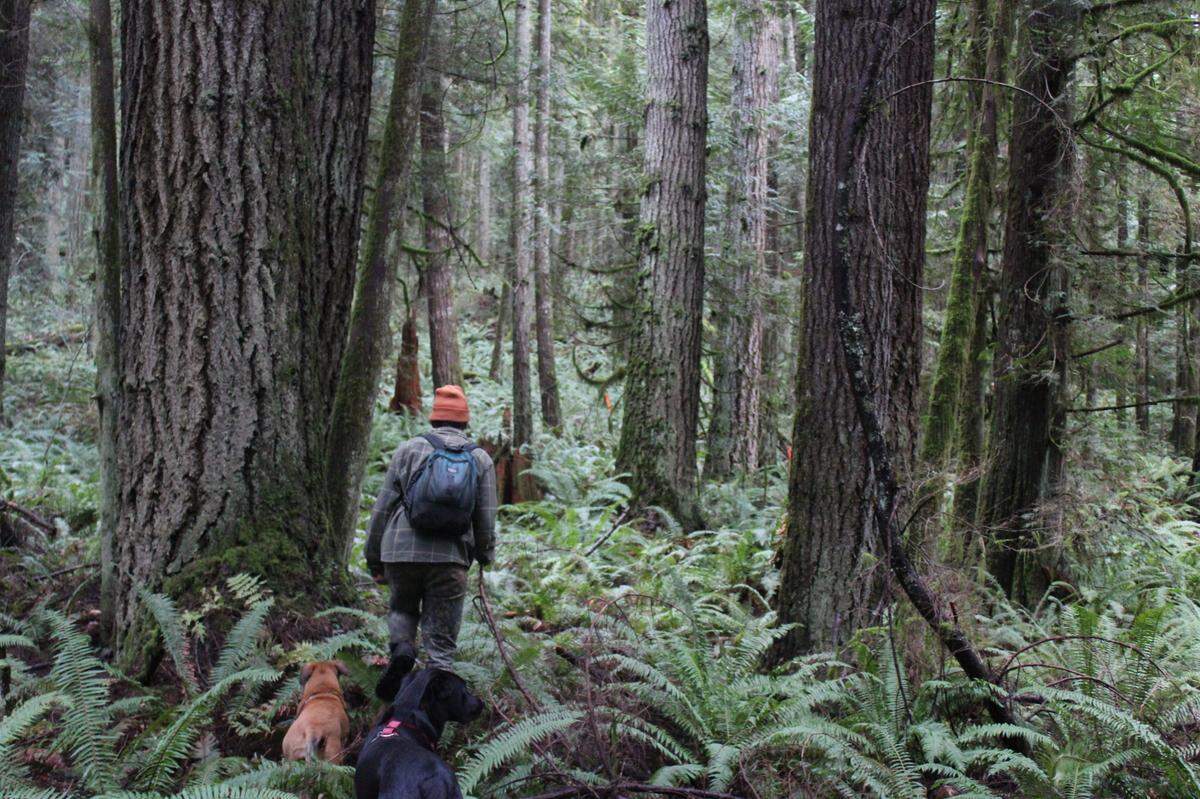
The “Bessie” timber sale is 166 acres of state-owned forest that has caused public concern due to its age and location in the watershed of Lake Whatcom, the drinking water source for over 100,000 people. Opponents of the sale are especially worried about a 46-acre chunk of the sale called “Unit 2” — trees there are estimated to be between 100 and 115 years old, with some reaching heights over 200 feet and diameters of around 4 feet.
The County Council’s letter will request that the state pause further action on Unit 2 until county representatives can review the plans again and ensure they align with the county’s response to climate change. (The Bessie timber sale was previously greenlit by an Interjurisdictional Committee including a county staff biologist in June 2021.)
“There’s a lot at stake here,” said County Councilmember Kaylee Galloway, who proposed that the council send the letter. The council voted 4-2 in favor of the proposal, with Councilmember Tyler Byrd abstaining.
The DNR will decide whether to finalize the sale on March 1. The forest is on trust land, which the state manages to bring in revenue for the construction of K-12 public schools, county services, state universities, some state buildings and prisons. About 40% of DNR-managed land is managed for conservation.
Once the Bessie timber sale is finalized, it will be auctioned for timber harvest in late May, according to DNR spokesperson Kenny Ocker. The sale is expected to bring in $2.2 million.
Concerns about Bessie
One of the primary concerns regarding this timber sale is that it will reduce water quality in Lake Whatcom, which was added to the state’s list of polluted water bodies in 1998 for high levels of phosphorous and fecal coliform bacteria. Trees are beneficial for water quality because they filter out pollutants.
Opponents of the logging also argue that even though the forest does not fit into the state’s definition of old-growth — mostly undisturbed with natural origin dates prior to 1850 — it is old and structurally complex enough to provide similar biodiversity and climate benefits.
“Bessie might entirely fit within current rules and regulations that exist for harvest,” Galloway told The Bellingham Herald. “I want to honor that. The question to ask is whether those rules and regulations are setting us up for success several generations from now.”
These types of concerns are not falling on deaf ears at the state level: The DNR recently paused logging activities in forests with origin dates prior to 1900 as it reconsiders management of older forests, which have been shown to store more planet-warming carbon than younger ones.
The DNR paused the Upper Rutsatz timber sale near the Middle Fork of the Nooksack River on Friday, Jan. 28. Much of the forest in this 89-acre sale originated in 1890, making it 130 years old.
“Collectively, we are at that tipping point,” said Bellingham City Councilmember Lisa Anderson, who proposed that the City Council send a letter similar to Galloway’s at the council meeting on Monday, Jan. 24. “Each time we fail to act, it pushes that line a little closer to no return.”
Anderson’s motion failed, with the City Council voting 4-3 against sending the letter urging the state to reconsider the timber sale.
“It would be a little hypocritical to say ‘Well, I don’t want the source of those products to come from my own backyard,” City Councilmember Hollie Huthman, who opposed the letter, said in Monday’s council meeting. ”I realize this is just one sale, but I think that kind of sets a precedent.”
Similar concerns were echoed by some County Council members.
“This is not where you get involved,” said County Councilmember Kathy Kershner in Tuesday’s meeting. “You get involved where the plans are made — not stopping every action that comes forward.”
Some members of the local logging industry also bristle at efforts to further prohibit logging on state trust lands.
The world economy demands lumber, said Mike Janicki, president of Janicki Logging & Construction, which operates in Whatcom County. If forests like Bessie aren’t logged, it means forests in other countries with less protective practices will be, he said.
He sees the 46 acres of Bessie’s Unit 2 as small compared to the tens of thousands of DNR lands already protected. But he worries it could be the tipping point for local sawmills that rely on that business.
“It could be enough for a mill like Great Western to decide I’m done and just quit,” Janicki said. “That’s the impact you have on the local community.”
Environmentalists continue fighting
As local decision-makers debate their position on the timber sale, environmentalists continue public outreach efforts.
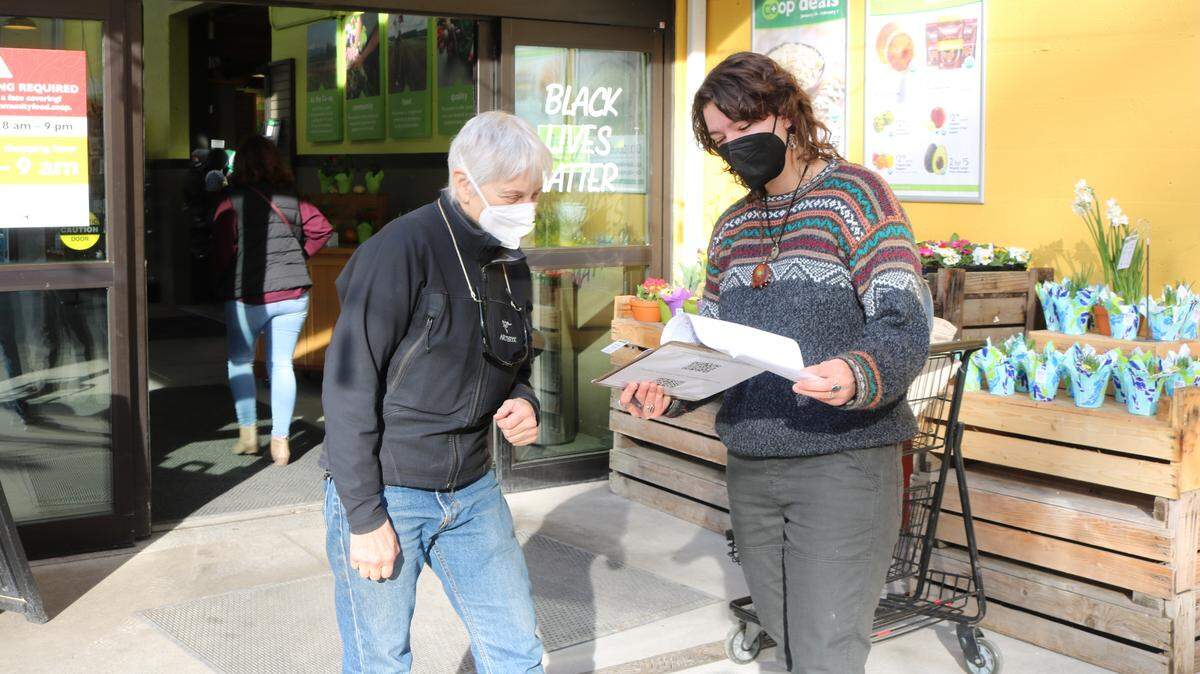
Three opponents of the sale stood outside the Community Food Co-op in downtown Bellingham on the chilly afternoon of Wednesday, Jan. 26, asking shoppers to sign a petition urging the DNR to reconsider the Bessie timber sale.
The petition had 340 signatures as of Thursday, Jan. 27, said Brel Froebe, a Bellingham resident and communications coordinator for the Center for Responsible Forestry.
Local environmental nonprofit RE Sources got over 200 community members to submit public comments to the DNR opposing the sale, Froebe said. But the DNR received less than two dozen unique comments about the sale, agency spokesperson Kenny Ocker said.
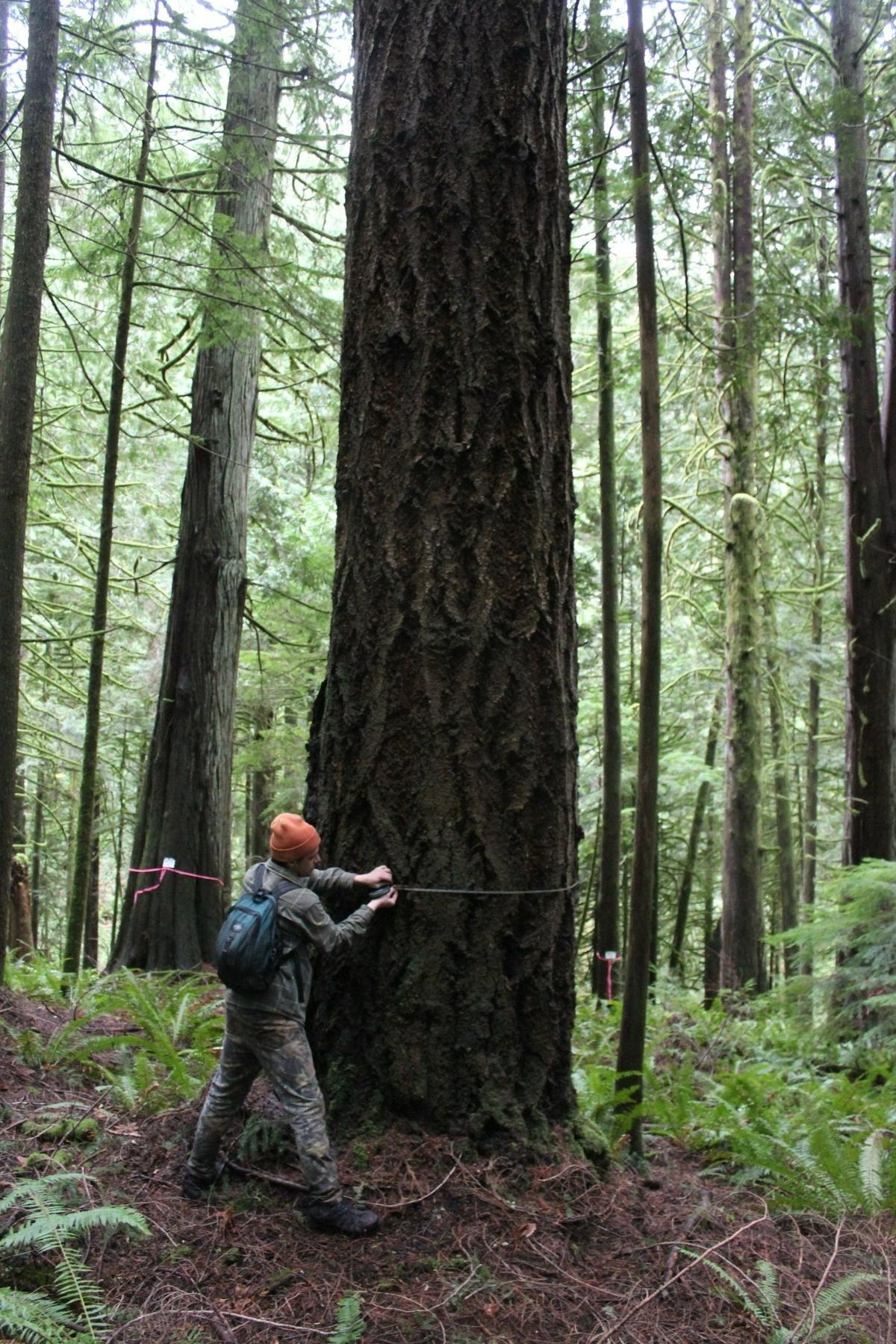
The community groups opposing the sale, including the Center for Responsible Forestry, hired independent consultant Northwest Forestry Services to conduct an assessment of the Unit 2 portion of Bessie timber sale. The assessment was based on a site visit conducted on Jan. 20 and determined that the forest contained numerous trees between 82 and 116 years old.
The local activists don’t plan on giving up if the DNR finalizes the Bessie timber sale at its March 1 meeting, Froebe said.
“We will continue to try to put public pressure on and get more local and state politicians to stand in support of the forest,” Froebe said. “At that point, we will try to continue to convince Hilary Franz to stop this sale.”