Whatcom’s 3 ‘Murder Hornet’ nests eradicated in 2021 genetically related to 2020 nest
All three Asian giant hornet nests that were found and eradicated in Whatcom County during 2021 were related to the nest that was found and eradicated near Blaine in 2020.
“Last year we took DNA samples from several specimens from each of the three #AsianGiantHornet nests that we eradicated,” the Washington State Department of Agriculture announced in a Facebook post Wednesday, Jan. 12. “We were able to determine that all three 2021 nests were related to the 2020 nest — meaning the queens that started the 2021 nests left the 2020 nest prior to when we were able to eradicate it and started the new nests.”
A follow-up post said that the Asian giant hornet nests that were found in Whatcom County were genetically distinct from those previously found in British Columbia.
The genetic match to the 2020 nest also is good news in that the department said it does not have any evidence of any unrelated nests in the area at this point in time.
But now the question is if any queens left the nests before they were eradicated in 2021?
Unfortunately, we’ll all have to wait until this summer to find out, as Asian giant hornets “overwinter in protected, rather than exposed, areas. They are also super hardy,” another follow-post by the Department of Agriculture stated. Only queens overwinter and in areas such as rodent burrows or rotted tree trunks.
According to another post by the department in the string, more than 200 queens were found in the 2020 nest, “which suggested we got most — but not necessarily all — of the new queens. Clearly, at least three emerged, mated, and successfully started new nests.”
“There is no reason to think that honeybees are at risk from AGH in the US at this time,” the Department of Agriculture said in a follow-up post. “We did have reports of hive attacks in 2019, but none in 2020 or 2021.”
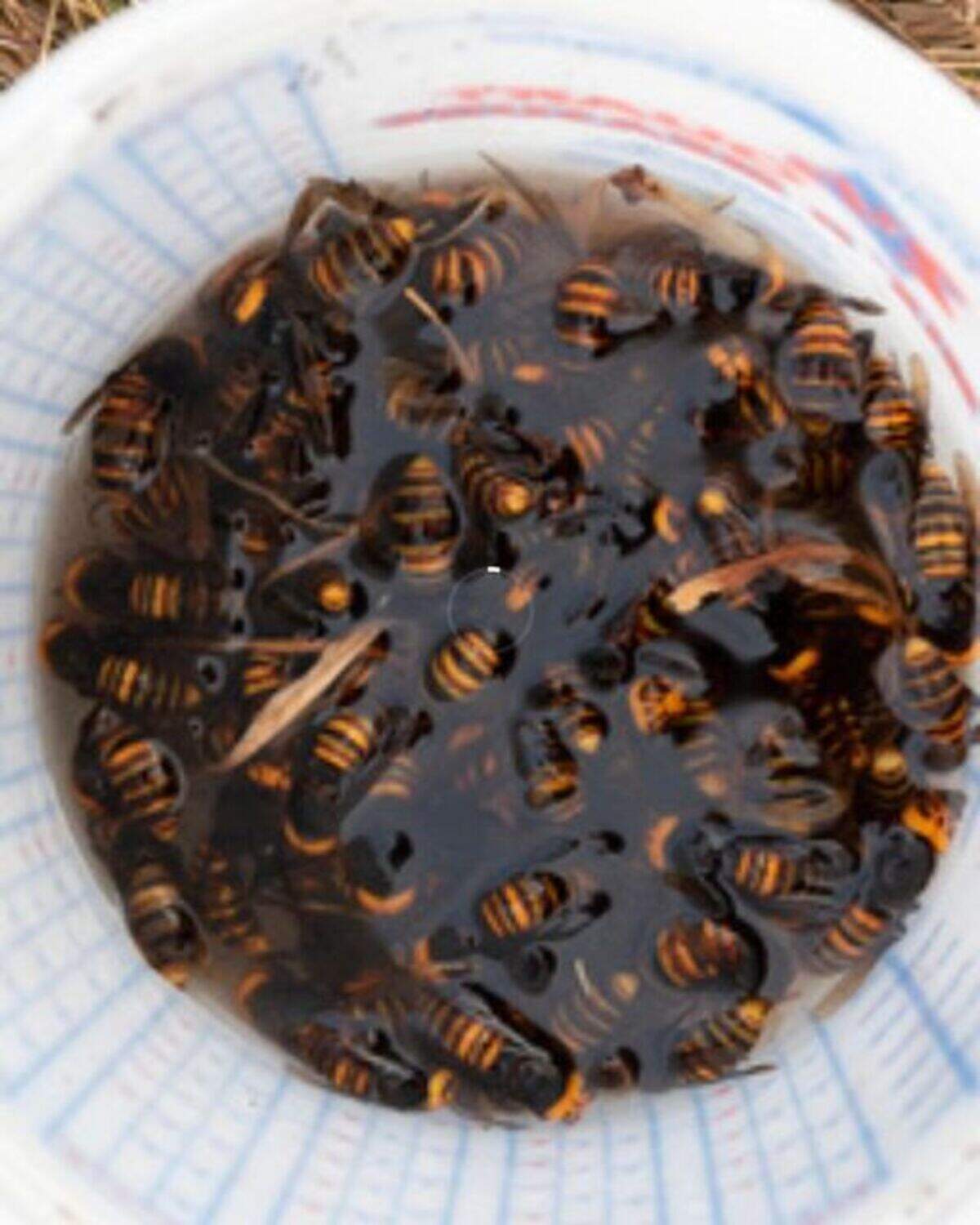
What are murder hornets?
Commonly known as murder hornets and up to 2 inches long, the Asian giant hornet, or Vespa mandarinia, is the world’s largest hornet species. They are identifiable by their large yellow/orange heads. The hornets are known for their painful stings.
They will attack people and pets when threatened, and tried to attack the team eradicating their nest in August, though the team’s hornet suits prevented team members from being stung. People should be extremely cautious near them, state agriculture officials have said, and those who have allergic reactions to bee or wasp stings should never approach an Asian giant hornet, according to earlier reporting in The Bellingham Herald.
The invasive hornets are feared for the threat they pose to honeybees and, by extension, the valuable crops in Washington state that the bees pollinate, including blueberry and other cane crops in the region that includes Whatcom County.
They also prey on local pollinators such as wasps, posing a threat to the local ecosystem, state entomologists have said.
Before the sightings that led to the discovery of the two nests in Whatcom County this year, a dead Asian giant hornet was located near Marysville in mid-June.
The Department of Agriculture planned to continue to trap Asian giant hornets through the end of November, according to a previous news release, adding that instructions on how to build traps can be found on the agency’s website.
The Department of Agriculture’s annual budget for community outreach, tracking and eradication of the Asian giant hornet is approximately $650,000, Spichiger said.
Battling murder hornets
Three nests have been located in the U.S. this year — all within northern Whatcom County:
▪ A dead Asian giant hornet was located near Marysville in mid-June. The Department of Agriculture has previously said it does not believe that the hornet was related to others found in Whatcom County.
▪ The first live Asian giant hornet of 2021 was captured in Whatcom County on Aug. 12, and another was captured on Aug. 13. Both were tagged and released by the Department of Agriculture in an effort to locate their nests.
▪ The Department of Agriculture found 1,500 Asian giant hornets in various stages of development when it eradicated the first Asian giant hornet nest of 2021 on Aug. 25 in a rural area of the county east of Blaine.
▪ Two more live murder hornets were spotted in the same general area of Whatcom County as the first nest was destroyed, the Department of Agriculture reported on Sept. 8.
▪ The Department of Agriculture reported that it had located and destroyed a second nest on Sept. 13, but a third nest had been located.
▪ Destruction of that third nest was not completed until Sept. 23 because that nest was located nearly 20 feet up in a tree and special equipment was required to eradicate it. The nest was found to have 10 combs inside.
The Department of Agriculture also reported in mid-September that it received a “concerning” report about a possible Asian giant hornet sighting four miles south of Sumas and east of South Pass Road — a long distance from where the three nests have been found and eradicated this year. No other sightings have been reported by the Department of Agriculture in that area.
In 2020, the first Asian giant hornet nest in the U.S. was found and destroyed in Whatcom County, and another nest was located and destroyed in 2019 south of Nanaimo, B.C.
This story was originally published January 12, 2022 at 4:17 PM.