Whatcom officials in ‘uncharted territory’ after facility accused of unpermitted expansion
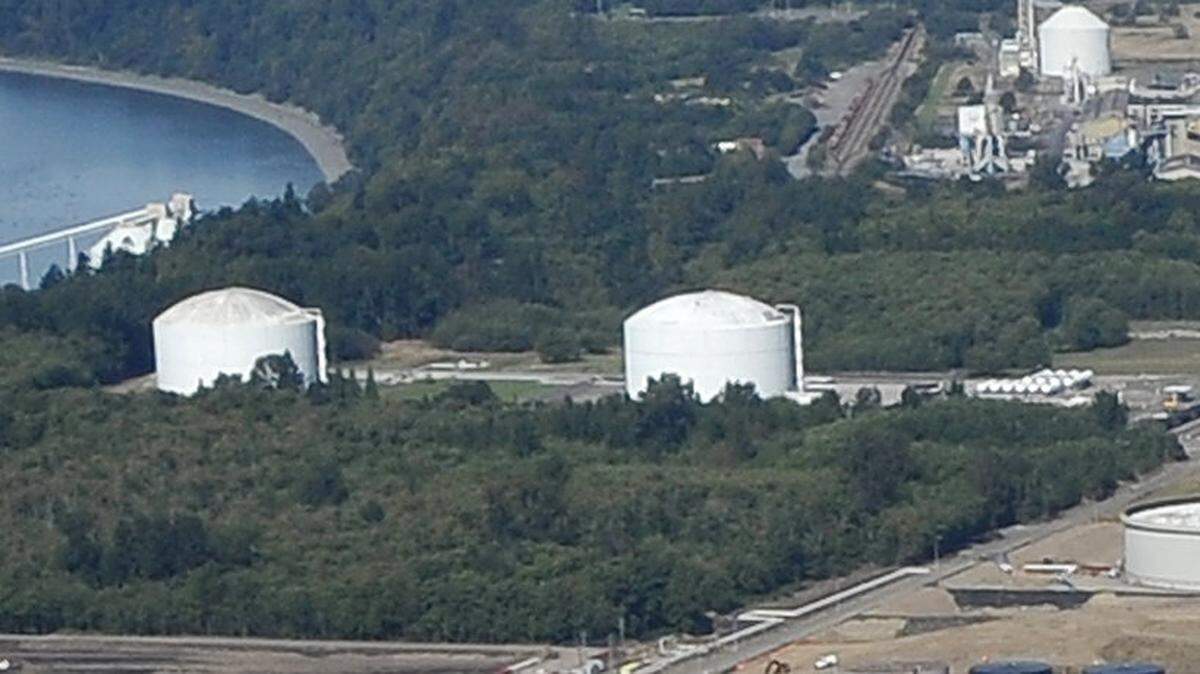
Nearly five years ago, Petrogas West made what seemed like a simple request to Whatcom County: The company wanted to replace two aging compressors at its Ferndale facility, where it stores and distributes the propane and butane used to power vehicles and heat homes.
The project wouldn’t increase rail activity or result in future additions or expansions, the company promised Whatcom County in an environmental review checklist completed at the time.
But it’s come to light that Petrogas likely did make changes to the Ferndale facility without obtaining the required permits, according to a recent investigation by the Northwest Clean Air Agency, the government body that enforces air quality regulations in Island, Skagit and Whatcom counties.
When asked whether the agency’s allegations are true, AltaGas told The Bellingham Herald in an email that it is “working through the matters that have been raised and the compliance order with (the NW Clean Air Agency), so we cannot provide further comment at this time.” AltaGas, a Canadian energy infrastructure company, gained a controlling interest in Petrogas in late 2020. Petrogas forwarded The Herald’s questions to AltaGas.
The alleged expansion significantly increased the facility’s environmental impact: The number of rail cars unloaded at the facility nearly quadrupled between 2015 and 2020, jumping from about 4,000 to about 16,000, alleges an Oct. 15 letter the government agency sent Whatcom County alerting it of the suspected violations. The expansion also increased shipping traffic, which increased from two to five berthing events per year to 26 in 2019, the letter says.
The Ferndale facility is the only operating liquefied petroleum gas export terminal on the U.S. Pacific Coast, and the alleged expansion “fundamentally transformed” its environmental, export and local traffic footprint, wrote County Councilmember Todd Donovan in an email to The Herald.
“It’s now a global player in propane exports,” said Donovan, who is also on the NW Clean Air Agency’s board of directors.
The county is now in what Donovan called “uncharted territory.” As the lead agency in determining whether Petrogas’ projects have a significant environmental impact, Whatcom County must decide how to deal with the alleged under-the-radar expansion. Will it allow the facility to continue operating at peak capacity as it makes its decision? How do you enforce a rule that’s already been broken?
The entire predicament has more profound implications than what’s going on at Petrogas’ Ferndale facility, Donovan said. It raises serious concerns about whether industry can be trusted to self-report its own projects’ impacts, which is a keystone piece of recent Cherry Point code amendments intended to limit fossil fuel expansion in the industrial area.
Fossil fuels are a primary driver of climate change, according to NASA: Burning them produces greenhouse gases, which have a warming effect on the planet. The devastating impacts of climate change are becoming abundantly clear, as heat waves, floods and other extreme weather events increase in severity and frequency.
“If industry can just say ‘No, it’s not going to increase capacity,’ it kind of makes the (Cherry Point) code toothless,” Donovan said. “Whatever potential enforcement there might be with Petrogas, I see it as something far beyond that individual permit.”
What exactly happened?
The NW Clean Air Agency might never have discovered that Petrogas likely expanded its Ferndale facility had it not been for an emissions report from the company that didn’t quite add up.
In May, Petrogas submitted emissions self-disclosures to both the U.S. Environmental Protection Agency and the NW Clean Air Agency saying that it had identified an unpermitted vent stream of volatile organic compounds coming from its facility. These are chemicals that can cause ear, nose and throat irritation, difficulty breathing, nausea and damage to organs and the central nervous system.
When these chemicals are pumped into the outdoors, as was happening in the case of Petrogas’ Ferndale facility, they can create a cocktail with nitrogen oxides to produce ozone, or “smog,” the country’s most widespread outdoor air pollutant, according to the American Lung Association.
AltaGas said in an email to The Herald that Petrogas discovered the unpermitted vent as part of a new owner audit that was conducted after AltaGas obtained a controlling interest in Petrogas in December 2020.
Luckily, the volatile organic compound emissions don’t appear to have had an immediate public health impact, said NW Clean Air Agency Executive Director Mark Buford. In June, Petrogas installed equipment to reduce the vent’s emissions, bringing the facility into compliance, said AltaGas in an email to The Herald.
But by that point, the NW Clean Air Agency already suspected the emissions were a symptom of a deeper problem at the Ferndale facility, Buford said.
“It was more to us than a matter of just addressing the emissions, which is important, but why?” he said. “What happened at your facility that now this vent that was very small in the past is now pretty significantly emitting propane?”
So the agency opened an investigation, reviewing its own records, information collected from Petrogas and site inspections. Eventually, it came to the conclusion that beginning in 2015, Petrogas must have made unpermitted facility changes that increased its capacity for propane deliveries and handling.
Not adding up
Emissions numbers calculated by the NW Clean Air Agency also didn’t match up with the amount of pollution that Petrogas previously reported it was emitting: The agency’s calculations found that the unpermitted vent alone spewed hundreds of tons of volatile organic compounds into the atmosphere each year, while Petrogas’ reported volatile organic compounds emissions numbers between 2014 and 2020 never exceeded 60 tons per year.
For example, in 2018, the company said the facility emitted about 41 tons of volatile organic compounds, according to the Notice of Violation that the agency sent to Petrogas. The NW Clean Air Agency’s recent calculations resulted in a vastly different number: It found that just the facility’s unpermitted vent emitted about 834 tons of volatile organic compounds that year.
The agency is confident in its calculations but is still waiting on Petrogas’ response to the allegations, which could result in revised numbers, Buford said.
Whatcom County could provide little insight into what happens next, since the Planning and Development Services office is still early in the review of the matter, said the office’s Director Mike Personius in an email to The Herald.
The county is working with the NW Clean Air Agency, state Department of Ecology and outside legal counsel as it navigates next steps.
“We are currently in an information gathering stage,” Personius said.
This story was originally published January 3, 2022 at 5:00 AM.