‘It feels like a family, not just a place you live’ Whatcom resident says after flood aid
Editor’s note: From watching roadways turn to rivers outside their doorsteps, to being awakened to water pouring in their homes, to attempting to find rescue help for their young child, several Whatcom County residents share what it was like during the first few hours of surviving a once-in-a-generation flood.
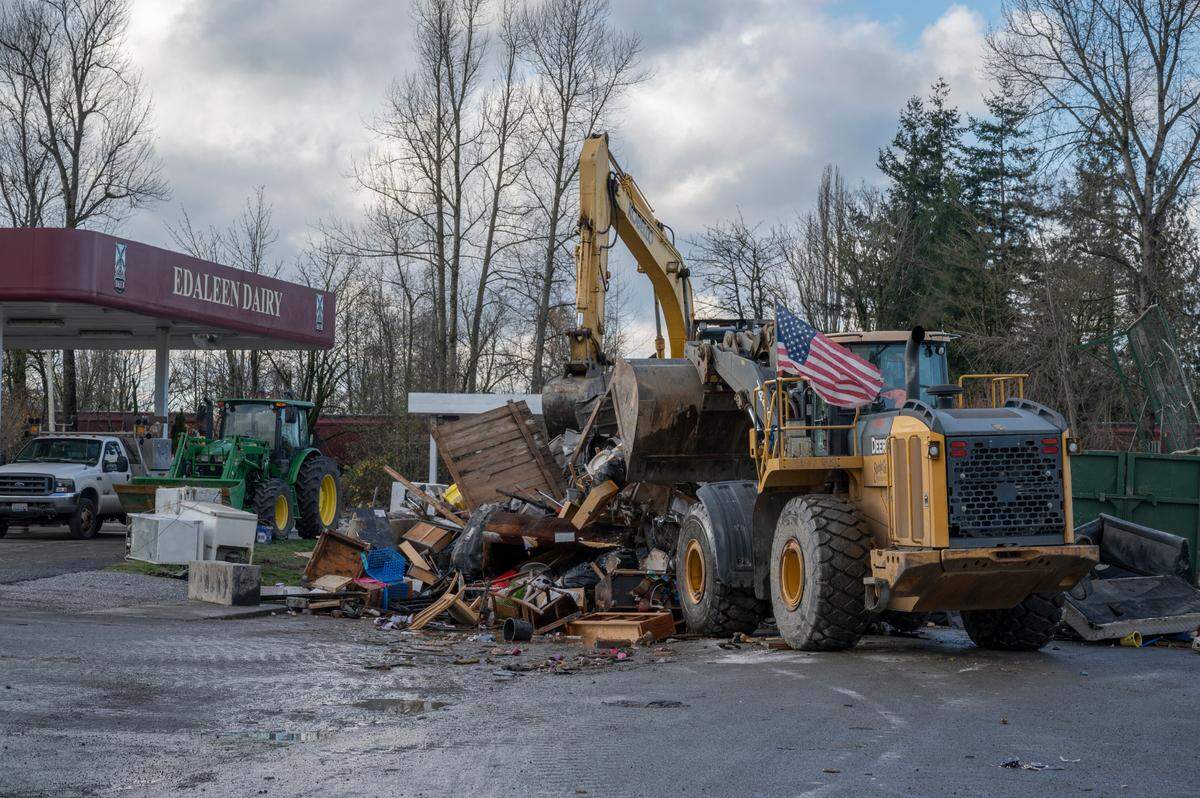
Whatcom County residents have begun the task of removing debris, assessing damage and planning for repairs after widespread flooding inundated Western Washington and British Columbia this week. The Saturday-Monday, Nov. 13-15, storm brought flooding, power outages, school and road closures, mudslides, damage and accidents as it swept through the area.
Storm damage could reach $7 million to $10 million, officials said at a press conference Tuesday afternoon, Nov. 16, and officials are comparing it to 1990 flooding along the Nooksack River that caused $21 million in damage, according to previous reporting in The Bellingham Herald.
One fatality has been linked to the storm. Jose Garcia of Everson was swept away by floodwaters on his way to work at a dairy farm early Monday, Nov. 15.
Whatcom County, the Whatcom County Library System and the Opportunity Council have all established pages at their websites on flood resources and assistance.
Help in a crisis
Candice Lankhaar was supposed to work Monday, so on Sunday afternoon she sent her 6-year-old son to stay overnight with her mother at her home in Sumas. Lankhaar, of Bellingham, told The Herald in an email that they had heard the flood warnings, but didn’t think the flooding would be all that bad.
Lankhaar had planned to pick her son up Monday evening. Her son has special needs and requires medication and is on a medically-restricted diet. She said she sent him with a day’s worth of medication and food. As the flooding began to worsen Monday, she said she began to worry.
“The power went out in Sumas as we watched the water creep up to my mom’s front porch. It was about 8 inches to 10 inches from entering the house, and rushing by like a river,” Lankhaar said. “I told myself everything would be OK but in the morning I would start looking for rescue help.”
Tuesday morning, Lankhaar put the call out to have her son evacuated from Sumas. Eventually, someone with a front-end loader who was evacuating people from the area was able to pick up Lankhaar’s son, she said.
Lankhaar said her son luckily was excited and had no fear about his evacuation, and afterward, a family friend was able to drive him home safely.
“I am always humbled and filled with gratitude for the wonderful people who jump to help in a crisis,” Lankhaar said. “I was feeling very anxious and helpless about the situation. Asking for help was (always is) hard, but it is always met with kindness and I am so thankful.”
Plan for the future
Marina Wiersma and her family bought their home in Nooksack behind Nooksack Valley Middle School around 15 years ago. The flooding in late January 2020 was the first time water had ever reached their house, Wiersma said in an email to The Herald. The water had reached their crawl space, but didn’t enter their home, she said.
On Sunday night, Wiersma, her husband and their two children, a 1-year-old and 3-year-old, received an alert and began to prepare for a flood. They put sandbags around their garage and crawl space openings, parked their cars at higher points on the road, and watched as the water started to rise on their street around 9 p.m., she said. They were not expecting the floodwaters to enter their home.
Wiersma said she and husband didn’t sleep and as the water kept rising, they started lifting furniture and packing bags. By 6 a.m., the floodwaters were at their doorstep and started coming in their vents. Their house was completely flooded within the hour, she said.
“We called 911 as soon as we noticed water coming in and our kids were waking up. After two hours, no one came,” Wiersma said.
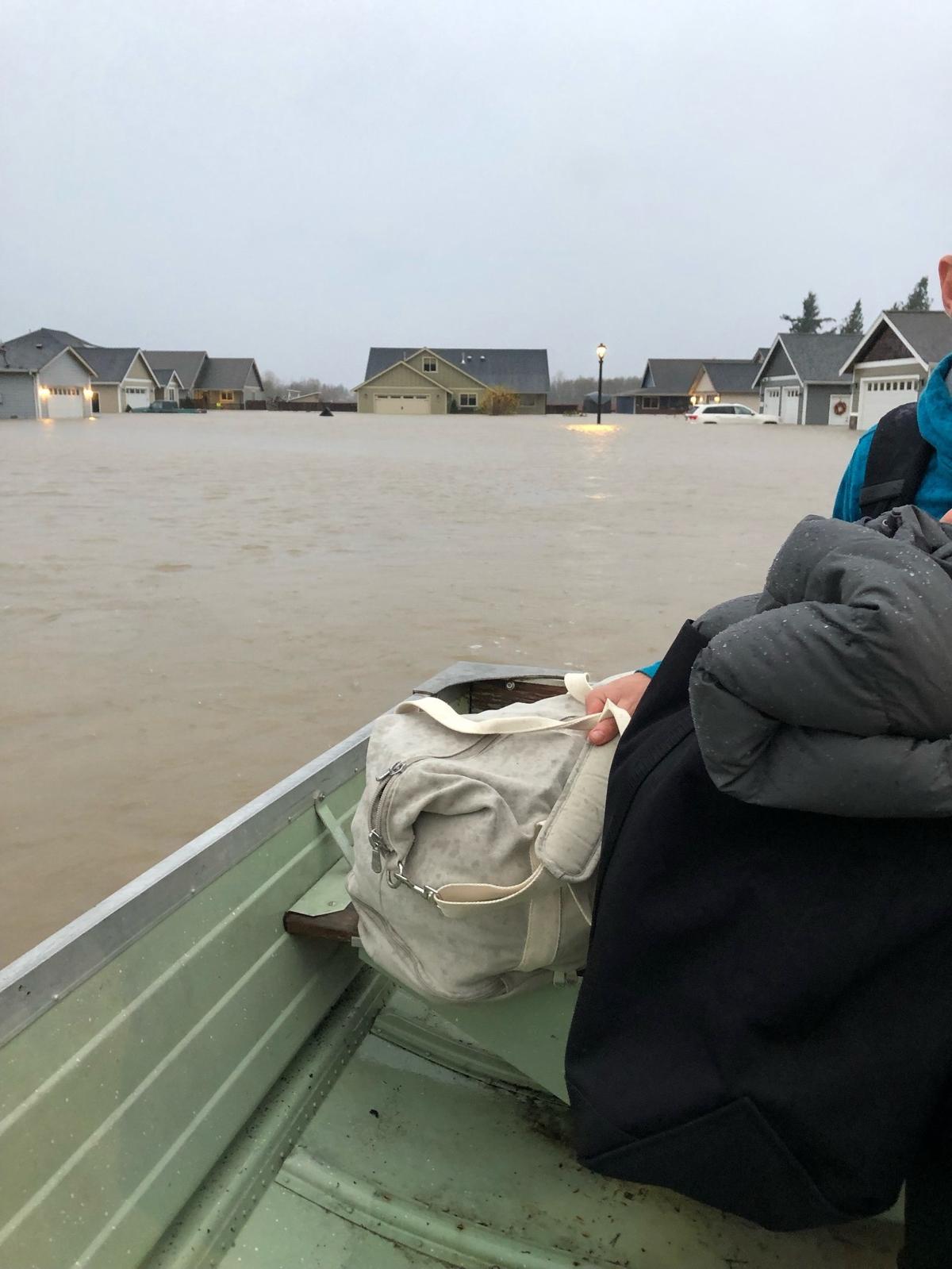
They borrowed their neighbor’s boat and had friends push them to a dry spot in the road near where they parked their car. Someone had hit their car and the driver’s side mirror had come off, she said. The car was flooded, but still ran, and they were able to make it down Highway 9 and eventually to Lynden where they could stay with family, she said.
Wiersma said the scariest part was putting her children on the bed while they waited for someone to rescue them as water was coming into their home.
“It was also very frightening for our kids to leave our house in a boat in the middle of a storm,” she said.
Wiersma said the street they live on didn’t require flood insurance when they bought their home, so they will have to pay for repairs from both the 2020 and 2021 floods themselves.
“We just want the community to learn from these disasters and plan for the future. Protect these neighborhoods that are in the floodplain,” Wiersma said.
Losing everything
Eryn Kipling has lived in her apartment on Main Street in Everson for the last two years. When Whatcom County flooded in 2020, she wasn’t affected, so it didn’t cross her mind that floodwaters could hit her house, she said in an interview with The Herald.
Kipling said she woke up at midnight because she was feeling sick, and noticed how hard it was raining outside. She said she was a little concerned, but went back to sleep.
Around 4 a.m., Kipling woke up again and looked outside to find her car fully submerged in water. She said the parking lot outside of her apartment looked like a lake.
“I looked out my front window that faces Main Street and the road was completely gone. The water was already level with our door. So any time a car drove by, which was a lot for that early in the morning, water was just sloshing in with every car. It was just coming into my house at that point, so I didn’t really know what to do,” Kipling said.
Kipling and her boyfriend decided to wait for a while, but the situation just kept getting worse, she said. By 8 a.m., water was pouring into every corner of her home, she said. The pair and their two cats left the apartment by 9 Monday morning, she said.
Kipling said in the aftermath of the flood, it’s been difficult. She said she’s having trouble finding somewhere to stay with her pets, as most pet-friendly temporary places she’s finding accept dogs but not cats.
“They’re like my family, I can’t just leave them behind,” she said.
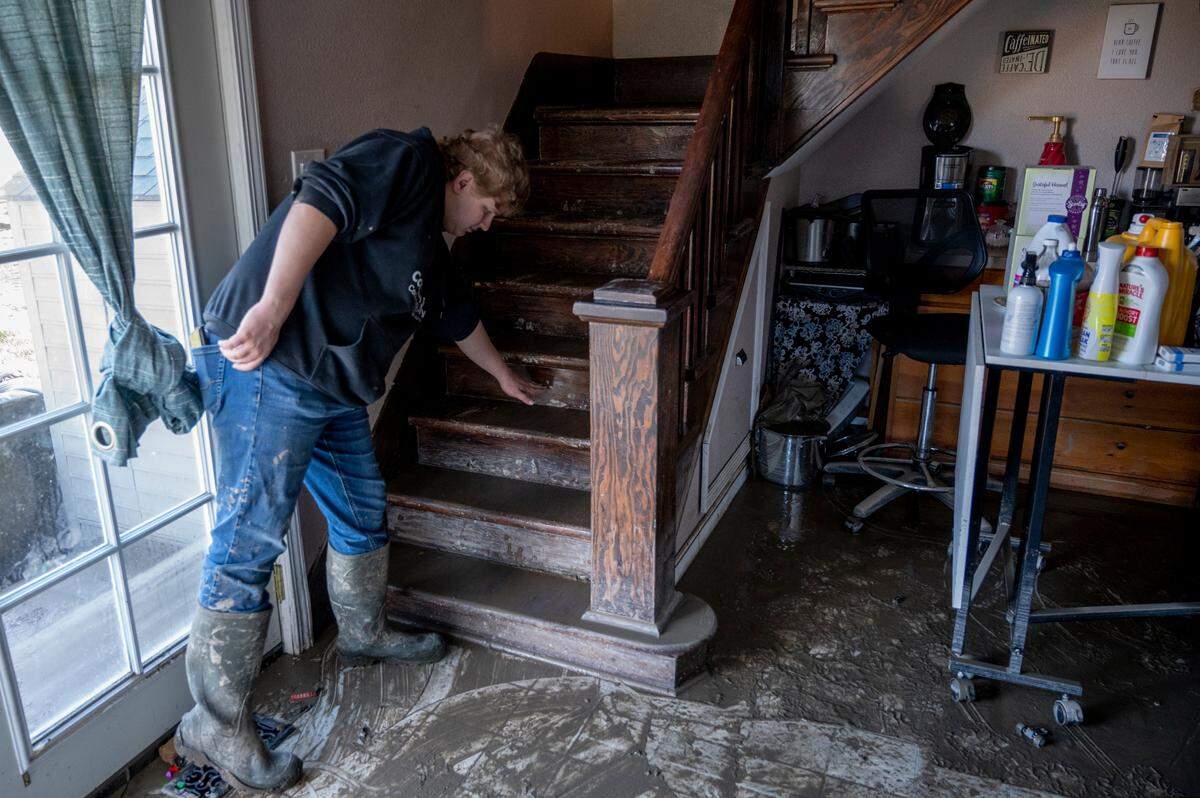
Kipling returned to her apartment Thursday, Nov. 18, and realized that everything is ruined. She said she was focusing most of her energy on cleaning her apartment out and trying to salvage what she could, but expressed concern for the future.
“Everything is just gone and I just can’t believe that,” she said. “I just can’t believe that this is happening. And then I’m thinking about, like, where am I going to go from here? You have to plan for the future. I have to go to work. I have to have a place to live. I don’t know what I’m going to do two days from now. But also, I don’t even know what we’re going to do today. It’s just so wild that this is happening.”
Kipling said she felt like the community could have been made more aware of the flooding danger and that a better system could have been in place for updating Everson residents. She said many community members came together to help one another, but said she was frustrated by what she perceived as a lack of officials putting forth a coordinated effort.
Kipling said she also wished the area had more services, like housing and emergency assistance, for residents and hopes that the community can be better prepared in the future.
Like a family
Calie Rencher and her husband have been through bad snow storms before, but never a flood.
The pair moved into their Noble Street home in Sumas last March after moving from Utah, Rencher said in an interview with The Herald. The pair got a flood warning on their phones on Sunday and started reading the city of Sumas’ Facebook page, learning about the floods in 1990 and 2020, she said.
Rencher’s husband left for work in Lynden around 6:30 a.m. on Monday, but was called by a coworker who told him he wouldn’t make it and to return home and prepare for the flood.
Rencher said by the time her husband returned home and left in an attempt to get sandbags, Main Street was closed. The water went from the road to filling their garage within an hour, she said.
“Watching water slowly creep up to your house is the single most terrifying moment of my life,” Rencher said.
Sumas told its residents to shelter in place if they could, which Rencher and her husband decided to do. She said rescue officials were going up and down the streets asking people if they wanted to stay in their homes or be taken to a local church for shelter.
Rencher said the house of her neighbor across the street flooded immediately, and they left before noon on Monday. The neighbors next door are new to town, had no one to call and didn’t know who to contact to be put on an evacuation list, Rencher said.
They ended up putting a red light outside of their window, and when Rencher’s husband went to check on them, they had nearly a foot of water in their home, she said.
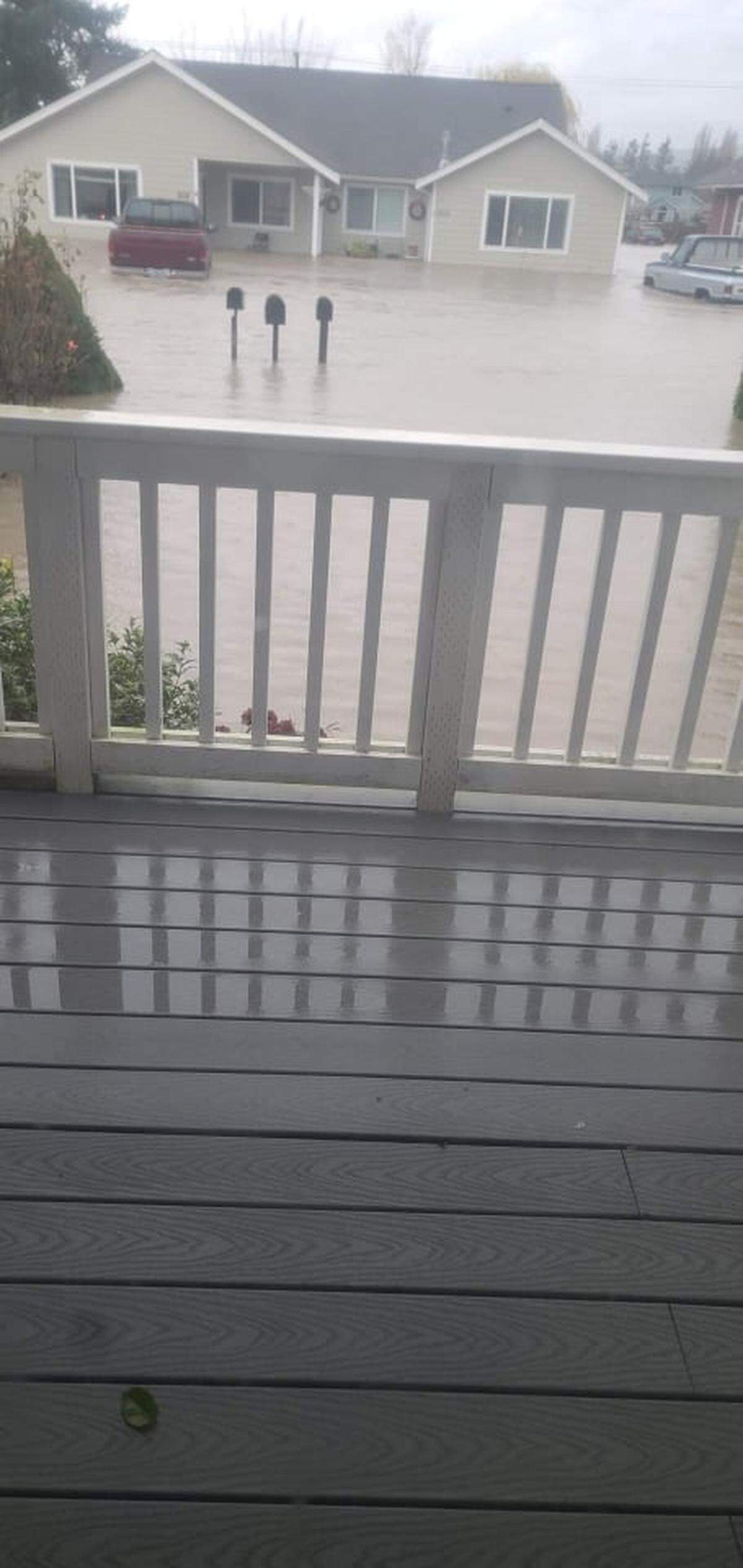
Rencher said they were fortunate to not receive any water in the liveable areas of their home, but did lose power and made it through a few cold nights. They also had around a foot of water in their garage and more than a foot in their crawl space. She said they’ll have to cut out a few walls in their garage and were working on getting the water out of their crawl space.
Rencher said as the disaster was happening, boats and tractors were going up and down searching for people to evacuate, people from Bellingham brought food, water and gasoline, and neighbors let one another use generators for power.
“I have lived a lot of places. We are originally from Utah. We are both from a small community where you help your neighbors. I was worried about moving to Whatcom County. I was worried we were going to lose the family community connections. I was wrong,” Rencher said. “Communities are like a family. You may not always get along, you may call the cops on one another once or twice, but in a time of need, you are here for them. You help, you get help.”
Rencher said she encourages people to get involved in community meetings and to stay informed. She said it’s important for people in the neighborhood to voice their concerns if they have ideas to prevent this situation in the future. She also said others should offer a helping hand if their homes weren’t damaged in the flood, and to ask for help if you need it.
“We’re taking care of our own ... and helping others at the same time. It feels like a family, not just a place you live,” Rencher said.
This story was originally published November 20, 2021 at 5:00 AM.