A new facility in downtown Bellingham will address two of the community’s biggest needs
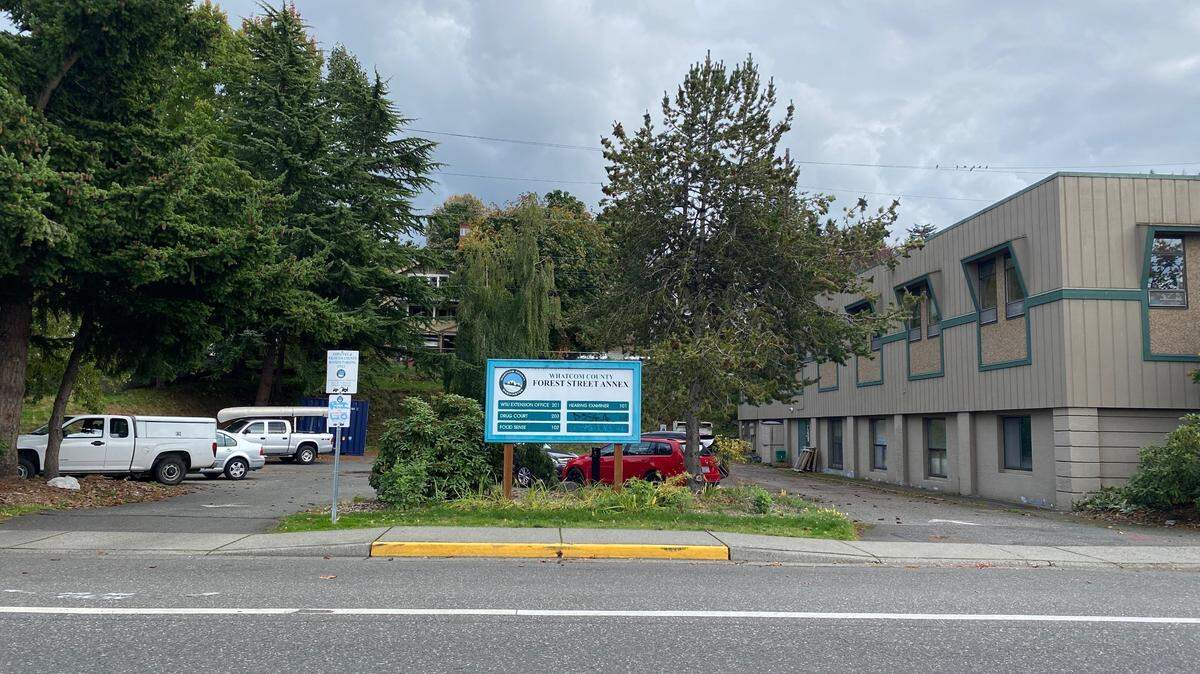
A downtown Bellingham property is slated to be developed into affordable housing for seniors and a childcare facility.
The parcel at 1000 and 1010 N. Forest St. will change hands from Whatcom County to the local nonprofit Opportunity Council. The property is currently a county annex that houses Washington State University’s Whatcom County Extension, Whatcom County Drug Court and Whatcom County Hearing Examiner.
“In current use, it’s being underutilized in terms of the amount of space that’s there,” said Jed Holmes, spokesperson for the county. “Our priorities are childcare and affordable housing.”
The Opportunity Council does an assessment of community needs every three years, and affordable housing and childcare are consistently identified as resources people want more of, said the nonprofit’s Executive Director Greg Winter. It also conducts an annual survey of people experiencing homelessness in Whatcom County at a certain point in time — this year’s survey reported 163 people over 55 years old experiencing homelessness, compared to 61 in 2012.
“We see clearly that going back 10 years, there’s been a steep increase in people 55 and older that we encounter in our homeless census,” Winter said.
Rental increases that have occurred in Bellingham in recent years often have a higher impact on seniors, he said, because they typically rely on fixed incomes, like Social Security or disability payments.
“The very small cost-of-living adjustments in those programs don’t even come close to the increase in rent over time,” Winter said.
The perfect location
The North Forest Street property is ideal for senior affordable housing and childcare because of its proximity to downtown, said Adrienne Solenberger, housing developer at the Opportunity Council. The parcel is near the city’s senior center and a grocery store, and it has a walkability score of 93 out of 100, she said.
The Opportunity Council plans on breaking ground in roughly a year, and Solenberger estimates tenants will begin moving in in 2023. The apartment building will include 56 one-bedroom units for low-income individuals of ages 55 years and older. Rent has not yet been determined, but it will accommodate individuals making less than 50 percent of the area median income. Utilities will likely be included in the rent structure, Solenberger said.
Many senior resources are for individuals 65 years and older, Solenberger said, leaving a “service gap” for those between 55 and 65 years old. People in this age range often face more difficulty or have to wait longer when seeking resources.
Preliminary design concepts for the apartment building include a computer room and exercise room, Solenberger said. The Opportunity Council is considering partnering with Western Washington University to provide a digital literacy classes to seniors and the local YMCA to lead a senior fitness program on-site. There may also be a light planned meal service available to residents, Solenberger said.
Current designs also include bike storage and structured parking, despite many older individuals not driving personal vehicles, she said.
“We know through research that the older population is taking to bike riding for both transportation and recreation,” Solenberger said.
The facility will also offer paratransit services, which are shared transportation services for those who cannot travel on public transportation due to their disabilities. Free bus passes may also be offered to residents, Solenberger said.
The childcare facility will have the capacity to serve up to 65 children, according to a letter sent to Whatcom County council members from the Opportunity Council’s Executive Director Winter and Associate Director Sheri Emerson on Sept. 26. It will be 5,000 square feet with three classrooms and housed in a portion of the building separate from the affordable housing. Current designs include a large multi-purpose room for “shared intergenerational activities” between the senior tenants and children.
The Opportunity Council has not yet selected a childcare provider, a decision that will determine which age groups the facility serves. Bellingham is lacking in childcare for toddlers, preschools and before- and after-school programs, Solenberger said, citing information from the council’s Early Learning Services team.
Relocating current offices
The offices currently located on the property will have to be relocated, county spokesperson Holmes said. The county is currently considering housing the WSU Extension in the Northwest Annex, a roughly 15-minute drive north of downtown Bellingham. This building is currently being redeveloped, however, and an interim solution still needs to be determined, Holmes said.
“The WSU Extension office has been collaborating closely with the county to make plans for relocation,” wrote WSU Extension Regional Specialist Michael Wallace in an email to The Bellingham Herald.
Development of the affordable housing and childcare complex is estimated to cost $13 million, according to the Opportunity Council.
The final cost of the property currently owned by the county has not yet been determined, but it will not exceed the appraised value of $1,230,000, Holmes said. The Opportunity Council reported in its letter to County Council that it has secured a loan from Impact Capital and a $2 million award from the city of Bellingham.
The nonprofit also just submitted a request for $5 million from the state’s Housing Trust Fund, which helps build affordable housing, and will apply to the state for the money to support the childcare element of the project. In November, the Opportunity Council plans on applying for the “last piece in the funding puzzle,” which consists of low-income housing tax credits offered through the Washington Housing Finance Commission.
Environmentally friendly design
Climate change will play a role in the building design, Solenberger from the Opportunity Council said. After this summer’s heat waves, which scientists said would have been “virtually impossible” without climate change, the nonprofit has identified cooling as a priority, she said.
“We want to make sure we are able to provide a living environment for folks who are maybe medically compromised,” Solenberger said. “Whether it’s smoke from wildfires or extreme heat and cold.”
The building will not use natural gas, a fossil fuel, for water and space heating. Instead, it will be all-electric, which aligns with energy recommendations the Opportunity Council expects the city of Bellingham to pass in the coming years. The city is currently drafting an ordinance that would require certain new construction to be all-electric, in an effort to reduce planet-warming greenhouse gas emissions, which are produced when natural gas is burned.
The city’s Climate Action Plan Task Force recommended in 2019 that Bellingham should also devise a plan to retrofit existing buildings to go all-electric in order to meet the climate goals originally set by the city in 2007 and updated in 2018.
The Opportunity Council is hoping to equip the building with solar panels, a form of renewable energy, or at least construct the facility in a way where solar could easily be added in the future, Solenberger said.
“That will also then help offset the costs of energy,” she said.