No injuries or damages in Whatcom oil train derailment as cleanup, investigations begin
As the last of an oil train fire burned itself out in Custer, investigators, hazardous materials experts and environmental officials began the long task of cleanup and learning what happened.
No cause was immediately cited and no widespread contamination was found in the immediate aftermath of the Tuesday, Dec. 22, train derailment and fire in Whatcom County, said Dave Byers, response section manager for the state Department of Ecology.
That includes air and water pollutants, Byers said at a press conference Wednesday, Dec. 23.
“All of our off-site community levels have been below or at background levels,” Byers said. “We will be investigating potential impacts to groundwater. That will take time.”
Byers said officials have been keeping members of Lummi Nation briefed for potential effects on their resources, which include nearby California Creek, a salmon-bearing stream.
Local, state and federal agencies were just beginning the investigation and it was too early to discuss a cause, said Whatcom County Sheriff Bill Elfo.
“We’ve not been able to get close enough to the site to make an evaluation,” Elfo said at a press conference Tuesday afternoon. “We want a thorough review and a thorough investigation to determine what caused the accident.”
No injuries were reported, Elfo said, and there was no damage reported to nearby homes and businesses.
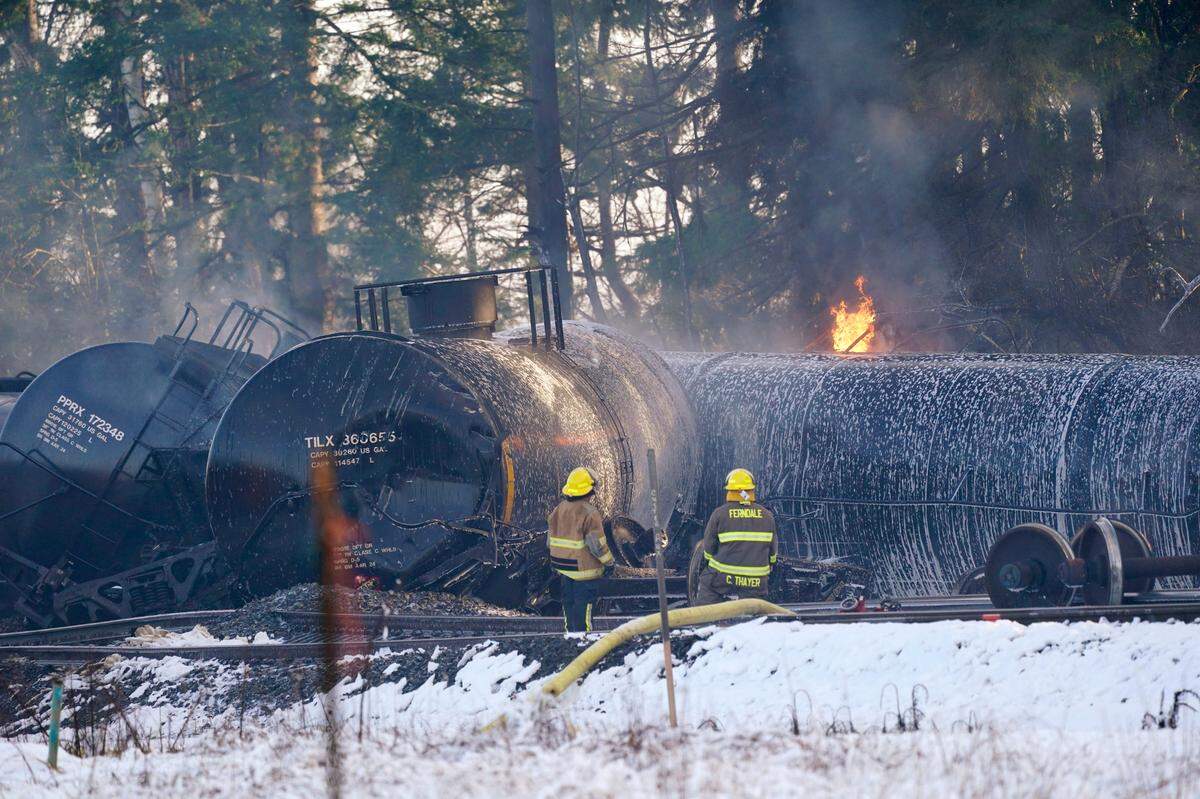
Seven cars of a BNSF Railway oil train derailed at 11:46 a.m. Tuesday just south of the intersection of Portal Way and Main Street.
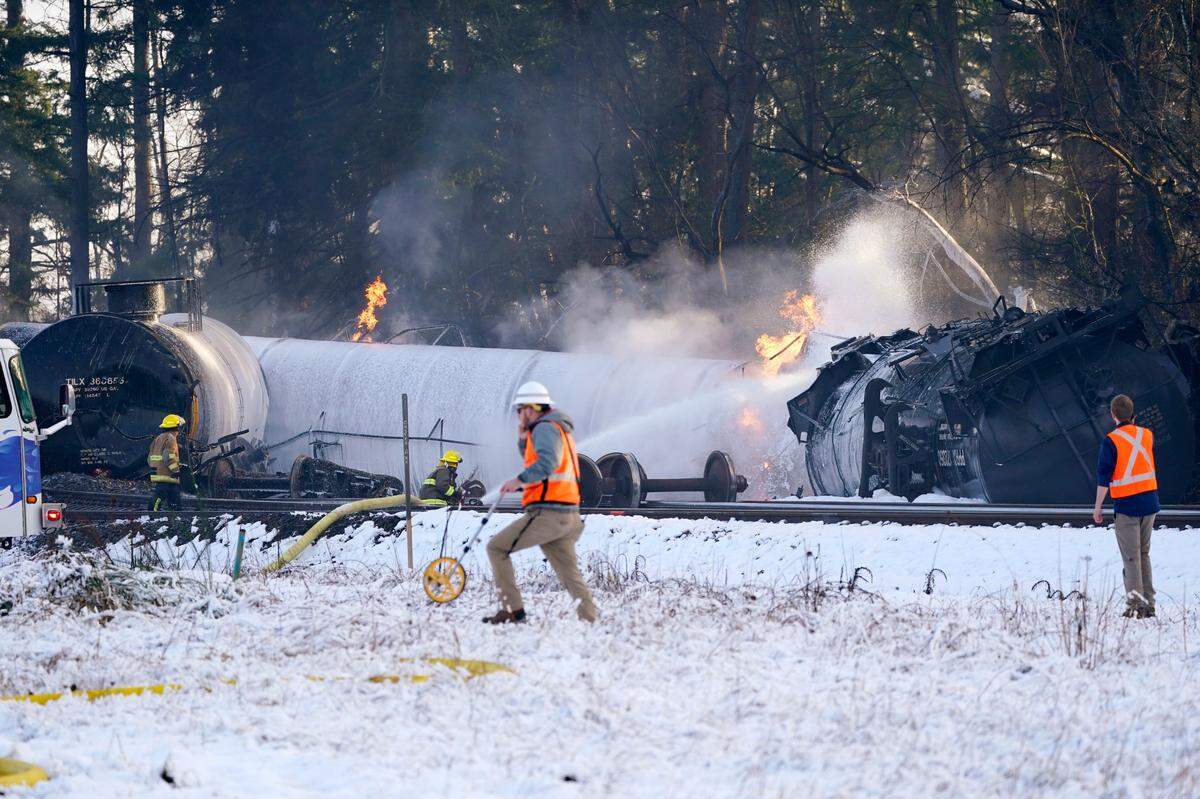
Five tank cars caught fire, said railroad spokeswoman Courtney Wallace.
Fire crews and government officials remained at the scene through Tuesday night and into Wednesday, and roads remained closed Wednesday to all but residents with ID, the Whatcom County Sheriff’s Office said online.
Residents within a half-mile radius of the derailment were told to leave their homes mid-day Tuesday.
Nearby roads, including Interstate 5, were blocked for several hours during a massive firefighting effort that included Whatcom County firefighters and specially trained crews from the two Whatcom County refineries.
Crude oil from the Bakken
Wallace said the northbound train was hauling more than 100 tank cars of crude oil from the Bakken Formation in North Dakota, bound for the Phillips 66 Refinery west of Ferndale.
Justin Piper, BNSF’s director of hazardous response, said locomotives were at both ends of the train, and the train’s two crew members disconnected the derailed portions and engines pulled the undamaged cars away from the fire, which sent up a thick cloud of toxic smoke.
Piper said the three tank cars that ruptured were of the newer and unpressurized DOT-117 style, designed to minimize the effects of fire.
Bakken crude is highly volatile and has been linked to several disastrous fires.
Such tank cars can carry up to 30,500 gallons of crude oil, according to the manufacturer, Greenbrier Co.
It was unknown how much oil had spilled, but Byers said it appears to have been contained at the fire scene.
Piper said crews worked through the night to contain oil on the ground and pump the rest from the ruptured cars.
In addition, special trucks were used to collect and remove contaminated water from the massive firefighting effort.
Officials with the National Transportation Safety Board were at the derailment scene, along with the FBI and the Environmental Protection Agency, the state Utilities and Transportation Commission, the state Department of Ecology, several local law-enforcement agencies and fire departments, and the sheriff’s Division of Emergency Management.
“We have the right people to determine what happened and why,” Elfo said.
Residents, businesses evacuated
When the train derailed, Jenny Reich was in the back of her Whimsy Glass Art Studio, facing the tracks that parallel Portal Way.
“There’s always switching going on over there. There are times you don’t even hear it because it’s so everyday,” Reich told The Bellingham Herald.
“Then I heard this big kaboom and it just shook. I told myself, ‘That’s not normal,’ “ Reich said.
Reich said she gathered her wallet, phone and her two dogs — a Bichon Frise and a Great Pyrenees, then drove to a nearby market to wait out the evacuation.
She said friends offered her a place to stay and she considered getting a hotel room but the evacuation order was lifted by 5 p.m.
“It could have been a lot worse but it wasn’t, and I’m thankful for that,” she said.
In a statement, Whatcom County Executive Satpal Sidhu thanked residents for their patience and cooperation.
Custer resident Brenda McAfee Sims told The Herald via Facebook Messenger that she lives just outside the half-mile evacuation zone and “hunkered down” at home.
“I work at (Custer) Elementary School also and this has been a big threat for us all,” she said. “We have plans in place just In case this would have happened with kids at the building. So I’m confident we would have evacuated them all safely as well.”
Refinery crews helped fight fire
Whatcom County Councilman Ben Elenbaas, who owns a nearby farm and works at the BP Cherry Point Refinery, arrived at the scene as the first fire crews were arriving.
“It was the real deal,” Elenbaas told The Herald. “It wasn’t just a few cars that went off the tracks.”
As a BP operations foreman, Elenbaas is trained in the procedures required to control such a fire and was able to brief firefighters before specialized fire crews from the two refineries arrived.
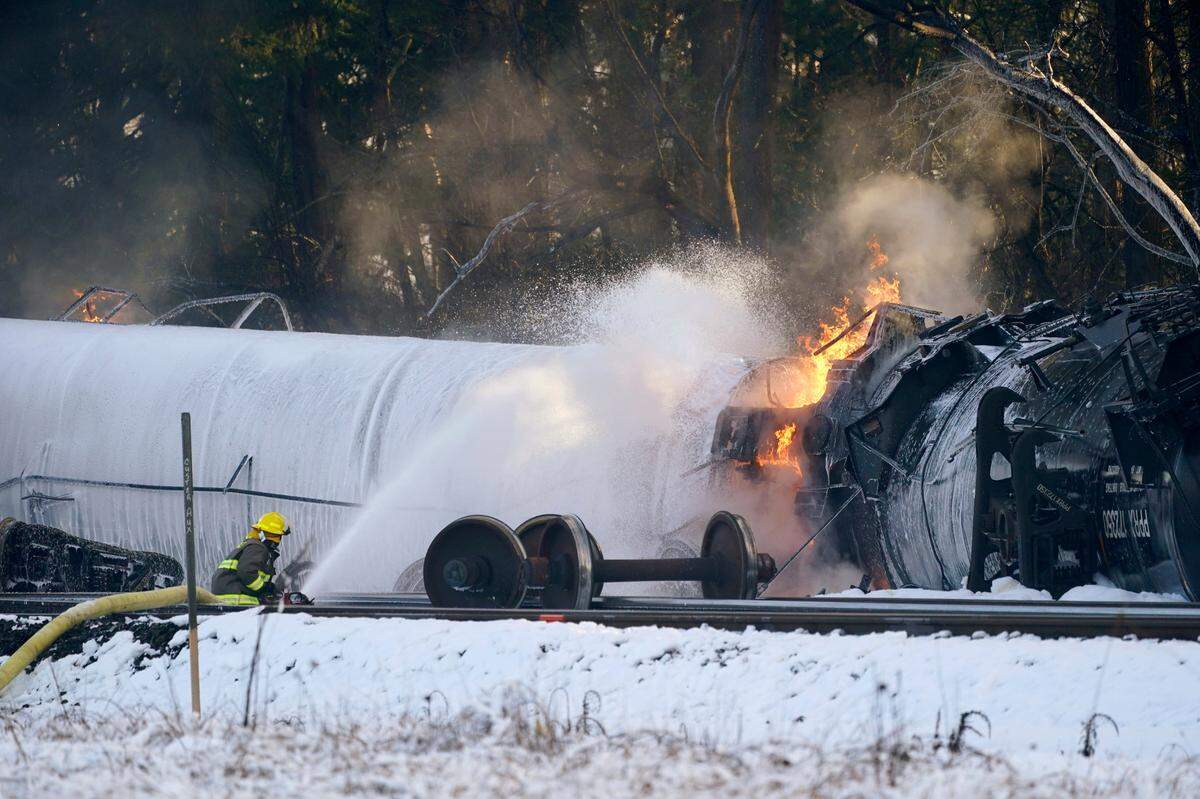
Elenbaas said firefighters scouted the area for nearby hydrants and laid water supply hose.
He said the BP fire crew attacked from the south and the Phillips 66 crew approached from the north, both using water mixed with foam for fighting petroleum fires.
“This community is lucky to have those folks here,” Elenbaas said. “As soon as those guys got there, once they started flowing foam, it went from being a very impressive fire to ‘Let’s start thinking about cleanup’.“
Recent train track attacks
Officials refused to comment Tuesday and Wednesday about recent apparent terror attack against BNSF trains.
Last month federal authorities in Seattle charged two people arrested in Bellingham with a terrorist attack on train tracks, saying they placed “shunts” on BNSF tracks. “Shunts” consist of a wire strung across the tracks, mimicking the electrical signal of a train. The devices can cause trains to automatically brake and can disable railroad crossing guards.
Authorities said the pair were opposed to the construction of a natural gas pipeline across British Columbia when they interfered with the operation of the railroad in Washington state.
The FBI’s Joint Terrorism Task Force has said there have been dozens of such cases involving BNSF tracks since January, with a message claiming responsibility posted on an anarchist website early this year.
In one, shunts were placed in three locations in Whatcom and Skagit counties on Oct. 11, prompting emergency brakes to engage on a train that was hauling hazardous materials and flammable gas. The braking caused a bar connecting the train’s cars to fail; the cars became separated and could have derailed, authorities said.
Washington state is home to five oil refineries and sees millions of gallons of crude oil move by rail through the state each week, coming from North Dakota and Alberta.
The Associated Press contributed to this story.
This story was originally published December 23, 2020 at 1:21 PM.