Asian giant hornet trapping continues in these Whatcom County parks and green spaces
If you’re wondering why there are clear plastic bottles hanging up in trees in some Whatcom County parks and green spaces, they’re there to trap invasive Asian giant hornets.
The Whatcom County Parks and Recreation Department has put up 25 traps on 11 properties in what it’s calling its west region. The department is helping the Washington State Department of Agriculture trap the hornets, which were first reported in Whatcom County, and by extension the state and the U.S., in 2019.
Bellingham Parks has set up 12 traps in the city’s green spaces as well. Citizen scientists also are helping with the effort to find and eradicate the hornets before they become established in Washington state.
The state asked the county to help with the trapping effort. County Parks put up the traps beginning July 4 and is monitoring them through the fall.
“The traps were installed at locations with lower levels of public use in woodland edge zones near shorelines,” Christ Thomsen, parks operations manager for the county, said to The Bellingham Herald.
The state provided trapping supplies as well as informational signs.
Asian giant hornets are known for their painful sting when threatened and feared for the threat they pose to honeybees — they can decimate hives quickly — and, by extension, the hundreds of crops in Washington state that the bees pollinate.
The traps are clear plastic bottles that contain a mixture of orange juice and rice cooking wine or sake.
Traps were put up at:
▪ Bay Horizon Park.
▪ Halverson Park.
▪ Hovander Homestead Park.
▪ Jensen Family Forest Park
▪ Lighthouse Marine Park.
▪ Lily Point Marine Park.
▪ Monument Park.
▪ Point Whitehorn Marine Reserve.
▪ Semiahmoo Park.
▪ Teddy Bear Cove.
▪ Tennant Lake.
The state agriculture department is leading the effort to find and destroy the Asian giant hornet, including settings traps for over-wintering queens early in spring followed by trapping for workers starting in July.
All six confirmed sightings of the hornets in the state last year and in 2020 have occurred in Whatcom County.
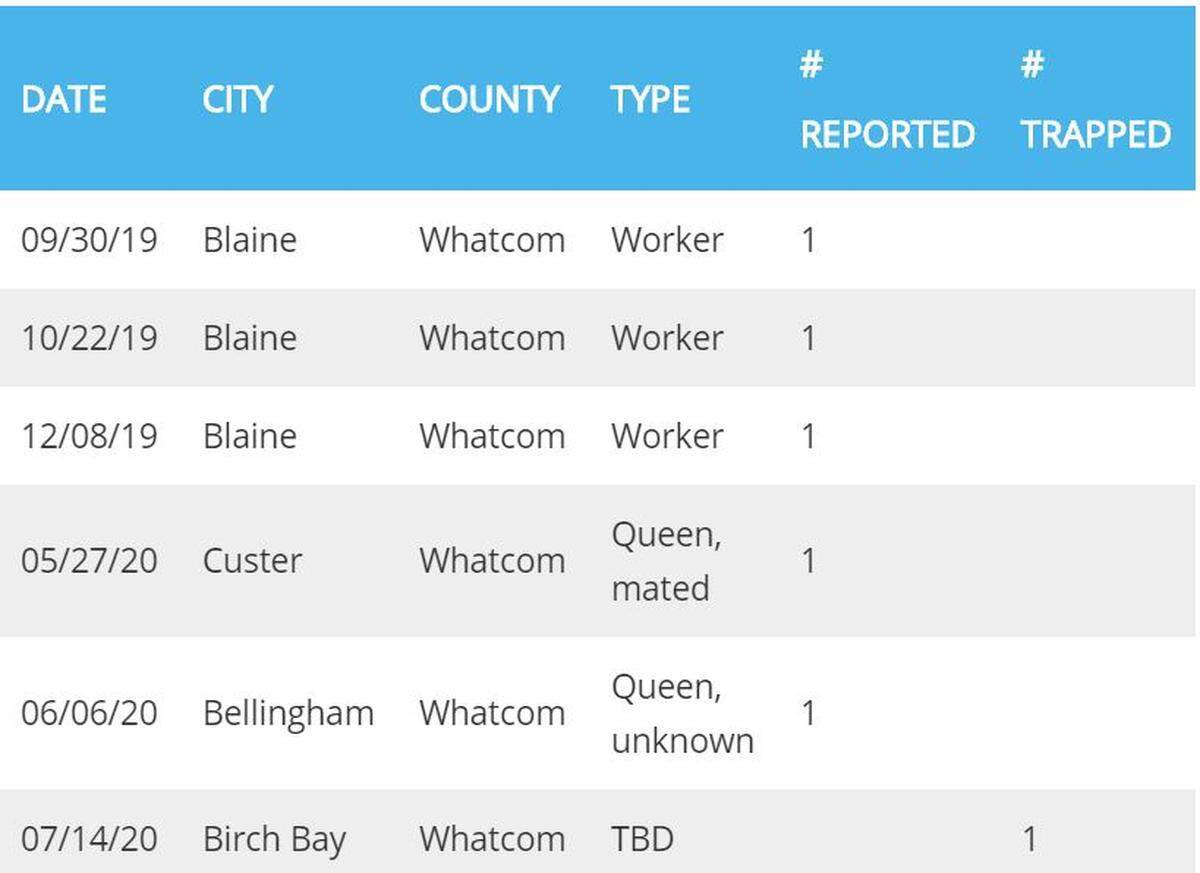
The goal is to find and destroy the hornets and prevent the pests from reproducing and taking hold in the Pacific Northwest.
State officials praised county parks for the help.
“Partnerships with our cooperators have greatly expanded our capacity to detect Asian giant hornets in Whatcom and other counties,” said Cassie Cichorz, Asian giant hornet outreach and education specialist, said to The Herald.
More than 1,800 traps — mostly across Northwest Washington — have been set by the department, other organizations and citizen scientists.
The traps in the county’s parks and green spaces haven’t trapped an Asian giant hornet yet.
But last week, state agriculture officials announced one of their traps caught an Asian giant hornet near Birch Bay in mid-July. It was the first time that one was found in a trap. Residents found previous specimens in the environment, outside of traps.
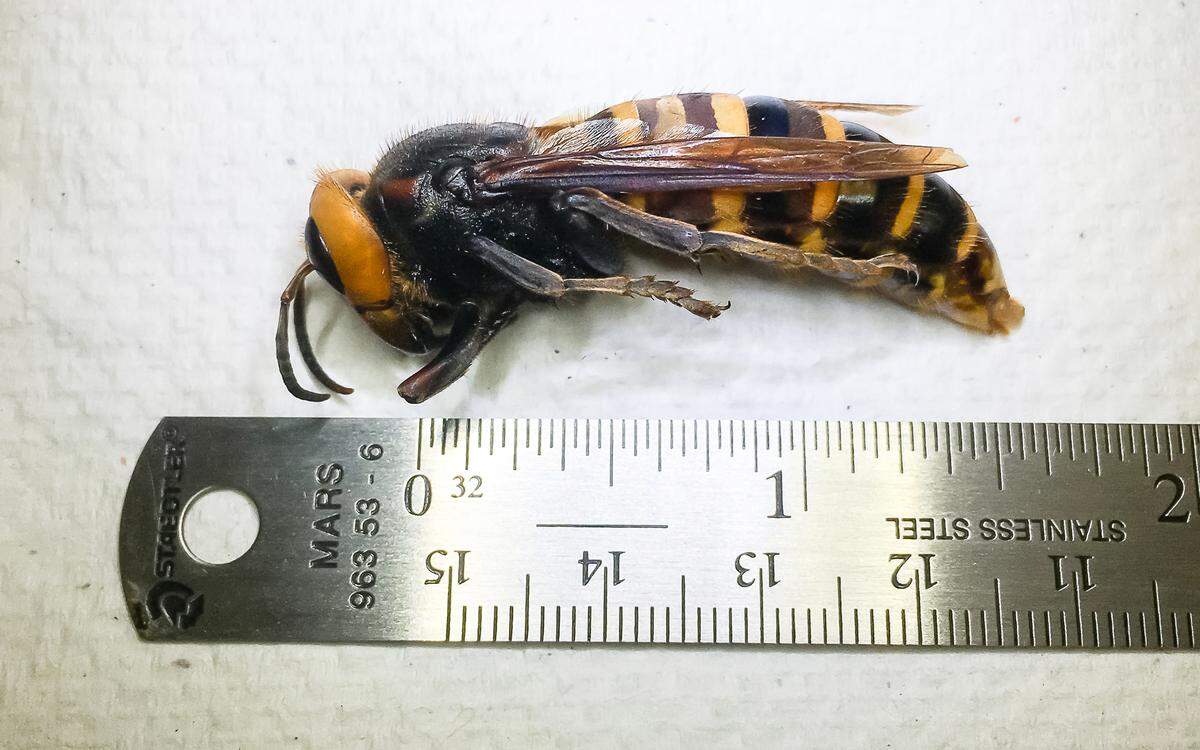
About the size of an adult thumb, the Asian giant hornet, or Vespa mandarinia, is the world’s largest hornet species and a predator of honeybees and other insects. They are identifiable by their large yellow/orange heads.
The hornets’ native range is Asia. They also are known as the Japanese hornet, yak-killer hornet, the giant sparrow bee and popularly as murder hornets after a New York Times article.
Asian giant hornets are typically dormant during winter. They’re seen usually from July through October, though most likely in August and September as the number of worker hornets increases as a colony grows.
They primarily nest in large colonies in the ground — in hollows formed by rotting roots, hollow trunks and rodent burrows. They can, though rarely, nest above ground in hollow trees and human structures, state agriculture officials have said.
Report it
If you think you’ve seen an Asian giant hornet, the Washington State Department of Agriculture wants you to report it.
Provide as much detail as you can about what you saw and where. Get a photo, if you can do so safely, and submit it. If you find a dead Asian giant hornet, keep it for potential testing.
Here’s how to report it:
▪ Go online to the Hornet Watch Report Form.
▪ Email PestProgram@agr.wa.gov.
▪ Call 800-443-6684.
▪ Stay updated at the Asian giant hornet watch Facebook group.
Learn more at agr.wa.gov/hornets, including how members of the public can create bottle traps for Asian giant hornets.
This story was originally published August 6, 2020 at 5:00 AM.