Only 57 agencies statewide, including the Bellingham police, earned this distinction
The Bellingham Police Department received reaccreditation by the Washington Association of Sheriffs and Police Chiefs, meaning the department follows or exceeds “industry best practices and standards,” Bellingham Police Chief David Doll announced Monday, July 20, during a Bellingham City Council meeting.
The department is one of 57 law enforcement agencies across Washington state that has received accreditation as of June 2020, according to the Washington Association of Sheriffs and Police Chiefs. There are up to 300 agencies that could be accredited across the state, Mike Painter, director of professional services with the association, told the council.
In an interview with The Bellingham Herald Tuesday, July 21, Doll said he has continued appreciation for the daily support the department receives from the community. He said community members should be proud that the department is one of only 57 accredited agencies.
“Not a day goes by where I do not receive some letter or card of support from community members who have experienced the professionalism of this department,” Doll said. “That support is gained by each and every contact from our personnel — the women and men in uniform, the investigation teams that follow-up on serious crimes, the outreach teams who engage in daily problem-solving with neighborhoods, those experiencing homelessness or mental health/drug addiction crisis, and our support staff who ensures our first responders have the right information to navigate the complex calls to which they are sent.”
Calls for police reforms have taken center stage after weeks of nationwide and local protests surrounding systemic racism and police brutality. Protests began after George Floyd, a 46-year-old Black man, died in late May after a white Minneapolis police officer knelt on his neck for nearly nine minutes.
At various local rallies and protests, people of color living within Whatcom County have spoken about their experiences with various local law enforcement agencies and police brutality. Bellingham Mayor Seth Fleetwood has set a series of listening sessions in which ways to address systemic racism and police reforms, including defunding the police, will be discussed.
Accreditation process
The Washington Association of Sheriffs and Police Chiefs has established 137 standards for agencies to be accredited. The standards fall into 18 law enforcement areas, which include goals and objectives, use of force, health and safety, fiscal management, training, performance evaluation, code of conduct and others, according to a memo Doll provided to the City Council and the sheriff and police association’s records.
An agency becomes accredited so it can increase credibility and public confidence in the agency, strengthen administrative and operational effectiveness and agency policies and procedures, reduce liability from civil lawsuits and ensure recruitment, ensure selection and promotion processes are fair and equitable, among others, according to Doll’s memo.
The accreditation process has eight phases, including an agency self-assessment, an on-site assessment and evaluation and two separate reviews, according to the association’s website. The eighth and final phase is reaccreditation — which happens every four years and requires the agency to go through the entire accreditation process again.
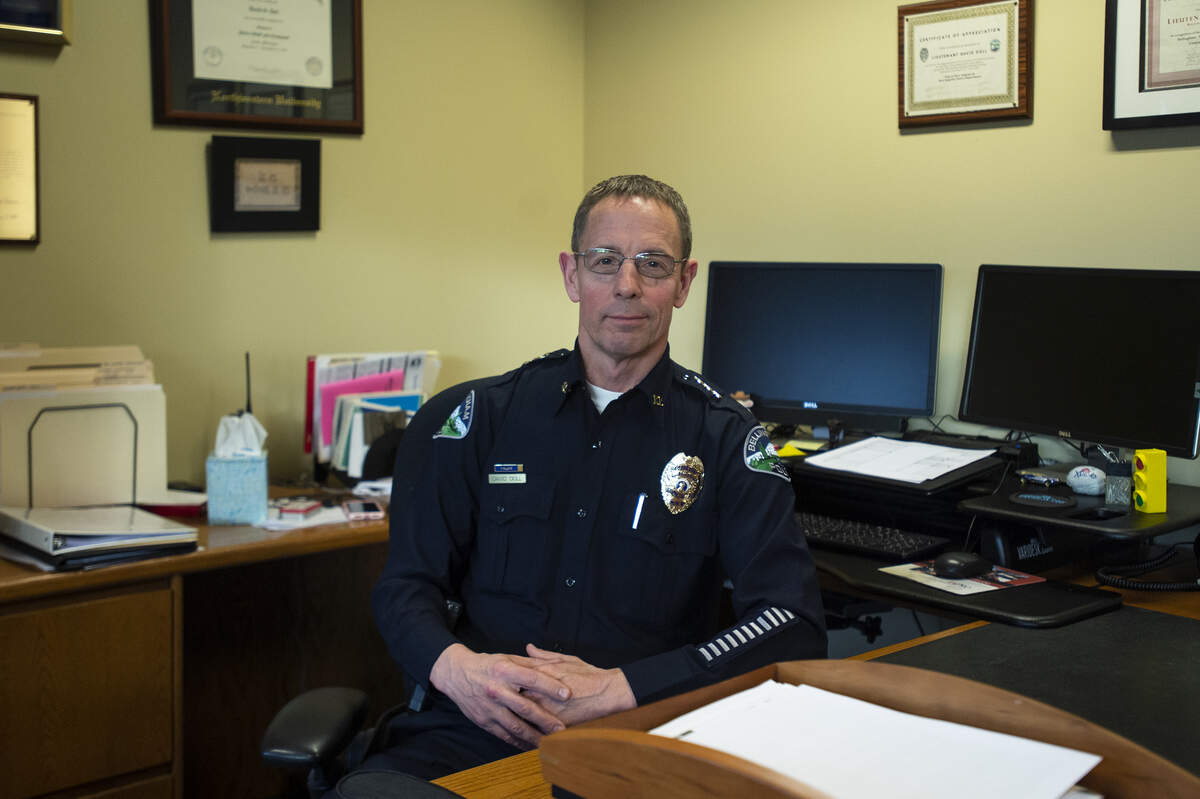
Bellingham police first became accredited in 2016 and was recently awarded reaccreditation as of June 2020. It is the only Whatcom County law enforcement agency that is accredited, according to the sheriff and police association’s records.
“I would be very proud and am very proud of Bellingham PD. I think that they have done a fantastic job, of not only preparing for accreditation, but also serving your community,” Painter said during the council meeting.
Painter said that when an agency gets accredited it makes the department better. He said being accredited means the agency is working and participating in best practices, that they are holding themselves accountable and that there is organizational discipline.
Painter told the council the accreditation process is tough and time consuming, and that Doll has also been involved in the committee that evaluates and helps develop the standards for accreditation.
“My experience with the staff of Bellingham PD is what I would characterize as some of the best, the most thoughtful professionals that I’ve had a chance to work with in over 40 years in law enforcement,” Painter said.
Outlining the standards
City Council member Michael Lilliquist asked Doll and Painter whether the standards outlined for accreditation really are higher standards and if they will become normalized for law enforcement across the state. Painter said that some of the standards may need a closer look.
Doll said that as chief, he tells every new officer that if they do great work, he will support and celebrate them, but that if an officer does one thing that damages the reputation of the department, he will remove that person from the organization.
“I think that’s just the culture we have here. We hold each other accountable,” Doll told the council.
Doll said that to be accredited or reaccredited, an agency has to live the standards, as they’re not something that can just be put together once every four years. He also assured the council that there are outside assessors that come in, look at the department’s work and decide whether they meet the accreditation requirements.
Council member Hannah Stone asked whether the accreditation process involved any standards surrounding deescalation. Painter said the standards do not, but that there will likely be some additions to the 137 current standards in light of national and statewide conversations surrounding policing.
Council member Daniel Hammill asked how much racial equity and social justice factor into the accreditation process. Painter said it doesn’t, but that the accreditation standards do include requirements surrounding bias-based policing or policing that is inappropriate.
“The attention to those topics has been around for many years. But it’s tough to get your arms around them in terms of evaluation,” Painter said.
He said he expects the sheriffs and police chiefs association will be looking at those questions over the next six months.
Council member Lisa Anderson said throughout her career she has gone through roughly 10 to 12 national, state and organizational accreditation processes. She said for people who haven’t experienced an accreditation, to imagine an IRS audit and having people going through your agency’s processes, practices and budgets with a microscope.
“It’s not an easy task,” Anderson said. “This is definitely something to be proud of and I’m proud that we are one of the cities who are accredited, because it does show that we are taking the initiative to make sure that we have outside agencies and people that are here looking at our practices and validating what we do right and hopefully providing feedback on areas and standards we can improve.”