There’s been little police presence at multiple Bellingham protests. Here’s why
Throughout nearly three weeks of demonstrations promoting equality and protesting systemic racism in Whatcom County, the Bellingham Police Department has not had uniformed officers present at any events.
The demonstrations have ranged from a protest of a little more than 100 people that prompted two community conversations with Bellingham Mayor Seth Fleetwood after protesters entered City Hall and later blocked off three blocks worth of downtown streets to a solidarity rally that drew more than 5,000 people to Maritime Heritage Park.
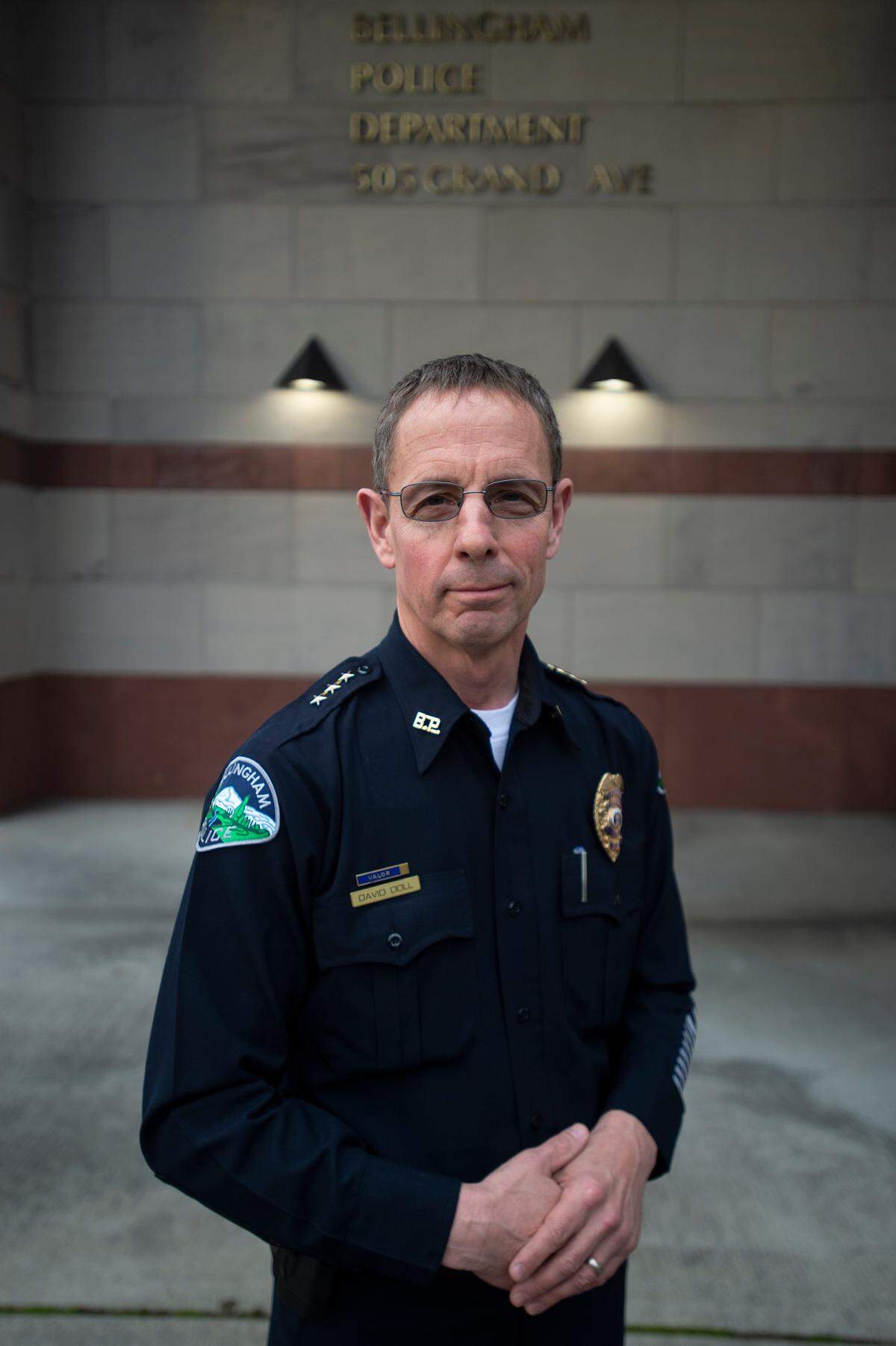
Bellingham Police Chief David Doll said there is a reason uniformed officers have not been present at any of the events.
“There’s no need for us to have uniformed police there. We do not have a history of violent protests. We have a very active community and we have a peaceful community,” Doll told The Bellingham Herald in an interview.
Nationwide protests erupted in late May after George Floyd, a 46-year-old Black man, died after a white Minneapolis police officer knelt on his neck for nearly nine minutes.
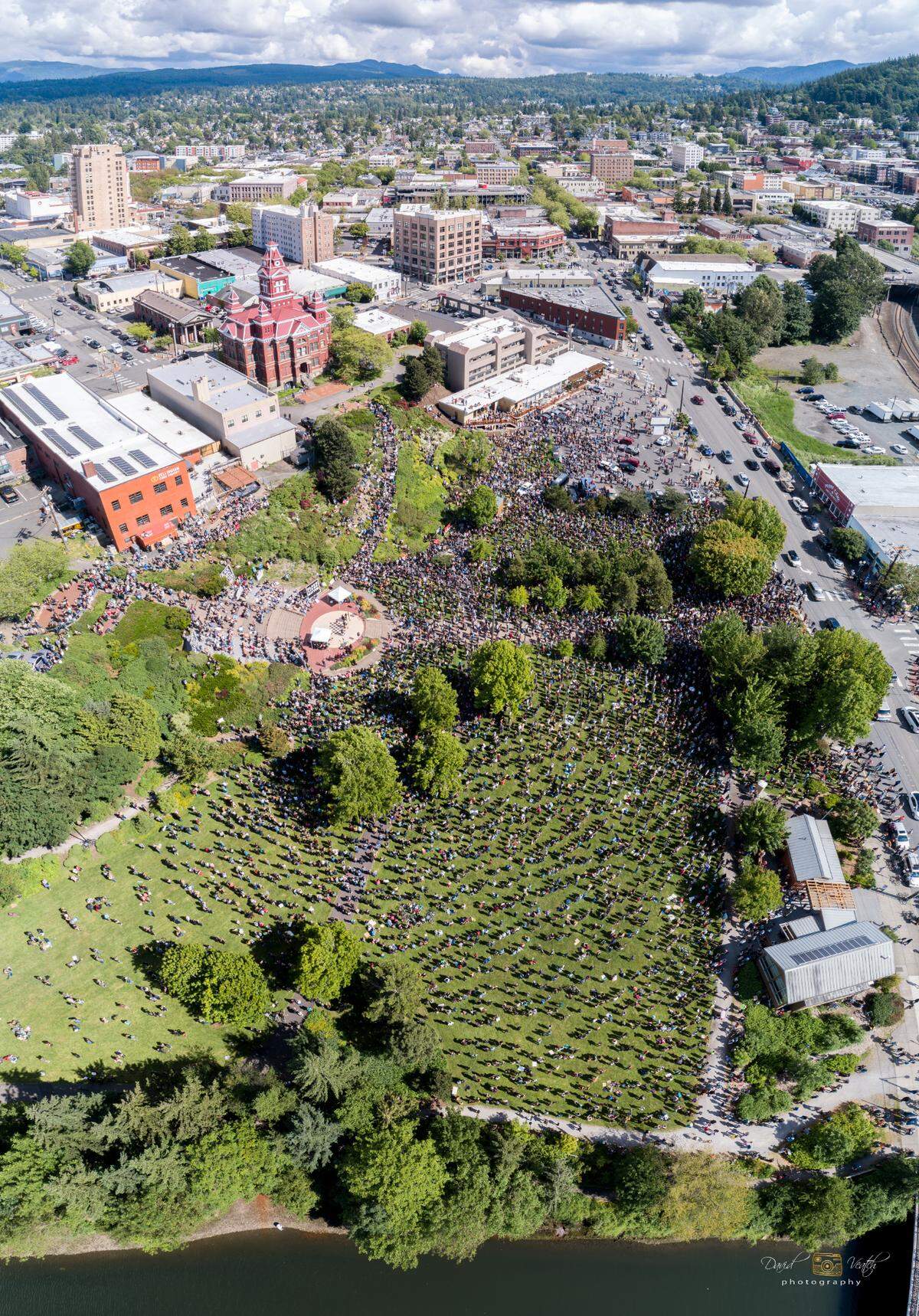
Nearly two weeks after Floyd’s death, a Peaceful Solidarity Rally was held on June 6 at Maritime Heritage Park to promote equality and solidarity among all people. More than a dozen speakers of color spoke about systemic racism. Both speakers and rally attendees said they hoped the event sparks change in the community.
No uniformed officers were present at the rally, but Doll and Blaine Police Chief Donnell “Tank” Tanksley attended in plain clothes. Doll said he was invited to attend by one of the organizers, and that officers were on standby in case there was interference with the peaceful assembly. Doll said the department was prepared to intervene if there were people who attempted to disrupt the safety of the people at the rally.
Before the Solidarity Rally, hate literature and leaflets promoting racist views were found on Western Washington University’s campus and in the Lettered Streets neighborhood in Bellingham. Armed men were also seen downtown prior to the rally.
“I wanted the focus to be on the event and speakers. I did not want the focus to be on us. It’s not about us. It’s about the message being delivered by the speakers,” Doll said. “I thought it was an amazing, amazing display of how the whole community could come together peacefully and come together speaking with a common voice. … It was an incredible opportunity for all of us to listen and quite frankly, to learn.”
Standing in solidarity
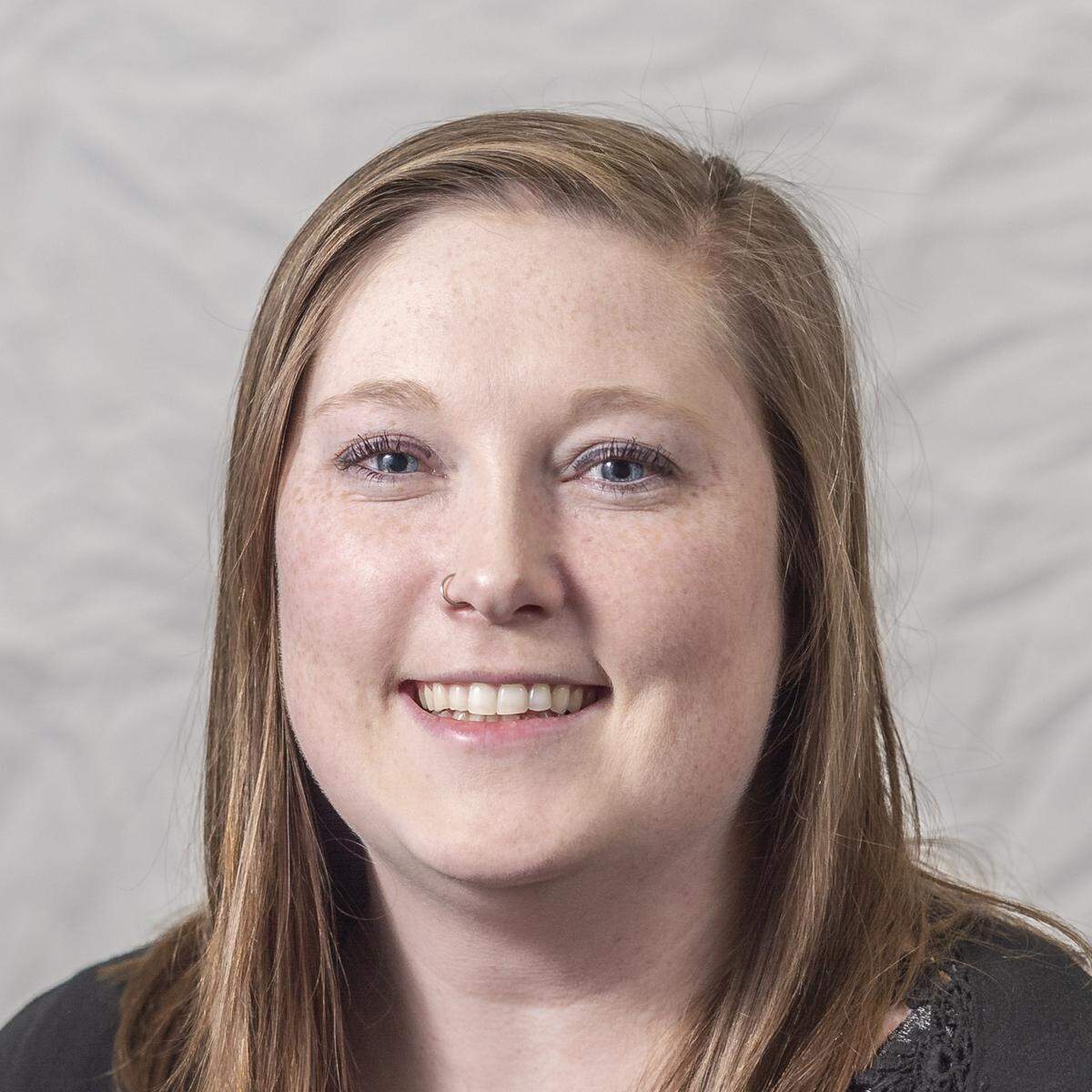
Kristina Michele was one of the organizers for the June 12 protest that saw several hundred people lined the sidewalks on West Bakerview Road near the Costco in Bellingham.
The protest was in solidarity with the Black Lives Matter Seattle-King County chapter, which put a call out on June 9 for a statewide day of action on June 12 that included a general strike and silent march in support of all Black lives in Washington state. Michele, who is Black, said the local event was about making sure the city saw them.
There was no police presence at the protest.
Michele said the lack of police presence at the protests is “6 of one and half dozen of the other” for her. Michele said sometimes police show up when they’re not needed, or they aren’t actually there when they are needed.
Michele said with the lack of police presence, protesters have been able to hold two peaceful protests without any problems.
Michele said the first time police called her was during the June 15 March to Defund Police when a group of protesters, who Michele is unaffiliated with, had barricaded downtown streets.
“No one wanted to check in on me after either of the two peaceful protests or anytime before the third one which I was completely unaffiliated with until there was rioting in the streets. All of the sudden they have time to talk to me … and I wasn’t even the right person,” Michele wrote in an email to The Herald. “The official response I then received from the police is right now, sometimes their uniforms insight violence, to which I responded, isn’t that the problem? And is it the uniforms or the way in which your officers react and respond to situations?”
Michele said she thinks it would go a long way to have uniformed officers stand in solidarity with the protesters. She said they’re welcome to, as long as they don’t hurt or kill people of color for exercising their First Amendment rights. She said she understands it may be hard for some of them to stand with protesters who think officers are doing “a terrible job,” or when officers’ colleagues support the ideologies the protesters are trying to condemn and dismantle.
“Until real changes start happening throughout the entire policing system we will be stuck at this stalemate,” Michele said in an email. “And they are paid by our tax dollars. We are telling you the system is broken and we want them to fix it, it’s literally their job.”
A protest, march and barricades
The March to Defund Police ended where it began nearly eight hours after it started in downtown Bellingham on June 15. Protesters marched, entered City Hall, barricaded the streets and held two conversations with the mayor.
Doll told The Herald in an email that there was no request or need for police presence when protesters entered City Hall. He said the department was monitoring the situation, though.
“While the participants may have been vocal, there was no violence and City Hall was open at the time,” Doll said in the email.
After leaving City Hall, protesters made their way back downtown where they overturned dumpsters and barricaded Holly Street from State Street to Cornwall Avenue. The city ended up placing its own barricades on some streets in an effort to redirect traffic for the safety of the protesters and the drivers, Doll said in the email.
Doll said 911 received 17 protest-related calls between 12:25 p.m. and 4:45 p.m. that day. A breakdown of the types of calls was not immediately available. Doll said the decision was made to not send police downtown to break up the protest because there was no violence.
He said he has “continued appreciation to our community members for remaining peaceful when they exercise their 1st Amendment rights. We are looking forward to continued outreach to and communications with groups to work toward having a greater understanding as to how we can better serve all of our community.”
Marissa McGrath, assistant director of the downtown Bellingham partnership, said at the most recent protest that blocked Holly Street, protesters had entered nearby businesses to let them know what was happening and kept checking in throughout the day’s events.
“The protests were done clearly in the sense of a pursuit for equity and justice. They were done pretty conscientiously,” McGrath said. “It just seems like it was a collaborative effort that was really intended to bring attention to the message a lot of people are thinking about nationally and locally.”
McGrath said downtown is the central district for culture, government and commerce, so it made sense that many of the protests or rallies would be centered in that area. McGrath said she checked in with some of the nearby businesses, especially after the protest on June 15.
“With how long everyone had to be closed with COVID-19, the idea that there is any glitch in the ability to operate is going to add the most frustration. But I heard ‘it is what it is right now.’ ... I think the downtown core understands they operate in ... the cultural center and locus of government for the county, so this is where big topics get hashed out and brought up,” McGrath said. “My understanding is that they just see it as it comes with the territory of operating in a city center at a moment like this.”
Building tensions
By not showing up to the protests, Bellingham police have been following best practices, according to Dr. Patrick Gillham, an associate professor at Western Washington University who has been studying and writing on social movements, protests and the policing of protests since 1999.
Gillham said research shows that when police are present at protests, especially if they are the target of the protest, that there is a correlation between police presence and the escalation of protests into riots or civil disorders. He said most protests around the United States, and the world, are peaceful, but that sometimes protests escalate into more disruptive events. He said when that happens, it’s often in response to something police have done to escalate the situation.
Gillham said during the 1999 WTO protests in Seattle, police in riot gear used tear gas and nonlethal projectiles on the first day, escalating the protest. Because of that overreaction, the demonstrations ended up lasting several days, Gillham said.
“When police overreact, they escalate a conflict. So we know more about how escalation occurs than how to de-escalate. The research isn’t clear on how to de-escalate, but when police show up looking for a fight, or looking ready for a fight — with armored personnel carriers or show up in body armor and are being very visible, even if the intent is to protect themselves and be able to protect others — nevertheless it escalates conflict almost immediately,” Gillham said.
Research shows it’s best for police to show up in normal uniforms to protests, if they show up at all, and tolerate minor law breaking and disruption, such as walking and blocking an intersection or spray painting or crossing on a red light, in order to keep things from escalating, Gillham said. This is the approach that Bellingham police have appeared to take during the recent local protests, he said.
Gillham said sometimes protesters can escalate things, but that by and large, the majority of people attending are peaceful and will police themselves if someone starts breaking something or escalating the situation.
“The main takeaway is that most people are protesting peacefully,” Gillham said. “So police can’t lump them all in the same bucket and say the people here protesting peacefully should be treated the same as the people breaking windows and they should be treated the same as people who are looting. That’s not helpful and it doesn’t improve relations between police and their communities. And it doesn’t do much for democracy either.”
Gillham said that in 1968 a 425-page report, called the Report of the National Advisory Commission on Civil Disorders, or the Kerner report, was produced by a presidential commission tasked to study the civil disorders of 1967. Gillham said the report found the causes of the disorders were from long-standing structural problems, such as institutional racism in housing, job and educational opportunities for people of color — many of the issues still present today.
Gillham encouraged people, especially elected officials and politicians, to go back and read the report, see what is still unresolved today and fix those issues. He said officials and politicians also need to be listening to the people who are protesting in the streets.
“The report says a lot of different things, but one of the things the report said was not only do we need to deal with the structural problems related to inequalities related to housing, healthcare, education and job opportunities, but we also need to deal with policing and make them more accountable to the people they serve in these communities,” Gillham said. “The police killing of George Floyd was the catalyst or spark that set off protests, but these tensions have been building for years and years and years partly because they’ve not been dealt with ever or sufficiently.”
Hoping for opportunities
Doll, the police chief, said he is deeply and continually saddened that people fear for their personal safety because of their race or ethnicity.
“As a privileged white male I do not know what it’s like to step outside my door and feel fear. As a police leader, I have to identify causes of that fear, the systemic racism that exists in all forms, and continue as a leader in the community to listen and find ways to remove that fear,” Doll said in the interview with The Herald. “For me, a big thing is listening and understanding. That’s the key I think.”
Doll started with Bellingham Police in 1980 as an explorer cadet, was hired as a commissioned officer in 1984 and was appointed chief Dec. 1, 2017. He attended Sehome High School, Whatcom Community College, Western Washington University and Columbia College. He also is a graduate of Northwestern University’s School of Police Staff and Command.
At all of the events, speakers of color have shared their experiences with and fear of the police and police brutality. Doll said he wants to identify the issues within the community, and know about specific experiences so he can understand, explain what happened and apologize if the proper actions weren’t taken.
Doll said he has an advisory council, which includes at least one person of color, meets with the Human Rights task force once a month, and before the COVID-19 pandemic, was having discussions about holding community round tables, including for youth who are fearful of police.
Doll said he hopes the recent events provide opportunities for him to meet with people in the community that have experiences or ideas that they would be willing to share that help build positive and constructive relationships, which would in turn hopefully provide more equitable service to all community members.
“I think right now the main objective is to listen to the perspectives that are out there and the points of view that are out there and to take that analysis and understand how to translate that into action,” Doll said. “I want to understand what the issues are from the community’s perspective and then I need to see what action steps I can take.”
Doll said the department does have riot, or protective, gear in case the department does have to take action, but that the department hasn’t needed to use it because “we have such a peaceful community.”
Doll said he wants to address the fears people in the community have and remove those fears. He said he hopes to build bridges and develop relationships with community members one conversation at a time.
“In my conversations with community members, I understand systemic racism exists in our community and am continuing these conversations to understand how I can assist in dismantling it,” Doll said in an email to The Herald.
Doll said he invites anyone in the community to connect with him in whatever way feels comfortable, and that he’s willing to meet them where they feel most comfortable.