The hunt is on in Whatcom for invasive, bee-killing giant hornets with painful stings
The state will set “sap traps” and ask people to make homemade bottle traps in an effort to find and destroy invasive Asian giant hornets and keep them from making a home in the Pacific Northwest.
Trapping will occur in spring and summer as Washington State Department of Agriculture and other officials battle the new and unwanted pest, which was discovered in Blaine in December — making it the first time the invasive Asian giant hornet was discovered in Washington state.
There also was another sighting in Blaine as well as possible, though unverified, sightings near Stimpson Family Nature Reserve and near Custer, where a beekeeper reported a massive loss of bees with decapitated heads.
The confirmed sightings were the first time the hornets were found in the U.S. outside of being intercepted at airports, according to Chris Looney, an entomologist with the Washington State Department of Agriculture.
On Wednesday, Feb. 26, Looney detailed on a public video call what officials know about the hornets, which can wipe out honeybee hives within hours and deliver painful stings to people, and what they’re doing to keep them from becoming established in Washington state.
As for how they got here, Looney said officials don’t know. It’s most likely over-wintering queens hitched a ride in ballast or commodities on traffic between Asia and North America, he added.
Officials had previously speculated that the ones found here may have come from British Columbia.
In September, a nest of Asian giant hornets in Nanaimo, British Columbia, was destroyed, according to the Times Colonist. It also was the first time they were found in B.C.
Search and find
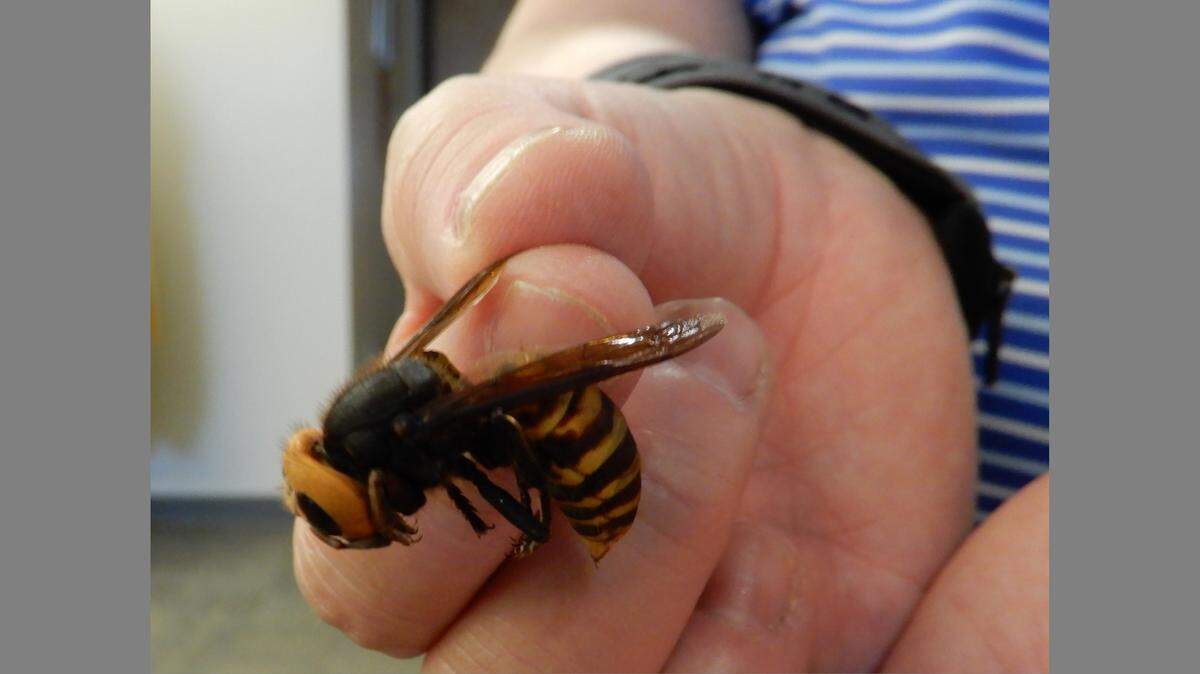
About the size of an adult thumb, Vespa mandarinia is the world’s largest hornet. Its stinger is longer than a typical, native wasp, so each sting delivers more venom.
Asian giant hornets usually aren’t aggressive toward humans unless disturbed, but people should stay at least 10 feet away from them.
“If you encounter these, run away” and do so calmly, Looney said.
Their native range is Asia. The hornets are also known as the Japanese hornet, yak-killer hornet and the giant sparrow bee. Because they’re new to Washington state, officials here are relying on the knowledge of their counterparts in China, Japan and Korea.
Asian giant hornets are typically dormant during winter. They’re seen usually from July through October.
They primarily nest in large colonies in the ground — in hollows formed by rotting roots, hollow trunks and rodent burrows. They can, though rarely, nest above ground in hollow trees and human structures, according to Looney.
As for how officials are going to find and eradicate them — it’s unclear at this point how big the problem is in Washington state — Looney laid out a number of steps:
▪ Setting what are called “sap traps” to attract unmated queens that emerge in the spring and feed on sap. Oak trees will be the focus of the sap traps, with the addition of alder, cherry and some maple, according to Looney.
▪ Asking for the public’s help in trapping and reporting. Community meetings will soon be scheduled in Whatcom, Skagit and San Juan counties to recruit people who want to make and put up a bottle trap in the summer, Looney said.
The bottle will have a fermenting liquid inside to attract the hornets.
▪ Other steps state officials are considering include using thermal-imaging cameras to find nests, which usually have a temperature of about 86 degrees Fahrenheit, and developing pheromone traps.
However, dogs aren’t being trained to sniff out nests because of the hornets’ powerful stings.
Finding nests
The goal is to find nests and kill the hornets before they can reproduce, Looney said.
If people find a nest, which can be 2 feet across, they should not destroy it.
“Leave them alone,” Looney said, adding that Washington State Department of Agriculture officials will destroy them at night, when the hornets are less aggressive in defending their nests.
To contend with the hornets, state officials have had to order special suits because the ones used by beekeepers are too thin to protect against the hornets’ sting.
Asian giant hornets can be nearly 2 inches long and are identifiable by their large heads, which are yellow/orange. They have orange and black stripes on their bodies, a black thorax and prominent black eyes.
The hornets feed on insects, including honeybees. Beekeepers are concerned about them because a small number of hornets can quickly destroy hives, leaving piles of dead bees outside their hives.
If you’re stung
State officials are telling people to use “extreme caution” near Asian giant hornets. In Japan, up to 50 people in a year have died after being stung by Asian giant hornets, according to Looney.
In general, stay away from them, especially if you’re allergic to bee or wasp stings.
The Washington State Department of Health recommends the following steps for staying safe and for what to do if you’re stung.
▪ Protect yourself while outside by keeping food and drinks covered and dispose of food and garbage properly.
▪ Don’t swat at the hornets because that might make them sting.
▪ If you’re stung, thoroughly wash the area with soap and water.
▪ Reduce swelling by applying ice or a cold compress. Applying ice also will slow the spread of the venom. There won’t be a stinger for you to pull out.
▪ Take an antihistamine or use anti-itch cream to reduce itching.
▪ If you are stung multiple times or have a severe reaction, such as trouble breathing or difficulty swallowing, after being stung, call 911 or get medical care immediately.
Report it
If you think you’ve seen an Asian giant hornet, the Washington State Department of Agriculture wants you to report it. Here’s how:
▪ Go online to the Hornet Watch Report Form.
▪ Email PestProgram@agr.wa.gov.
▪ Call 1-800-443-6684.
Stay updated at the Asian giant hornet watch Facebook group.
Learn more at agr.wa.gov/hornets.
This story was originally published February 27, 2020 at 5:00 AM.