Here’s what to do if you run into the invasive Asian giant hornet found in Blaine
A burly hornet with a voracious appetite for honeybees has been found in Blaine, marking the first time the invasive Asian giant hornet has been discovered in Washington state.
About the size of an adult thumb, Vespa mandarinia is the world’s largest hornet. It’s usually not aggressive toward humans unless disturbed but its powerful sting is painful, according to the Washington State Department of Agriculture.
The unwanted hornets are about 1-1/2 inches long and identifiable by their large heads, which have been described as yellow to light orange in color.
The agency released a pest alert on Thursday, Dec. 19, about the critter, which a Blaine resident living near the Canadian border reported finding on their property on Dec. 8, describing it as an “unusually large hornet.”
State agriculture officials went to the property two days later, collected the dead hornet and subsequently confirmed its ID, according to the alert.
“The resident also reported seeing a live giant hornet at a hummingbird feeder before it retreated into a nearby forest,” the alert states.
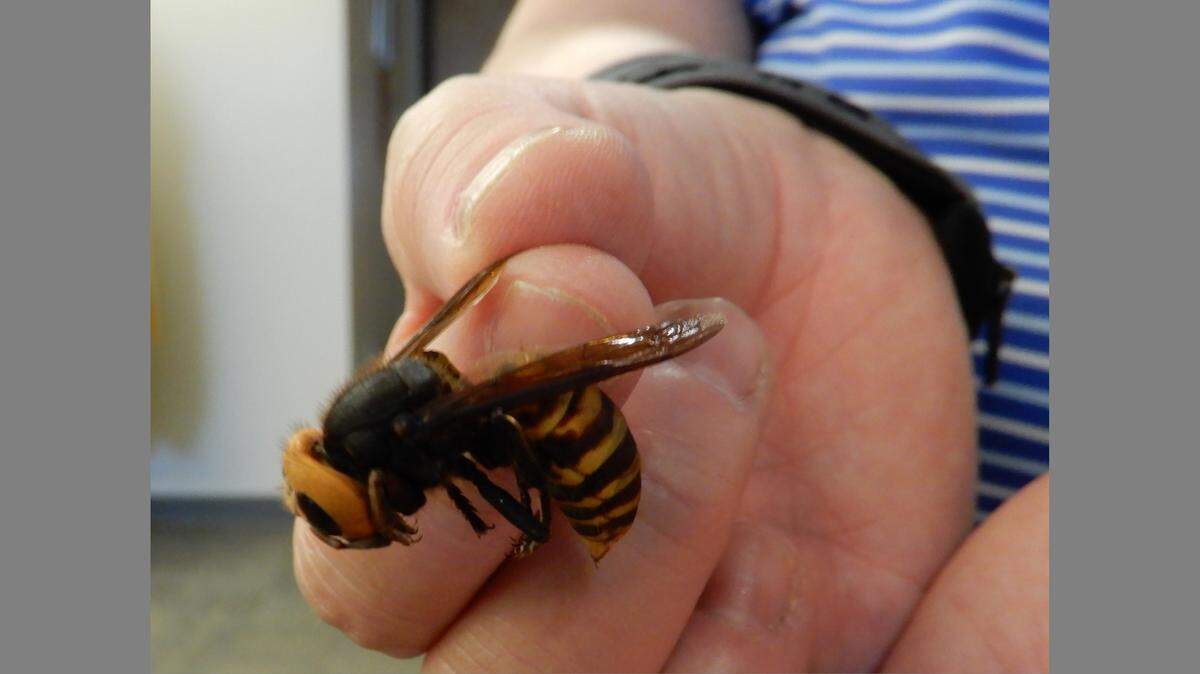
The state will set up traps in the Blaine area for the Asian giant hornets, and will reach out to the public for help next year in keeping an eye out for the pests and reporting any they find to the WSDA Pest Program.
“We want to keep this invasive species out of Washington and we’ll take steps to make sure we do that,” said Chris McGann, spokesman for the state Department of Agriculture.
Where did they come from? Canada, perhaps.
In September, a nest of Asian giant hornets in Nanaimo, British Columbia, was destroyed, according to the Times Colonist. It also was the first time they were found in B.C.
“I don’t think we can say conclusively that the hornet came from the colony found in B.C.,” McGann said. “B.C. officials apparently destroyed that colony of about 200.
“But given the location and the province’s recent encounter with these hornets, it’s likely that these came from north of the border,” he added.
Asian giant hornets are typically dormant during winter. They’re seen usually from July through October.
Still, state officials are telling people in the Blaine area to keep an eye out for the hornets and to stay away from them.
They nest only in the ground.
People, pets and large animals don’t have to worry about them usually but the hornets will “inflict a nasty sting if threatened or their nest is disturbed,” according to the pest alert.
The hornets feed on insects, including honeybees. Beekeepers are concerned about them because they can quickly destroy honeybee hives.
If you think you’ve found an Asian giant hornet, report it to WSDA’s pest program via email at pestprogram@agr.wa.gov. If possible, send a photo.
If you’re stung
The Washington State Department of Health recommends the following steps for staying safe and for what to do if you’re stung by giant Asian hornets.
▪ Protect yourself while outside by keeping food and drinks covered and dispose of food and garbage properly.
▪ Don’t swat at the hornets because that might make them sting.
▪ If you’re stung, thoroughly wash the area with soap and water.
▪ Reduce swelling by applying ice or a cold compress.
▪ Take an antihistamine or use anti-itch cream to reduce itching.
▪ If you are stung multiple times or have a severe reaction after being stung, call 911 or get medical care immediately.
The Washington State Department of Health has more on bees and wasps online.
This story was originally published December 23, 2019 at 9:45 AM.