
Whatcom air quality still very unhealthy, but ‘this should be the worst of the smoke’
Relief is in sight for Whatcom County residents after two days of record-breaking heat and “very unhealthy” air caused by smoke from wildfires blowing out of British Columbia.
Thursday’s forecast calls for partly sunny skies with temperatures in the 70s, followed by a slight chance of showers daily from Friday though Monday.
Meteorologists at the National Weather Service in Seattle said winds would bring cooler, cleaner air from across the ocean starting Wednesday evening and begin a gradual clearing through Thursday.
“This should be the worst of the smoke,” meteorologist Courtney Obergfell said Wednesday.
“It’s going to start the onshore push, but as we saw last week, it takes awhile to fully clear out,” Obergfell said.
Patches of blues were visible through the brown sky early Wednesday morning, but air quality remained in the very unhealthy range at Northwest Clean Air Agency measuring stations in Bellingham and Lynden/Custer and unhealthy in the Kendall/Maple Falls areas.
A weather station at Bellingham International Airport was reporting smoke and haze with visibility of 2 miles Wednesday morning.
According to the smartphone app Sh**t! I Smoke, Bellingham-area residents each inhaled the equivalent of about 7.5 cigarettes Tuesday.
Adding to the misery Tuesday was a second straight day of record heat, as the high of 85 tied the mark from 1958.
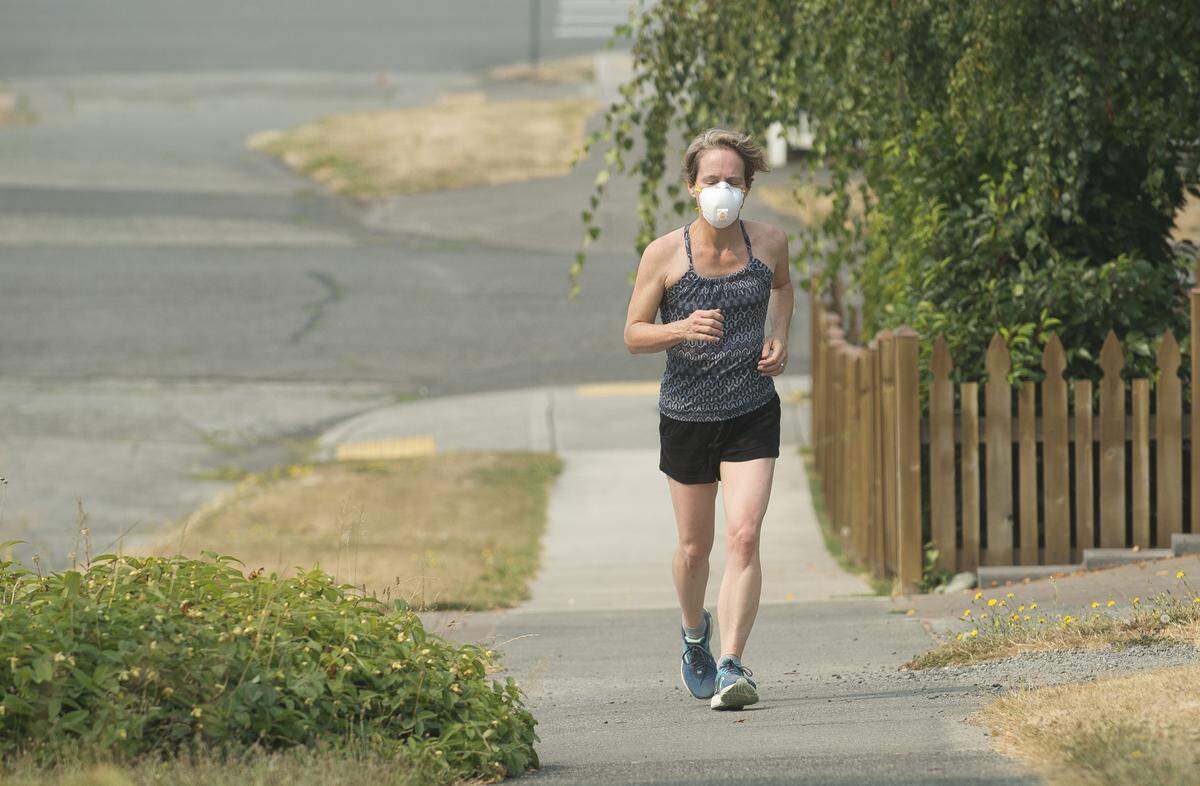
Officials were warning everyone to limit their physical activity and to stay inside if possible with doors and windows closed.

PeaceHealth officials saw a rise in ER and urgent-care visits for breathing problems Monday, along with calls to heart doctors about the threat to their health, and pharmacies saw patients seeking air masks and prescription refills for inhalers and other respiratory therapies.
By Tuesday, however, ER visits had returned to normal levels as residents began to cope.
State Health tips
The Washington State Department of Health offers tips to deal with smoky conditions.
How can I tell if smoke is affecting my family?
Smoke can cause coughing, scratchy throat, irritated sinuses, shortness of breath, chest pain, headaches, stinging eyes, and runny nose.
If you have heart or lung disease, smoke might make your symptoms worse.
People who have heart disease might experience chest pain, a rapid or irregular heartbeat, shortness of breath, and fatigue.
If you have a pre-existing respiratory condition such as asthma, COPD (including chronic bronchitis and emphysema), or allergies, smoke may worsen symptoms (inability to breathe normally, cough with or without mucus, chest discomfort, wheezing, and shortness of breath).
When smoke levels are high, even healthy people can have symptoms or health problems.
Contact your health care provider if you have heart or lung problems when around smoke. Dial 911 for emergency assistance if symptoms are serious.
What can I do to protect myself and my family from outdoor smoke?
Avoid physical exertion outdoors if smoke is in the air.
If you have asthma or other lung diseases, make sure you follow your doctor’s directions about taking your medicines and follow your asthma management plan. Call your health care provider if your symptoms worsen.
Stay indoors and keep indoor air as clean as possible. Take the following steps when indoors:
▪ Keep windows and doors closed. Track the air quality and open your windows for fresh air when the air quality improves. Pay attention to the heat indoors and follow guidance in the section below if it’s too hot.
▪ Run an air conditioner, set it to re-circulate and close the fresh-air intake. Make sure to change the filter regularly.
▪ Use an air cleaner with a high-efficiency particulate air (HEPA) filter to reduce indoor air pollution. A HEPA filter will reduce the number of irritating fine particles in indoor air. A HEPA filter with charcoal will help remove some of the gases from the smoke. Do not use an air cleaner that produces ozone.
▪ Don’t add to indoor pollution. Don’t use food boilers, candles, incense, fireplaces, or gas stoves. Don’t vacuum unless your vacuum has a HEPA filter, because vacuuming stirs up particles already inside your home. Don’t smoke, because smoking puts even more pollution into the air.
▪ Consider leaving the area if the air quality is poor and it’s not possible to keep indoor air clean, especially if you or those you are caring for are having health problems or are in a sensitive group. See section above titled, who is especially sensitive to smoke.
Should I exercise when it’s smoky?
Exercise is very important for health. When you exercise your air intake is increased, which means inhaling more pollution when the air quality is bad.
Avoid outdoor exercise when air quality is in the Unhealthy, Very Unhealthy, or Hazardous categories.
When the air quality is in the Very Unhealthy or Hazardous categories, consider the indoor air quality and consider limiting indoor exercise.
If you are sensitive to smoke, you should limit your activities when air quality is in the Unhealthy for Sensitive Groups category. People with asthma and lung and heart conditions may be very sensitive to poor air quality and may start to have symptoms when air quality is in the Moderate category and they should consider reducing indoor and outdoor activities.
This story was originally published August 22, 2018 at 8:56 AM.