
After a ‘very unhealthy day,’ here’s when Whatcom County should get some relief
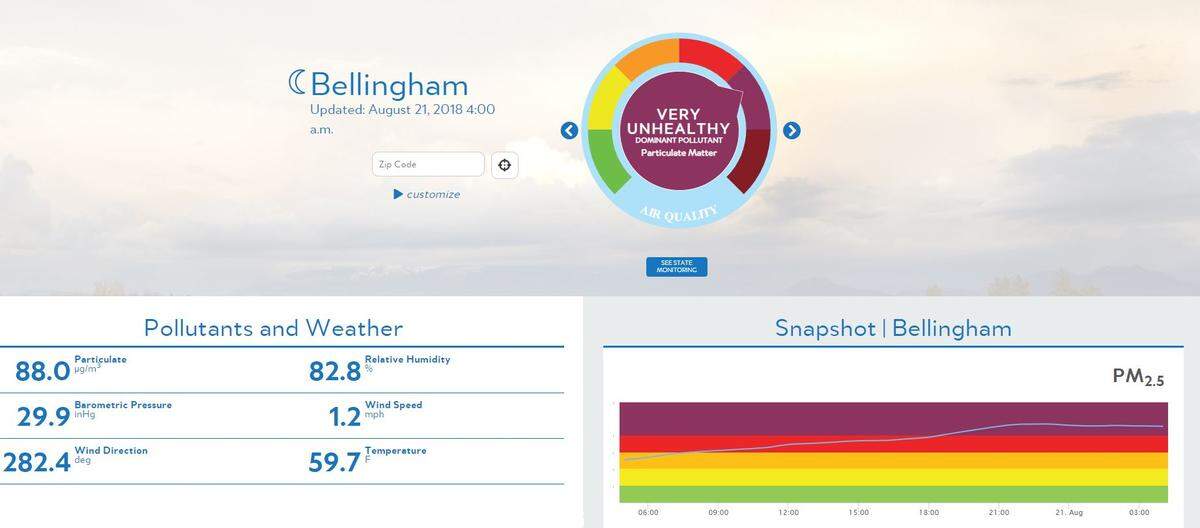
Sunrise Tuesday was an orange disc against a brown sky as air quality fell into the “very unhealthy” range, the worst in a week of wildfire smoke across Whatcom County.
Breezes from the north and northeast carried smoke from several hundred wildfires in British Columbia, and meteorologists said relief remained a day or more away.
According to the smartphone app Sh**t! I Smoke, Bellingham-area residents each inhaled the equivalent of nearly 8 cigarettes Tuesday.
“It looks like we’re going to have another choker today,” said lead forecaster Jay Albrecht at the National Weather Service in Seattle.
Albrecht said Western Washington can expect another day of smoky skies Wednesday before gradual clearing starts overnight.
Thursday’s forecast calls for partly sunny skies with temperatures in the 70s, followed by a slight chance of showers daily from Friday though Monday.
Morning haze was so thick Tuesday that residents in Geneva could barely see across Lake Whatcom, and Lummi Island wasn’t visible from Bellingham.
A weather station at Bellingham International Airport was reporting smoke and haze with visibility of 2 miles, and visibility was a half-mile or less at times Monday.
“When you get to ‘very unhealthy,’ there’s only one category worse, and that’s ‘hazardous,’ “ said Seth Preston, spokesman for the Northwest Clean Air Agency, which monitors air quality and has banned all outside fires except charcoal and propane grills — which are discouraged.
Preston said the health hazard from particulates in the smoke is almost double what Whatcom County residents experienced in the summer of 2017, when smoke from B.C. wildfires hung in the air for almost two weeks in early August and again in late August and early September.
“It’s not the worst it’s been ever, but it’s definitely the worst in recent memory,” Preston said.
An air-quality map at the state Department of Ecology’s website showed a sea of red and dark red dots as Western Washington residents suffered through another day of smoky skies during what’s traditionally the most gorgeous time of year.
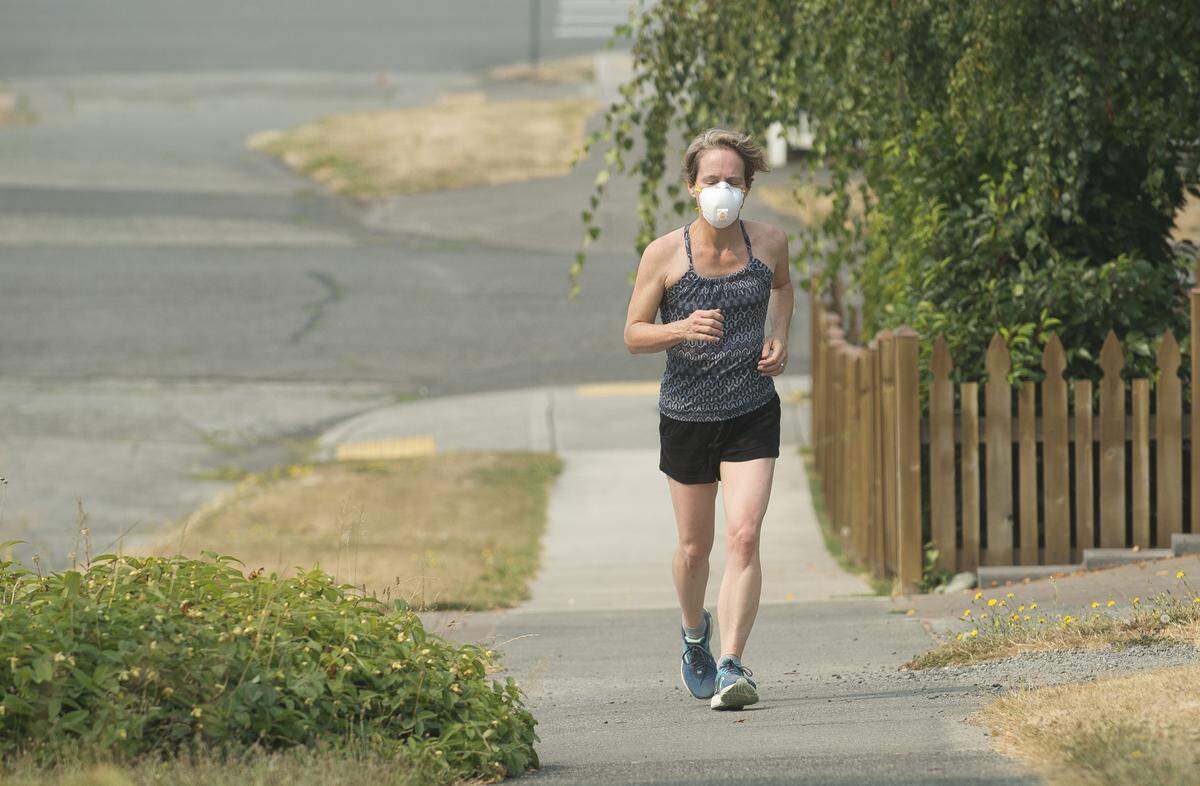
Officials were warning everyone to limit their physical activity and to stay inside if possible with doors and windows closed.
“My daughter got pneumonia last year from the smoke, so I’ve been trying my best to protect her and her sister this year,” said Jenna Schrengohst of Blaine.
“A friend lent us a portable AC unit and another bought an air purifier for the girls’ room, and it helps a ton,” she said.
But others, such as landscaper Josh Pankanin of Bellingham, must work outside.
“I’m lucky that I am young and have no breathing issues, the smoke doesn’t affect my day to day,” he said.
A popular You Tube video showed how to use a furnace filter to turn a simple box fan into an air purifier and KING-TV in Seattle reported that a doctor was advising residents not to operate a vacuum cleaner during the smoke emergency.
People with respiratory illnesses and heart ailments are especially vulnerable to the foul air, as are pregnant women and people younger than 18 and older than 65, health professionals said.
PeaceHealth officials saw a rise in ER and urgent-care visits for breathing problems Monday, along with calls to heart doctors about the threat to their health, and pharmacies saw patients seeking air masks and prescription refills for inhalers and other respiratory therapies.

By Tuesday, however, St. Joseph Hospital’s ER visits had returned to normal levels, said PeaceHealth spokeswoman Hilary Andrade.
Bellingham Fire Department didn’t see a rise in calls to 911 for smoke-related ailments or for outside fires — despite a “very high” local wildfire danger, said Assistant Chief Bill Hewett.
“Just anecdotally, we haven’t had an increase in calls related to respiratory emergencies,” Hewett said. “Our fire activity has been pretty consistent with what we would expect for late August.”
In Fairhaven, Fat Pie Pizza stopped seating diners in its popular patio and rooftop areas, citing health concerns.
In Bellingham, the city canceled its popular family-oriented All-Comers Track Meet on Monday.
But local high school sports teams continued to practice outside and Bloedel-Donovan Park on Lake Whatcom was crowded Monday afternoon as swimmers sought respite from the smoke and record-high temperatures in the high 80s.
Smoky skies obscured normally picture-postcard vistas in the Mount Baker-Snoqualmie National Forest and the North Cascades National Park.
“People are disappointed that you can’t see anything,” said Magenta Widner, a forestry technician at the U.S. Forest Service station in Glacier.
“From Artist Point, you can’t see Mount Baker or Mount Shuksan, and you can barely see Table Mountain,” Widner said.
She said visitation hasn’t declined significantly, but some travelers are surprised that the smoke hadn’t cleared at the higher mountain elevations.
“It’s been worse up high,” Widner said. “People were thinking that if they go higher, it would be better. But that’s not the case.”
State Health tips
The Washington State Department of Health offers tips to deal with smoky conditions.
How can I tell if smoke is affecting my family?
Smoke can cause coughing, scratchy throat, irritated sinuses, shortness of breath, chest pain, headaches, stinging eyes, and runny nose.
If you have heart or lung disease, smoke might make your symptoms worse.
People who have heart disease might experience chest pain, a rapid or irregular heartbeat, shortness of breath, and fatigue.
If you have a pre-existing respiratory condition such as asthma, COPD (including chronic bronchitis and emphysema), or allergies, smoke may worsen symptoms (inability to breathe normally, cough with or without mucus, chest discomfort, wheezing, and shortness of breath).
When smoke levels are high, even healthy people can have symptoms or health problems.
Contact your health care provider if you have heart or lung problems when around smoke. Dial 911 for emergency assistance if symptoms are serious.
What can I do to protect myself and my family from outdoor smoke?
Avoid physical exertion outdoors if smoke is in the air.
If you have asthma or other lung diseases, make sure you follow your doctor’s directions about taking your medicines and follow your asthma management plan. Call your health care provider if your symptoms worsen.
Stay indoors and keep indoor air as clean as possible. Take the following steps when indoors:
▪ Keep windows and doors closed. Track the air quality and open your windows for fresh air when the air quality improves. Pay attention to the heat indoors and follow guidance in the section below if it’s too hot.
▪ Run an air conditioner, set it to re-circulate and close the fresh-air intake. Make sure to change the filter regularly.
▪ Use an air cleaner with a high-efficiency particulate air (HEPA) filter to reduce indoor air pollution. A HEPA filter will reduce the number of irritating fine particles in indoor air. A HEPA filter with charcoal will help remove some of the gases from the smoke. Do not use an air cleaner that produces ozone.
▪ Don’t add to indoor pollution. Don’t use food boilers, candles, incense, fireplaces, or gas stoves. Don’t vacuum unless your vacuum has a HEPA filter, because vacuuming stirs up particles already inside your home. Don’t smoke, because smoking puts even more pollution into the air.
▪ Consider leaving the area if the air quality is poor and it’s not possible to keep indoor air clean, especially if you or those you are caring for are having health problems or are in a sensitive group. See section above titled, who is especially sensitive to smoke.
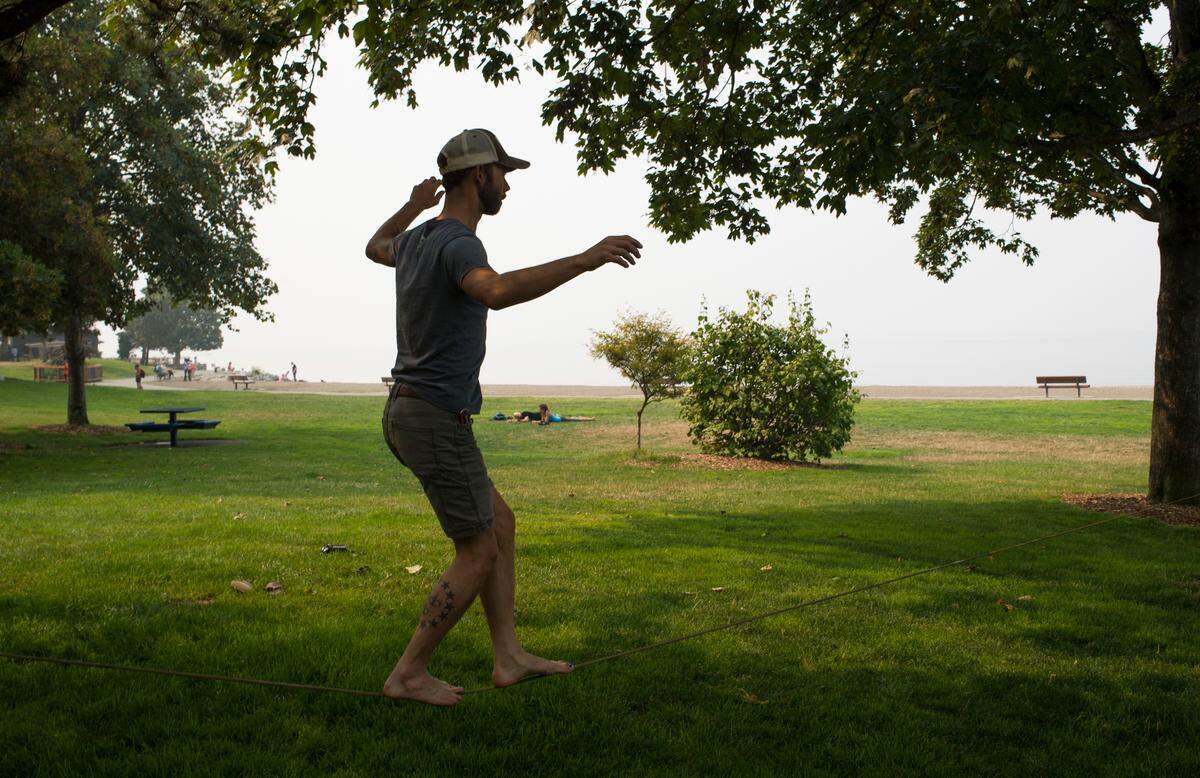
Should I exercise when it’s smoky?
Exercise is very important for health. When you exercise your air intake is increased, which means inhaling more pollution when the air quality is bad.
Avoid outdoor exercise when air quality is in the Unhealthy, Very Unhealthy, or Hazardous categories.
When the air quality is in the Very Unhealthy or Hazardous categories, consider the indoor air quality and consider limiting indoor exercise.
If you are sensitive to smoke, you should limit your activities when air quality is in the Unhealthy for Sensitive Groups category. People with asthma and lung and heart conditions may be very sensitive to poor air quality and may start to have symptoms when air quality is in the Moderate category and they should consider reducing indoor and outdoor activities.
This story was originally published August 21, 2018 at 8:02 AM.