Whatcom restaurant diners, shoppers suffer from these supply chain problems
Whatcom shoppers are finding businesses are having trouble getting back to pre-pandemic normalcy. Restaurants are dealing with low inventory by closing early or not opening on some days, while stores are occasionally running out of common products at seemingly random times.
What is going on?
When COVID-19 began making its way around the globe in early 2020, it sent shock waves throughout the economy. As everyday life changed during lockdowns, everyone noticed the impact of restrictions on restaurants, stores, schools and hospitals. The pandemic was also disrupting things less noticeable to the public, like global supply chains.
Once disrupted, supply chains can take time to get back on track. Until that happens, it means more pivoting for everyone else down the line, right down to the small-business owner.
Steven Engels is one of the many business owners having to adjust on nearly a daily basis. Engels opened The Galley at 6069 Hannegan Road in September 2019, six months before the pandemic took hold in Whatcom County. As a food trailer next to Hannegan Seafoods, he was able to stay open during much of the pandemic, sometimes creating dishes not on the menu based on what ingredients he was able to buy.
With residents getting vaccinated and restrictions being lifted earlier this summer, it’s still a tough go for businesses such as The Galley, which focuses on seafood meals. Engels recently made the decision to close on Mondays starting in September in order to have enough food to serve on the other days of the week. He was recently informed by Sysco, which distributes food products and equipment multinationally, that it would be temporarily not making deliveries to his restaurant as it cut back on deliveries because of a trucker shortage. Sysco did not respond to email questions.
Before hearing from Sysco, Engels had been stockpiling restaurant supplies because he was worried this would happen. He’s also making connections with local businesses such as Claus Meats in Bellingham, helping him restock on other items. The decision to close on Mondays is a precaution in hopes he doesn’t run out of food.
“I think this will be going on for a while,” Engels said. “I had wanted to expand, but this has made me leery.”
He also recently raised prices on his menu to cover the extra costs of the products he is able to get. Fryer oil, for example, went from $24 for a bulk unit to $54. Tartar sauce rose from $11 a bulk unit to $19.
“We had to raise prices just to keep up,” Engels said.
A go-to store for many local restaurants is the Chef’ Store, formerly known as Cash & Carry on Ohio Street near Bellingham High School. Chef’ Store was hit hard after a distribution center in Centralia had to temporarily shut down because of a COVID-19 outbreak. While that put a major crunch on restaurants that rely on that store for products for a few weeks, it appears to be restocking now.
“The temporary suspension of operations at (United Natural Food Inc.’s) Centralia distribution center has impacted our ability to keep some product in stock. UNFI has resumed normal operations, and we’re working closely with them to replenish products,” the company said in an email statement.
Global supply chain shock
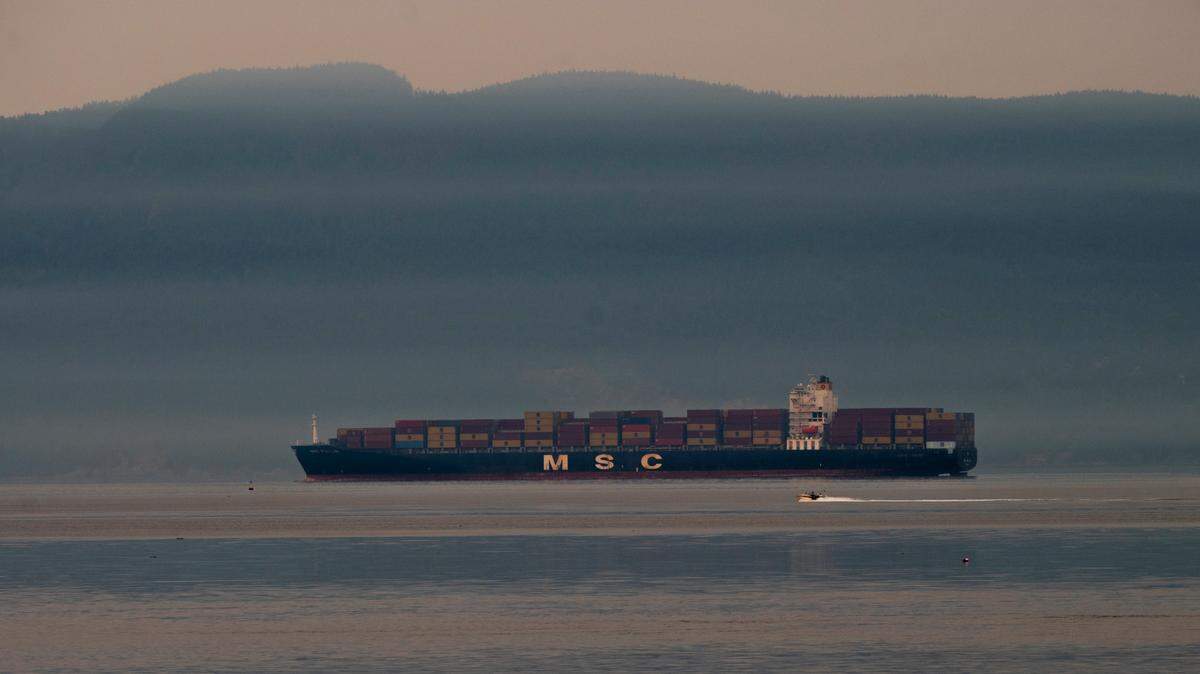
While local restaurants are dealing with shortages in the region, global supply chains are still disrupted. One result of this is the steady number of huge container ships hanging out in Bellingham Bay this summer, waiting to go into ports like Seattle and Tacoma.
These ships, which are too big to dock at the Bellingham Shipping Terminal, have mostly been arriving from China. The uptick in demand as pandemic restrictions has created more demand for products as we head into the holiday shopping season.
It has also led to a jump in shipping prices. Jeffrey Heininger of Heininger Holdings estimates that his shipping rates are triple what he was seeing a year ago. The Bellingham company, which manufactures a variety of products including bike racks for cars, gets some of its products manufactured and also buys some raw materials from overseas.
Heininger said the company does manufacture some of its products in the U.S., but in most cases, it is still difficult to find places in the U.S. that can offer competitive prices.
The global supply during this pandemic has become a fascinating area to study for Peter Haug and his students, Haug, a professor of manufacturing and supply chain management at Western Washington University, said one thing this pandemic did was show that more time needs to be invested in contingency planning and risk management.
The run on toilet paper and hand wipes at the outset of the pandemic caught a lot of people by surprise, leading to shortages for a time. Haug said the lesson is that all companies should have a plan on how to respond to a sudden 20% increase in demand, such as having other companies to go to if the current supplier is overwhelmed.
Even with contingency planning, the current lean manufacturing and just-in-time methods make it easy for disruptions to happen, said James McCafferty, co-director at Western Washington University’s Center for Economic and Business Research.
One example he used is ketchup. In the early stages of the pandemic, demand for ketchup at restaurants went down because of the restrictions on dining, but consumer demand rose because people were eating at home more. That meant a major shift from putting less ketchup in high-volume containers and more into bottles that are sold in grocery stores.
“Globally we have all kinds of supply chain issues that manifest in many different ways,” McCafferty said.
Haug expects that it will be 2022 before the supply chain issues from the pandemic are resolved. The fact that supply chains for products like toilet paper do bounce back is a good sign that the system works following a shock, but it also showed improvements can be made.
Following the pandemic, Haug doesn’t expect a major shift of manufacturing coming back to the U.S. China and Asia have strong infrastructure in place and other advantages that would keep many traditional companies from returning to the U.S. He does expect the U.S. to be a leader in developing new technologies and equipment that improve the system.
As for now, patience is needed.
“I hope people are sensitive to the demand,” Haug said, adding that people should consider how much they need something when they encounter delays.