Is tourism back? Here’s what to expect in Whatcom County this summer
Tourism has nearly returned to pre-pandemic levels in Whatcom County heading into the summer months, particularly when it comes to hotel bookings.
The hotel occupancy rate for Whatcom County hotels was 70.7% in April, according to data gathered by Bellingham Whatcom County Tourism. That’s just below the 72% occupancy rate for April 2019, before the COVID-19 pandemic. From a revenue standpoint, nationally a hotel occupancy rate above 70% is considered good.
The average daily rate at Whatcom County hotels is also up significantly. According to the data, the average rate in April was $111.64, up from $91.73 in April 2019.
Bookings this summer at some Whatcom hotels are running ahead of pre-pandemic levels. Dana Weber, general manager at the Best Western Plus hotel near the Bellingham airport, said the upcoming graduation weekends are filling up rooms.
“Weekends are definitely in demand, especially as we get more into July and August, but also June,” said Weber in an email, adding that they’ve also seen a big increase in Canadian travelers once border testing restrictions were lifted in April.
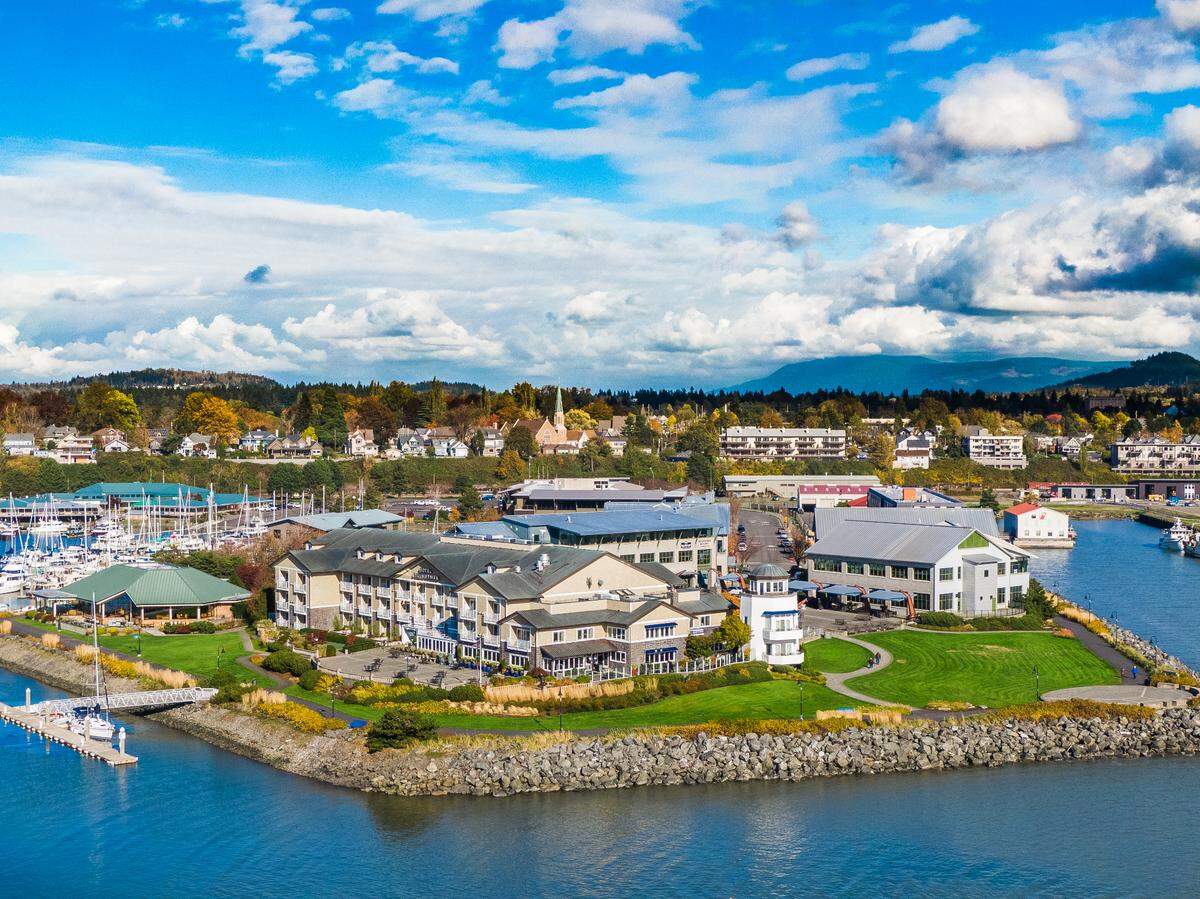
At the Bellwether Hotel, June is already booked with more than 70% occupancy, with most weekends nearly sold out, said Christine Jenkins, director of marketing and sales for the waterfront hotel.
While summer hotel reservations are strong in Whatcom County, it’s not something merchants can take to the bank just yet. The rise in COVID-19 and news of a new variant could quickly wreck travel plans; gas prices have also risen so high that demand for gas is going down as drivers cut back, according to a report on the website businessInsider.com.
One other headwind for the Whatcom County tourism industry is the worker shortage. In April, Whatcom County employed an estimated 10,700 people in the leisure and hospitality sector, according to data from the Washington State Employment Security Department. That’s 200 fewer people compared to April 2019, before the pandemic. The summer months are typically the peak time for tourism employment; in August 2019 it rose to an estimated 11,700 jobs.
“We still haven’t recovered when it comes to jobs,” said Sandy Ward, president and CEO of Bellingham Whatcom County Tourism, adding that competition among businesses to fill positions is fierce these days.
Revenue from tourism spending in Whatcom County was estimated to be $555 million in 2019, according to data gathered by Bellingham Whatcom County Tourism. It plunged to $380.9 million in 2020 after the pandemic arrived, but rebounded to $527.4 million in 2021. According to the data, lodging rebounded strongly in 2021, while food, recreation and retail fell short of 2019 pre-pandemic spending levels.
Tourism trends
Cross-border traffic continued to recover since the lifting of testing restrictions at the beginning of April. During the May 21-23 Victoria Day weekend, the number of passenger vehicles passing through the Blaine, Lynden and Sumas crossings totaled nearly 20,000 each day; in March the daily passenger vehicle total was in the 5,000 range.
While Canadian traffic is providing a boost to Whatcom’s tourism sector, many visitors are also coming from the Seattle area. Jenkins said the majority of Bellwether’s guests continue to be from Seattle and surrounding area, Oregon and within the drive market.
Ward said they are also starting to see more visitors from the markets like Las Vegas, San Francisco and Arizona, which are areas that have direct flights to Bellingham through Southwest Airlines and Allegiant Air. She expects that to pick up this summer when heat waves hit the southwest region of the U.S.
The return of major tourism events is something Whatcom County residents will also need to adjust to after a two-year hiatus. Along with returning events like Ski-to-Sea, new events including the NW Tune Up festival in July are expected to bring in hundreds of out-of-area visitors. There’s also expected to be plenty of wedding events, some of which were postponed during the more restrictive times of the pandemic.
Jenkins said in an email that they are also noticing more of their reservations are within shorter booking windows, meaning that reservations are being made within a month of the visit.
With reservations filling up the summer weekends, it may be more challenging for residents to have family and friends find accommodations, whether it is through hotels or vacation rentals. Both Jenkins and Weber recommend considering Sunday through Thursday bookings. Weber said prices are generally lower during the week, and discounts can be found for those who extend their stay during those days.