
Thanks to one industry, Whatcom’s GDP growth in 2017 was one of the nation’s best
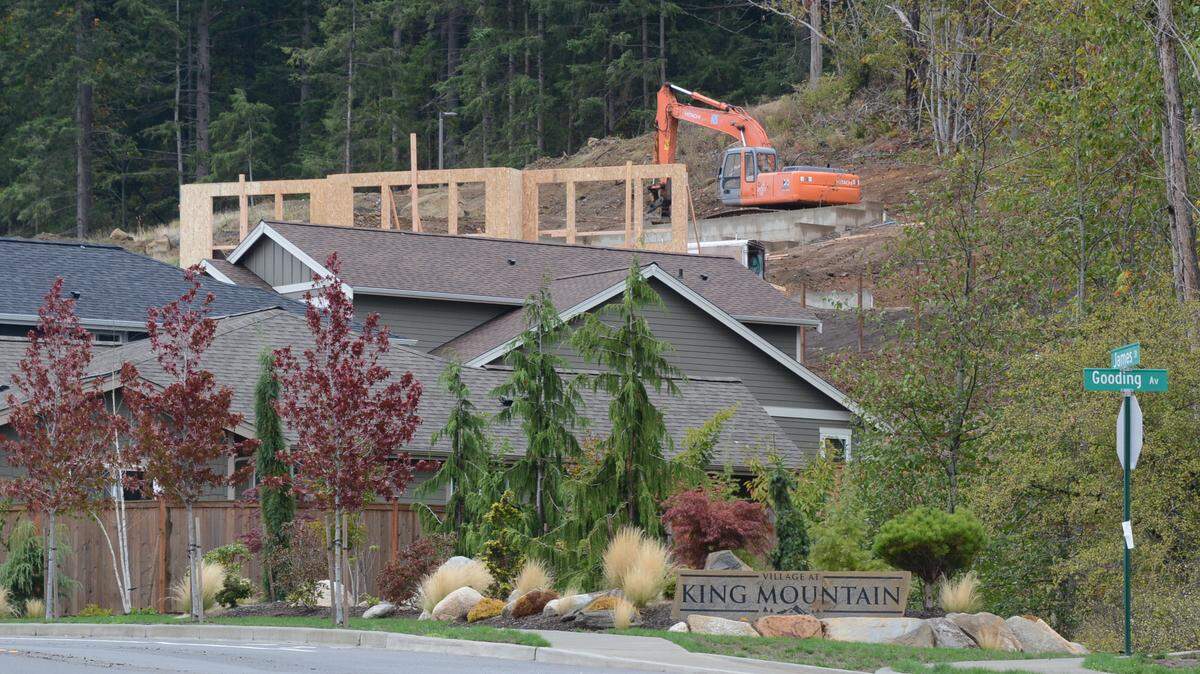
Whatcom County was busy building and making stuff last year, a good sign for the local economy.
Whatcom industry produced a little over $11.3 billion in goods last year, according to new data from the U.S. Bureau of Economic Analysis. Adjusting for inflation, Whatcom’s gross domestic product rose 4.2 percent in 2017, ranking the increase 33rd highest out of 383 metro areas. The average real GDP increase in those metro areas was 2.1 percent, according to the report.
More than half of that increase came in the finance, insurance and real estate sector.
That includes real estate construction, which also has had strong employment growth, said Hart Hodges, director at the Center of Economic and Business Research at Western Washington University.
Other sectors that posted strong growth were other types of construction, trade and professional services.
Non-durable goods, which is dominated locally by two oil refineries at Cherry Point, saw a decline compared to 2016. That sector can be a bit volatile, depending on what is happening with gas prices and production issues.
Whatcom County durable goods experienced a slight decline last year and one factor could be the drop in Canadian cross-border traffic, said Laurie Trautman, director at Western’s Border Policy Research Institute.
She noted that recent tariffs announced by the Trump administration are starting to have an impact on the border, which might impact the 2018 GDP numbers.
Given the uncertainty of national trade policy right now, it’s not clear yet what it might mean to local industries.
The top 20 or so communities that made the biggest GDP jumps over all over the map, literally and figuratively. There is no clear national trend.
Some of the metro areas with the biggest jumps were in areas that were due for a resource-based rebound, like in Wyoming and Texas. A couple of big metro areas known for high-tech growth, San Jose, Calif. and Austin, Texas, also were on the list. And several mid-size metro areas were in the top 20, including Reno, Nev. and Fort Collins, Colo.
People and businesses moving out of cities like Seattle into nearby communities may signal a trend that is contributing to GDP growth, but it is still too early to tell, said James McCafferty, who is also a director at Western’s CEBR.
He added that the recent spike in property values here may mean more investment is being made in this area, but that could be more of a blip than a trend, McCafferty said.
This story was originally published September 22, 2018 at 5:00 AM.