
The Real Secret to Visible Abs After 40 Isn't More Sit-Ups
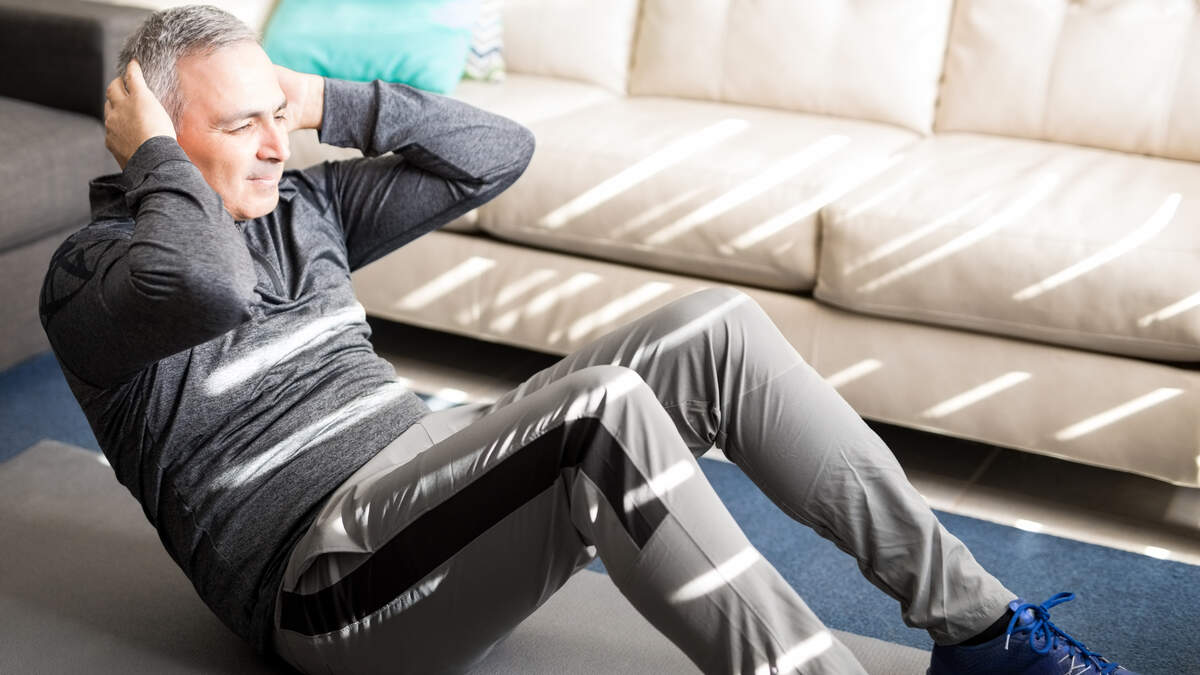
If you’ve been grinding through endless crunches hoping they’ll reveal a six-pack, you’re not alone-but science suggests you’re focusing on the wrong target. A 2022 review found little evidence that exercising one body part alone reliably burns the fat covering that area, meaning visible abs depend far more on lowering overall body fat through nutrition while preserving the muscle underneath.
According to Morgan Beemiller, RD, LDN, a registered dietitian at Health Loft, the biggest mistake men over 40 make is assuming ab exercises are what create visible abs. In reality, the muscles are already there. The challenge is reducing the layer of body fat covering them while preserving the muscle underneath.
“For visible abs, nutrition is often 70 to 90 percent of the equation,” Beemiller says. “Training matters, but you generally can’t out-train a diet that keeps body fat above the level where abs become visible.”
That becomes even more important after 40, when muscle mass naturally begins to decline and metabolism gradually slows, making smart nutrition a cornerstone of both body composition and healthy aging.
Why Eating Smarter Beats Training Harder
Most guys respond to stubborn belly fat by slashing calories, skipping carbs, or trying the latest fasting trend. But Beemiller says sustainable fat loss is less about finding the “perfect” diet and more about consistently managing energy intake.
Recent research suggests that alternating periods of calorie restriction with planned maintenance phases may help reduce some of the metabolic slowdown that accompanies prolonged dieting while making long-term fat loss easier to sustain. But that doesn’t mean a single cheat meal or re-feed day magically resets your metabolism.
Likewise, intermittent fasting isn’t inherently superior to traditional calorie control.
“At the end of the day, all diets are just different ways of managing calories,” Beemiller says. “It comes down to personal preference and what someone can consistently maintain.”
Related: Scientists Just Discovered What Happens to Your Gut When You Eat at 2 A.M.
Stop Treating Carbs Like the Enemy
Carbohydrates have taken the blame for belly fat for years, but Beemiller says that’s a mistake-especially for active men trying to preserve muscle. “A better mindset is carbohydrate allocation, not carbohydrate elimination,” she says.
Instead of cutting carbs across the board, she recommends eating more carbohydrate-rich foods around strength workouts, endurance sessions, and competitive sports, while naturally reducing intake on less active days. Whole-food carbohydrate sources like fruit, oats, potatoes, rice, beans, vegetables, and whole grains provide fuel for training while supporting recovery.
Protein, however, should remain the priority. Beemiller recommends aiming for roughly 1.6 to 2.2 grams of protein per kilogram of body weight when trying to lose fat without sacrificing lean muscle.
Healthy Fats and Consistency Separate the Men Who Stay Lean
Research suggests that very low-fat diets may modestly reduce testosterone levels in men, although the effect appears relatively small and additional randomized trials are needed. Moderate fat intake also helps increase satiety, slowing digestion and making calorie deficits easier to maintain.
Beyond body composition, foods rich in unsaturated fats-including extra-virgin olive oil, avocados, nuts, seeds, and fatty fish-provide nutrients linked to cardiovascular and metabolic health and help the body absorb fat-soluble vitamins.
Perhaps the biggest difference Beemiller sees isn’t nutritional-it’s behavioral.
Men who maintain visible abs into their 40s, 50s, and beyond aren’t constantly bouncing between bulking and crash diets. They prioritize protein, keep portions consistent, limit alcohol, avoid turning weekends into all-you-can-eat celebrations, and rely primarily on whole foods.
Most importantly, they play the long game. “They think in years, not weeks,” Beemiller says. “That mindset shift is huge.”
For men chasing visible abs after 40, the goal isn’t to find another ab workout. It’s to build eating habits that reduce body fat, preserve muscle, and support a healthier body for decades to come.
Related: Why You’re Not Losing Weight Eating ‘Healthy,’ According to Dietitians
This story was originally published by Men’s Journal on Jun 25, 2026, where it first appeared in the Nutrition section. Add Men’s Journal as a Preferred Source by clicking here.
2026 The Arena Group Holdings, Inc. All rights reserved.
This story was originally published June 26, 2026 at 4:08 PM.