Bellis Fair owner defaults on a $77 million loan. Here’s what could happen to the mall
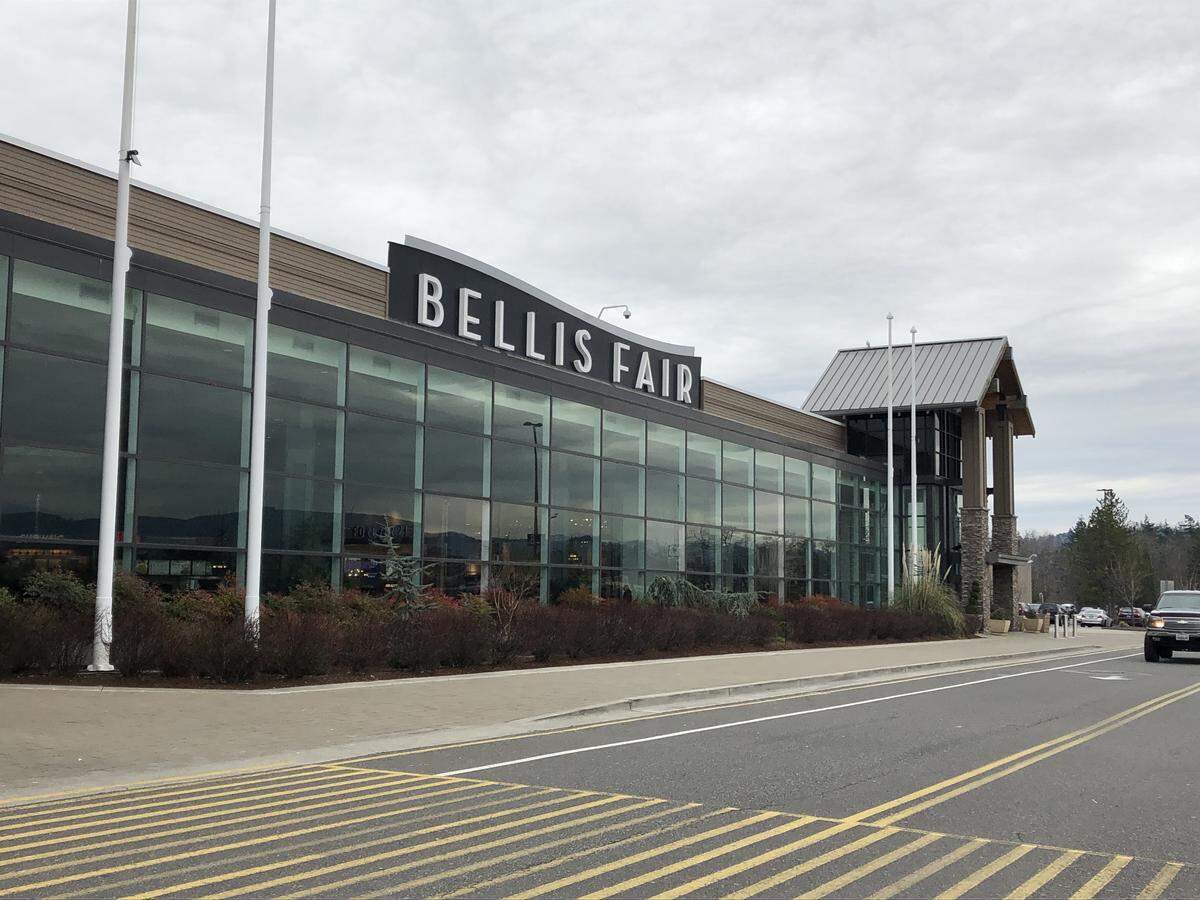
The owner of Bellis Fair has defaulted on a $77 million loan secured by the mall, according to global credit ratings business DBRS Morningstar.
It’s uncertain what will now happen to Brookfield Property Partners’ ownership of the Bellingham mall that’s currently home to 80 stores.
The mall was built by General Growth in 1988 and acquired, along with the 2011 loan, by Brookfield in 2018.
The commercial mortgage-backed securities loan, with $77 million remaining on $93 million, defaulted in February and was transferred to a special servicer, according to Steven Jellinek, head of CMBS research at DBRS Morningstar.
A Brookfield spokeswoman declined to comment for this story.
A special servicer will resolve the delinquency by working with Brookfield to refinance or take title to the property, Jellinek wrote in an email to The Bellingham Herald.
If a special servicer takes the property title, it could hire a company to run Bellis Fair or sell it. For now, Brookfield will continue to operate Bellis Fair as long as it has title of the property, Jellinek wrote.
Brookfield’s options include negotiating a loan extension or simply walking away, Jellinek wrote.
“Generally speaking, large savvy investors like Brookfield will walk away from malls where they deem the property value to be less than the mortgage balance,” Jellinek wrote.
Brookfield has been known to hang on to strongly performing malls; it was recently able to negotiate a one-year extension on its $282 million loan on its Tysons Galleria property in Virginia.
“The borrower’s main consideration will focus on return and value. If the mall isn’t hitting Brookfield’s financial targets, then its more likely a candidate to be turned over to the trust,” Jellinek wrote.
And, Brookfield has walked away from under-performing malls in the past year. Last May, MarketWatch reported that Brookfield handed back the keys to three malls and was in negotiations to walk away from several other deals.
Little equity left
Ryan Martin, co-owner of Pacific Continental Realty in Bellingham, analyzed the available data and concluded that there is likely little or no equity left in Bellis Fair for Brookfield. Martin said when Brookfield’s predecessor took out the loan in 2011 it was at a good period for retail, particularly near the Canadian border.
“The U.S. was just coming out of the great recession with strong consumer confidence, the Canadian dollar was valued higher than the U.S. dollar that summer, and retail online sales were a fraction of what they are today,” Martin wrote in an email to The Herald, adding that the occupancy at the mall was 99% at the time the loan was approved.
The financial data on the DBRS Morningstar website about Bellis Fair indicates that the net cash flow has declined for six straight years. When fully leased in 2015, the annual cash flow was $14.64 million; in 2020 that cash flow was down to $9 million and even less for much of 2021.
Bellis Fair has been a part of Bellingham for 34 years after local developer David Syre won controversial zoning changes to allow for the development. The property is more than 70 acres and has more than 775,000 square feet of retail space.
Regional malls fight
With changing consumer behavior, including the rise of online shopping and an overabundance of retail space, regional malls were struggling even before the pandemic hit. Jellinek wrote that delinquent loans on malls have become more common during the pandemic, with values of some properties falling more than 60% in the past two years.
Bellis Fair was hit particularly hard during the COVID pandemic because it relied on shoppers crossing the border from Canada. The pandemic put a halt to cross-border shopping for more than a year and even now hasn’t fully recovered. As a result, more empty spaces are seen at the mall: According to a report by DBRS Morningstar, Bellis Fair’s occupancy rate was 79.8% in September 2021, down from 87.7% in December 2019, right before the pandemic.
In Western Washington, other regional malls have either closed or significantly changed. That includes the Cascade Mall in Burlington, which mostly shut down in June 2020. Northgate Mall in north Seattle turned into Northgate Station and has a mix of residential and other uses in the area, including a practice arena for the Seattle Kraken hockey team.
Jellinek pointed out that not all malls are suffering this fate.
“We note that lower-quality assets, especially those in secondary and tertiary markets, are losing tenants and cash flow, while owners of properties in the upper-quality tier are investing in their properties to broaden their appeal,” Jellinek wrote.
Bellis Fair options
Jellinek wrote that while Bellis Fair was hit hard by the COVID-19 restrictions placed on Canadian consumers, it’s in a better position to recover compared to some other Washington malls.
The primary risk for Bellis Fair is the closure of anchor stores, which have remained in place through the pandemic, Jellinek wrote. The retailers that are considered Bellis Fair anchors include Macy’s, Ashley Homestore, Target, Kohl’s, Dick’s Sporting Goods and JC Penney. One wrinkle to this is that JC Penney, Target and Kohl’s own their space and do not pay rent to Brookfield.
If Brookfield or a new owner can keep the anchors it leases to in place, chances increase that Bellis Fair can maintain its current business model as cross-border shopping recovers.
While those anchor stores could close at any time, several of them have relatively long-term leases. The current Macy’s lease is scheduled to expire in January 2029, while Dick’s and Ashley are set to expire in 2028, according to the DBRS Morningstar report.
One option in the long-term could be in converting Bellis Fair into more of a mixed-use property by adding residential apartments and office space. Jellinek wrote that Morningstar’s research indicates that is being done successfully, but it needs to be in areas that lack developable land as an infill project.
Martin, the Bellingham real estate broker, wrote he can envision the development of apartment buildings because there is so much available space on the property. Bellingham continues to deal with a housing shortage, so the demand is currently strong for more homes.
Martin wrote he could also see a developer take a hybrid approach and convert some of the big spaces into something like the nearby Summit Adventure Park, or the Volli pickleball facility that is currently being built in a former furniture warehouse building near Whatcom Community College.
This story was originally published March 24, 2022 at 11:15 AM with the headline "Bellis Fair owner defaults on a $77 million loan. Here’s what could happen to the mall."