When will coronavirus peak? Here’s the model Whatcom County is following
Whatcom County officials fighting the coronavirus pandemic are operating under a pair of scenarios that see the outbreak peaking locally in May or August, according to documents The Bellingham Herald has obtained.
Those scenarios show that Whatcom County medical facilities, along with doctors, nurses, firefighters and other health-care workers, could be overwhelmed with critical patients — even with continued social distancing aimed at slowing the virus spread.
Twenty-three Whatcom County residents who tested positive for COVID-19 have died and 250 people have confirmed infections through Friday, April 10, according to Whatcom Unified Command, the multi-governmental agency directing local response to the pandemic.
Widespread coronavirus testing remains unavailable, in part because of a lack of supplies from the federal government, and only those showing symptoms are offered tests, so the actual number of infections is unknown.
An April 10 report at the Institute for Health Metrics and Evaluation website shows that their models suggest that the virus might have peaked statewide, and they reduced their Washington state death estimates to 842 by Aug. 4.
The institute, at the University of Washington, was founded by the Bill & Melinda Gates Foundation to research global health statistics and impacts.
That report, however, relies on continued social distancing through the end of May.
A total of 446 people who tested positive for COVID-19 died in Washington through April 9, according to the state Emergency Operations Center.
Whatcom death estimates
Locally, scenarios estimate between 56 and 338 deaths in Whatcom County by the peak in August, depending on the success of social distancing.
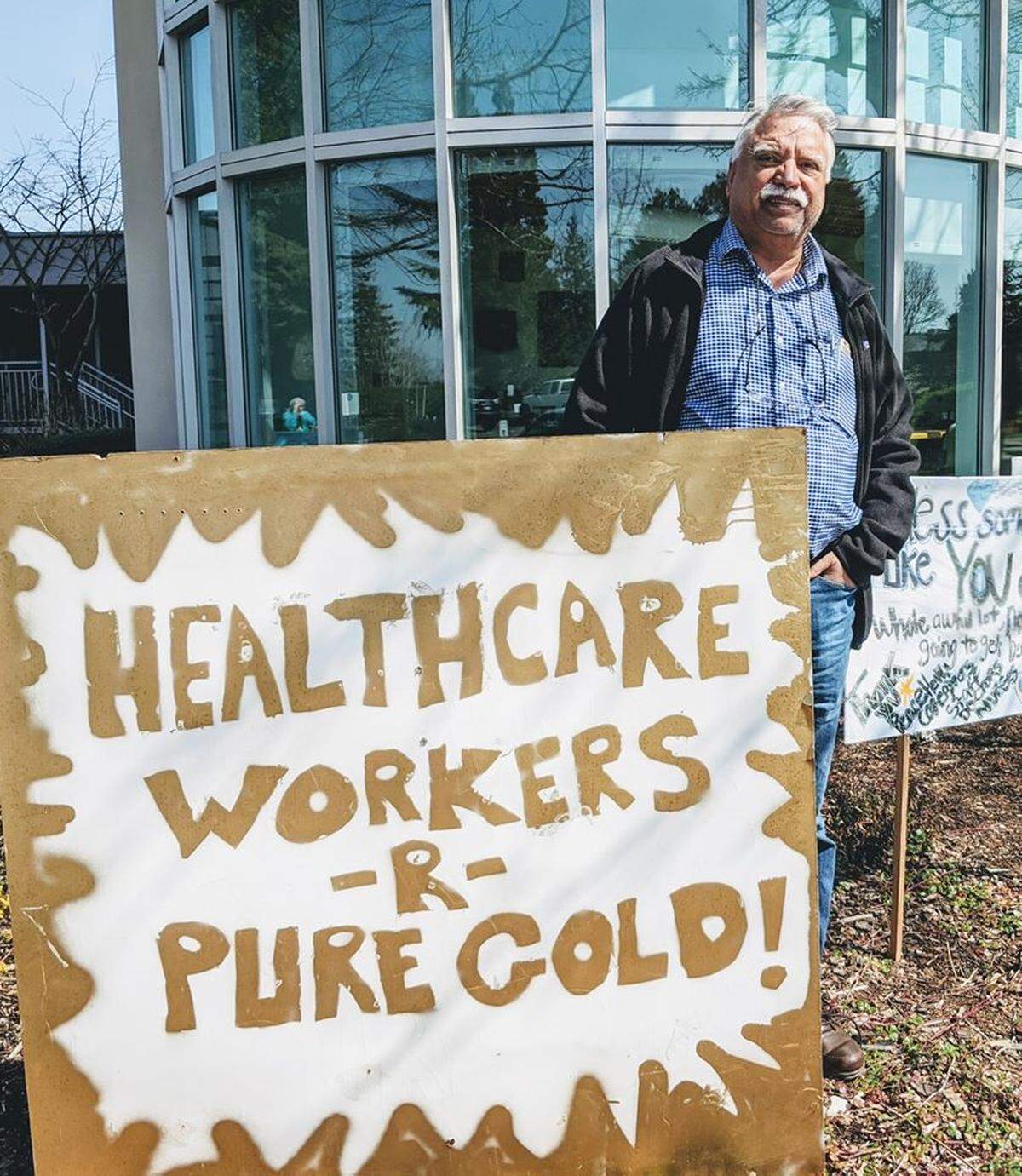
And both local models estimated that Whatcom County would have five deaths by April 1. However, eight people in Whatcom County who tested positive for COVID-19 had died by April 1.
Both local coronavirus models are outlined in a March 29 report titled “Draft Whatcom County Community Surge Plan for COVID-19.”
That report cites no specific author, but includes contact information for Steven Hollenhorst, dean of the Huxley College of the Environment at Western Washington University.
Questions emailed to Hollenhorst were answered by a spokesperson at Whatcom Unified Command.
“Whatcom Unified Command began the work of planning for how we would mitigate and prevent the spread of COVID-19 in our community early in our response,” said an email from Bellingham Police Lt. Claudia Murphy, a member of Whatcom Unified Command’s Joint Information Center. “WUC staff have connected with many researchers, including WWU professors, to begin, review and analyze several models and tools to understand the impact of COVID-19 for our community. This tool represents one of many we are considering as we plan for community needs ahead.”
Which model in use?
Unified Command officials didn’t answer questions asking which model of virus spread they are using now to guide their response.
But a letter seeking federal reimbursement for costs associated with a $1.34 million deal to use a Bellingham motel for an isolation/quarantine center suggests that local officials are planning for the virus to peak in August.
John Gargett, deputy director of the Whatcom County Sheriff’s Office Division of Emergency Management, cited the August peak in a letter to Washington state’s representative to the Federal Emergency Management Agency, which reimburses local and state governments for expenses caused by a natural disaster.
Gargett is also an incident commander at Whatcom Unified Command.
His letter was based on a request from Dr. Greg Stern, the Whatcom County health officer, to create isolation/quarantine shelters for up to 1,100 people and examine more than 30 possible isolation sites for homeless people and others who don’t need to be in the hospital but must remain isolated during their infectious and recovery stages.
“Based on modeling of current information, the Whatcom Unified Command projects that we will need 1,100 isolation/quarantine beds by the peak of the expected surge in late August (this does not include needed hospital beds),” Stern wrote in a document attached to the FEMA reimbursement request.
.jpg "unnamed (7).jpg")
Two scenarios
Scenarios described in the surge report mirror those contained in a more broad look at possible trajectories of the virus in Whatcom County that The Herald reported earlier.
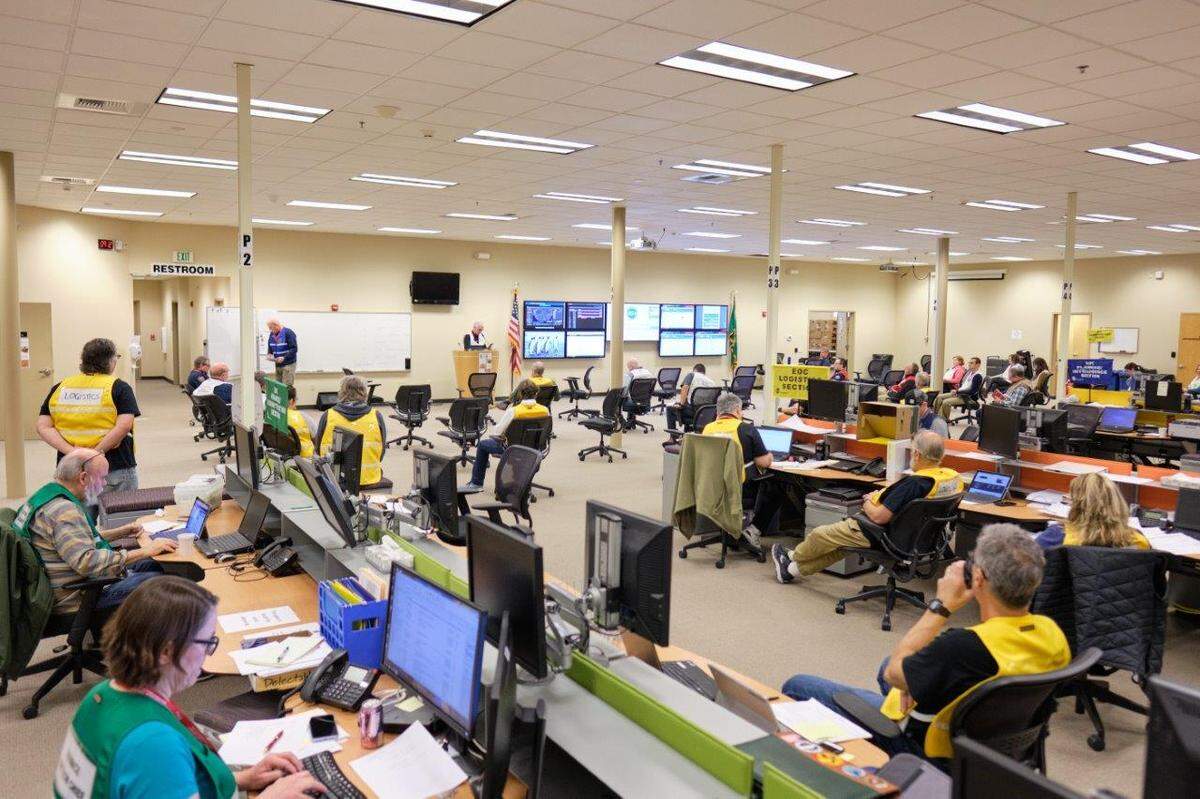
These two scenarios appear to indicate the current thinking inside unified command’s Emergency Operations Center near Bellingham International Airport.
They both assume each infected person will pass the disease to 2.5 other people on average.
One scenario assumes a 50% success rate of transmission reduction and the other assumes a 67% transmission reduction through measures such as social distancing, self-isolation of possibly infected people, working from home, and the closure of businesses such as retail stores and restaurants.
“The rapid increase in the spread of the novel 2019 SARS CoV-2, the virus that causes coronavirus disease (COVID-19), will likely exceed current hospital capacity in Whatcom County within several weeks,” said a copy of the report dated March 29.
St. Joseph hospital in Bellingham was far below capacity March 31, according to a daily situation report obtained by The Herald.
Virus predictions
According to the surge report, the virus is so unpredictable that “epidemiological modeling and forecasting, such as transmission rates, case fatality rates and hospitalization rates are simply not available with certainty.”
Stern approved the report’s final findings March 28, according to the document. Estimates were based on a “Day Zero” of Feb. 14, with social distancing in effect on March 25.
The actual first positive test result for COVID-19 in Whatcom County was reported March 10 and the Whatcom County Health Department declared a public health emergency on March 12.
Gov. Inslee closed public schools statewide and prohibited gathering at restaurants, bars and gyms on March 17. By the time Inslee made his “Stay Home, Stay Healthy” proclamation on March 23, Whatcom County had reported the first death of a person who tested positive for COVID-19 on March 19 and a cluster of cases at Shuksan Health Center on March 22.
▪The report expected some 1,927 active infections would remain circulating on a peak day of Aug. 2, and hospitalizations would reach 1,516 by Aug. 28.
▪ A total of 19,405 Whatcom County residents would have contracted the virus and recovered.
▪Some 20 active infections would remain circulating, and hospitalizations would peak at 89 on April 24.
▪ A total of 2,855 Whatcom County residents would have contracted the virus and recovered.
Hospital assets
In addition to the infection scenarios, the surge report discusses hospital assets, including the number of beds and ventilators available at the time of the report, and how many would be needed.
St. Joseph hospital had 276 total beds available, including 34 in its intensive care unit, and 102 ventilators with 30 more expected, according to the March 29 report.
Whatcom Unified Command hasn’t been disclosing information about hospital status to the public since April 1, when The Herald obtained a copy of its daily “situation report” that listed a total of 23 ventilators there.
Hospital spokeswoman Bev Mathew wrote in email Saturday that 34 ICU beds were operational and 16 more were ready to use if needed.
“We’re currently running at about 30% occupancy in our ICU, so at least for the time being, capacity is not a problem,” Mayhew wrote.
Mayhew wrote that the hospital had 43 ventilators Saturday but was using only 2% of them.
“We also have other respiratory-support equipment such as bipap machines available which can be used by many patients who require breathing support,” she wrote. “Fortunately, should the predictive model indicating a peak on Aug. 28 be accurate, there is a long enough ramp to procure more resources.”
At the pandemic’s estimated Aug. 28 peak, the hospital would need 1,137 non-ICU beds, 379 ICU beds and 102 ventilators.
Finally, the report makes five recommendations to be accomplished by July 1:
▪ Find 1,159 non-ICU beds, 111 ICU beds and 227 ventilators.
▪ Find 1,110 isolation and quarantine beds.
▪ Create “medical surge units” or small field hospitals consisting of 36 beds and one nurse station, using the nurse training facilities at Whatcom Community College and Bellingham Technical College for the first units and school gyms, cafeterias and other spaces for the rest.
▪ Build 35 total medical surge units. Each surge unit would require beds and side tables, bedside toilets, patient privacy dividers, electrical connections, air conditioning, air-exchange procedures, medical equipment and a host of other supplies.
▪ Acquire staffing of 1,472 medical professionals for three 8-hour daily shifts, including 576 registered nurses, 576 certified nurse assistants, and 96 doctors, physician assistants and nurse practitioners.
This story was originally published April 12, 2020 at 5:00 AM with the headline "When will coronavirus peak? Here’s the model Whatcom County is following."