
3 things that could make or break the Mariners’ season
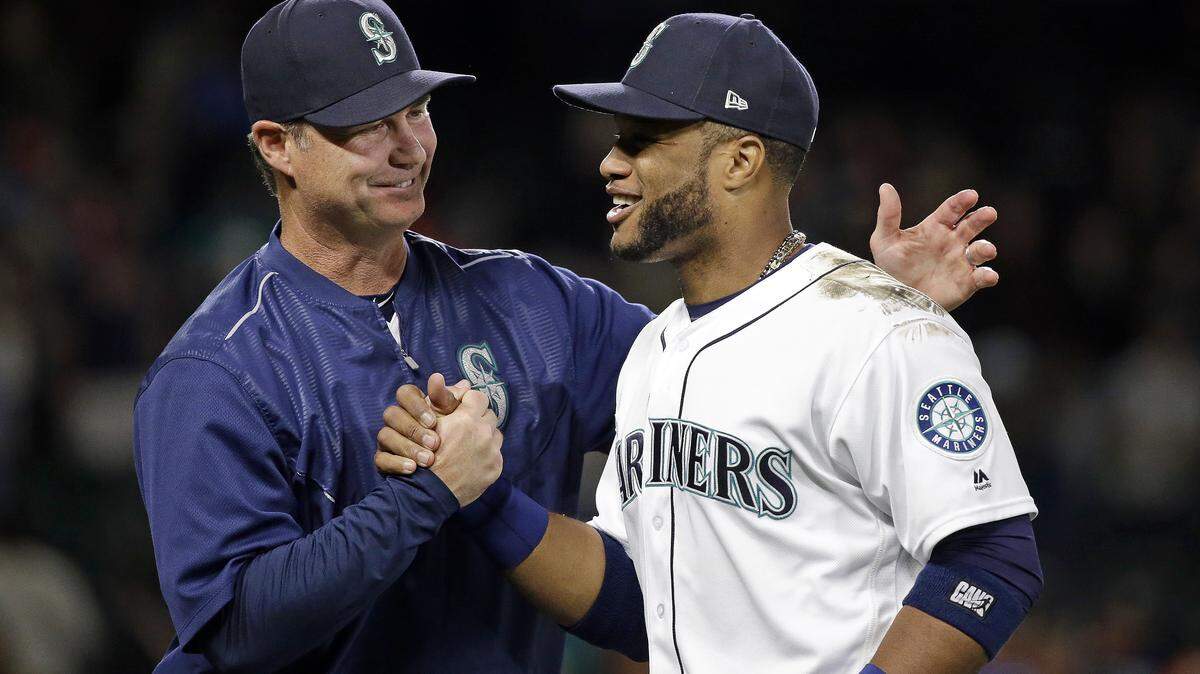
The Seattle Mariners earlier this month were given an 88 percent chance of reaching the playoffs, according to MLB.com’s projections.
With the Oakland Athletics surging and the Mariners sliding to enter the break, that number dipped to 64 percent. They were up 7.5 games on the A’s for the second wild card spot as recently as July 5, although that number is down to three after four consecutive losses to end the “first half” of the season.
Welcome to baseball, where the only thing that’s predictable is the unpredictability.
“It’s going to happen. I don’t think anybody here is thinking we’re going to go through the season without a couple of rocky stretches,” Mariners manager Scott Servais told reporters after the Mariners lost to the Rockies on Saturday. “That’s where we’re at right now – no pun intended.”
But here’s the thing: They still have a lead for last playoff spot, and they’re technically more than halfway through the season. With 97 games played and 65 to go the Mariners are 19 games above .500 (58-39).
Even with losses in eight of their past 11 games, the Mariners are on pace to win 97 games. The most wins a team’s had without making the playoffs (since the second wild card was created in 2012) was the 91-win Texas Rangers in 2013, when they finished one game back of the second wild card behind Tampa Bay.
History changes, but history says 92 wins gets you in, and the 85-win Minnesota Twins made it last year.
The Mariners lead over Oakland is not insurmountable, though. Consider some recent baseball history:
* The Indians overtook those Rangers in 2013 when Texas had a three-game lead at the break, same with the Tigers overtaking the White Sox despite a three-game deficit at the hallway point in the American League Central in 2012.
* Seattle led the Royals by 2.5 games for the second wild card in 2014 but finished a game back. The Blue Jays went from four games back in 2015 to entering the playoffs with the AL’s top seed.
So, yes, unpredictable.
“I thought we had a chance to enter the break on a high note, but we put ourselves in a position the way we played in the first half to be in a good spot here for down the stretch in the second half,” Servais said. “And ultimately get to where we want to go – and that’s into the playoffs. This team certainly has enough talent to do that.”
But will they get enough of the breaks teams inevitably need?
Here are three things that could make the Mariners’ season – as in their first playoff trip since 2001 to end North America’s longest active playoff drought among the major professional sports – and three things that could break it:
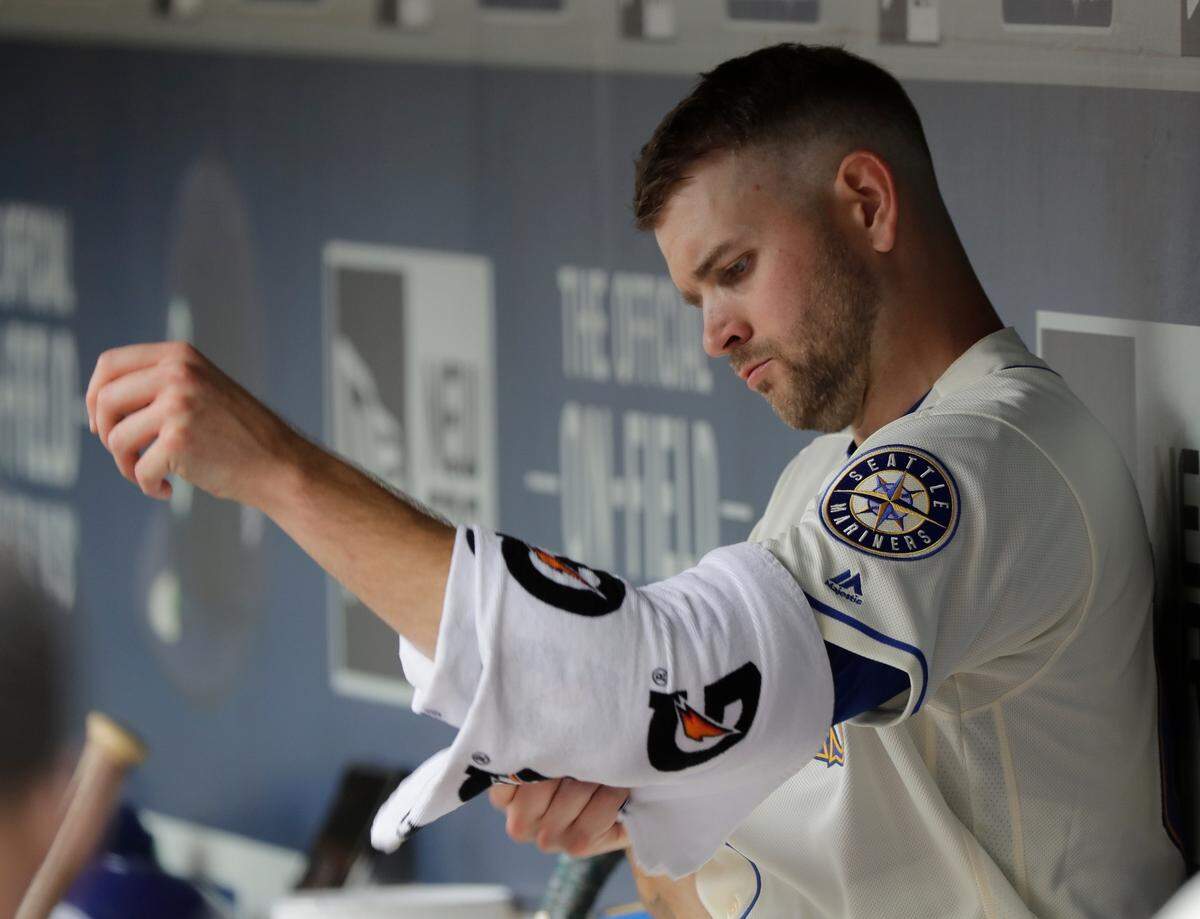
3 THINGS THAT COULD BREAK THE MARINERS
1. Rotation goes south
The Mariners’ most pleasant surprise of the first half was their starting rotation, but what if it regresses to the mean?
For as good as Wade LeBlanc has been — essentially the rescuer of the Mariners’ rotation — he’s allowed four or more runs in three of his past five starts. His season ERA has gone from 2.63 after 7 2/3 shutout innings against the Red Sox on June 16 to 3.63 after four runs in 4 1/3 innings in Colorado as the Mariners enter the break.
Then there’s all these innings thresholds. Marco Gonzales has pitched 113 1/3 innings this season after a career-high 126 1/3 innings all of last season. But this applies to all of the Mariners’ starting rotation, not just Gonzales.
An arm has never fallen off for throwing an inning more than their previous career-high, but Servais and Co. are most certainly monitoring thresholds and general manager Jerry Dipoto said they’ll start to really look at it when they approach 150-160 innings.
2. Injuries
Not to bring up 2017, but remember all those injuries last season?
Thought so. The Mariners haven’t endured anything to that degree this season (not like the Los Angeles Angels have, either). But Dee Gordon, Jean Segura, Robinson Cano, Nelson Cruz, Kyle Seager, Mitch Haniger, Ryon Healy, Mike Zunino and Ben Gamel have all missed at least one start because of injuries already.
Zunino (ankle), James Paxton (back) and Felix Hernandez (back) are currently on the disabled list, but none are expected to miss a start as the Mariners enter the second half.
Paxton spent most of his offseason with no goal greater than being healthy throughout the season after missing significant time each of the past two seasons with myriad injuries. His health is near the top of that make-or-break list.
3. Offensive jugger-not
The Mariners entered the break tied for the third-best team batting average in the American League (.258) behind the Red Sox (.272) and Astros (.261).
But they’re in the bottom half of the AL in runs scored (10th) and the Mariners average about one fewer run per game than the top three run-scoring teams: the Red Sox, Astros and Yankees.
“I think things have really played out much differently,” Servais said. “I think when we left Peoria we thought we were an offensive juggernaut. We loved the lineup and what we were going to do offensively. But things have changed a little bit.”
One change was their No. 3 hitter, Robinson Cano, fracturing his finger and then being suspended 80 games for violating MLB’s joint drug and prevention program. They’ll get him back in less than a month (more on that in a bit) but here’s something somewhat ominous for the Mariners – no team that has ranked 10th or lower in the AL in runs scored has reached the postseason since the second wild card was added in 2012.

3 THINGS THAT COULD MAKE THE MARINERS
1. Robinson Cano
It’s undeniable the difference Cano adds to the Mariners’ lineup and Jerry Dipoto told the New York Post this week that when he returns from his 80-game suspension on Aug. 14, he’ll do so as an everyday player in the Mariners’ lineup – even if that means splitting time at second base, first and designated hitter.
The Mariners’ offense averaged 4.6 runs per game in the 40 games they had Cano; they’re averaging 3.9 without him.
Despite what former Mariner Harold Reynolds said on 950-KJR last month, that they should sit Cano and say, “See you next spring,” Cano’s bat and plate discipline augments the Mariners’ lineup to a level that could make them playoff bound.
It’s not exactly instant-offense when he returns and the Mariners’ aren’t ignoring the team-chemistry factor, but all signs have pointed to his teammates being willing to accept him back, at least from what he said from Safeco Field two weeks ago.
“This is the hardest thing that I’ve been going through in my life besides the death of my grandpa,” Cano said. “I love this game so much. For me, baseball is everything.”
His absence seemed to galvanize the team in some ways. He won’t be eligible to participate in the playoffs even after he does return, but he’ll be the biggest trade-deadline addition to the Mariners’ lineup.
2. Trader Jerry
The Mariners don’t have the upper-level prospects to offer that their competitors do, but you know Dipoto is scouring the market.
All signs have pointed to the Mariners chasing either a starting pitcher or one more arm for the back-end of the bullpen, and the right addition could be the key to ensuring the Mariners a spot in the playoffs.
The question is, how much is Dipoto willing to deal? Or how much of the future is he willing to sacrifice for what really amounts to a spot in the one-game Wild Card round? The Mariners certainly aren’t out of the race for the AL West crown, entering the second half five games back of the Houston Astros, but that’s a big hill to climb.
Dipoto has shown a willingness to avoid one-year rentals and, instead, acquire players with club control, like he did in May to get Alex Colome and Denard Span from the Rays. And it didn’t work out so well when they picked up pending free agent Yonder Alonso last season to play first base.
3. Mike Zunino’s swing
For all the Mariners’ success, they’ve had some players who have not lived up to expectations. Right-hander Juan Nicasio is one of them, third baseman Kyle Seager is another.
But for all of Mike Zunino’s defensive prowess (and don’t ignore what he’s meant to the pitching staff) he’s batting .189 with 85 strikeouts in 60 games, which is a significant regression from, dare it be said, MVP-type numbers (if compiled for an entire season) he put up in the second half of last season. He batted .281 with 24 home runs, 61 RBI and a .589 slugging percentage from May 29 through the end of the season, and the only other players to do that (or better) were Nolan Arenado, Charlie Blackmon, J.D. Martinez, Giancarlo Stanton and Joey Votto.
Zunino appeared to have an “aha” moment with his swing earlier this month before he headed to the disabled list on July 5 because of a bone bruise in his ankle. He’s expected to return in the next week, but Zunino’s oblique injury to start the season clearly derailed what was a strong spring after that torrid end to last season. The Mariners will hope the same doesn’t happen with this trip off of the DL.
If he can find the swing he had last season – huge break for the Mariners.
Because with the A’s hot on their tail and a postseason drought to douse, they’ll need all the breaks they can get.
“It’s not going to be easy,” Servais said. “When you’re trying to put some things behind you – we haven’t been to the playoffs in a long time – there are going to be some challenges along the way. You find out what you are made of. I like what this club is made of and I like our chances. But we got to get back on the right side of things.”
This story was originally published July 18, 2018 at 1:32 PM with the headline "3 things that could make or break the Mariners’ season."