WWU Hall of Famer, who broke golf’s color barrier and won U.S. amateur title, dies
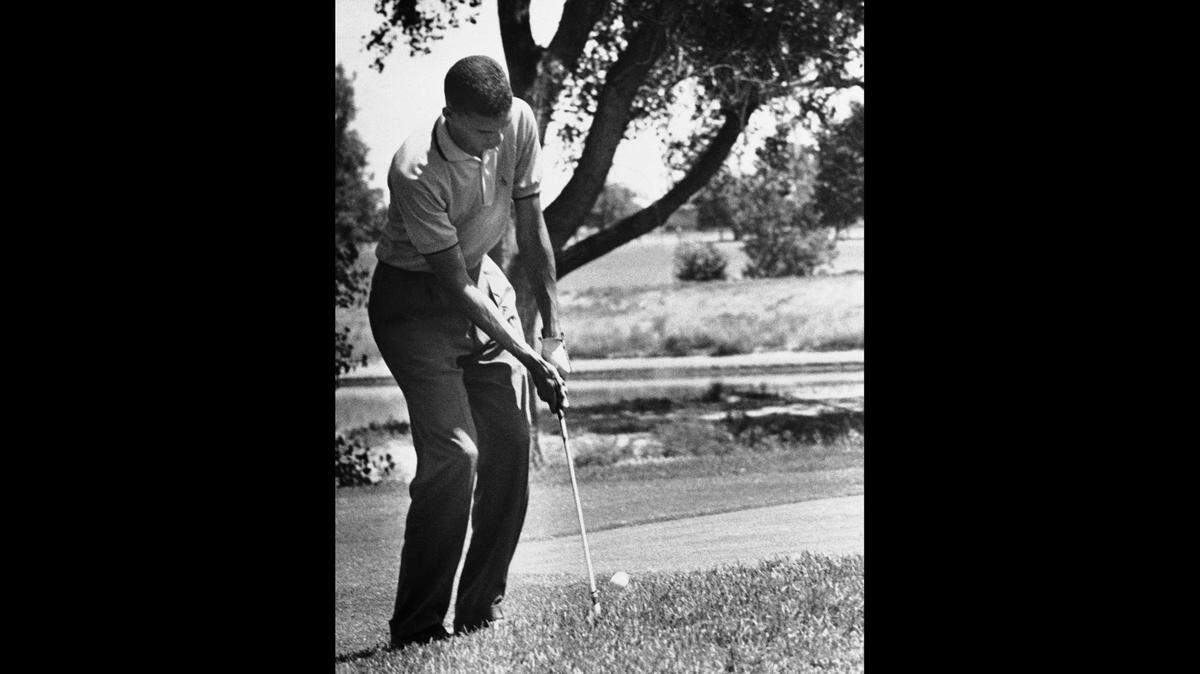
Western Washington University Hall of Fame inductee William “Bill” Wright, who was the first Black man to win a major U.S. golf tournament, died Friday in Los Angeles at 84, the school announced in a release.
Wright, on July 18, 1959 became the first Black to win a tournament conducted by the United States Golf Association, when he captured the U.S. Amateur Public Links title at the Wellshire Golf Course near Denver. Wright was 23 and a senior at Western at the time of the win.
During his senior season, Wright took medalist honors at the National Association of Intercollegiate Athletics (NAIA) National Tournament.
He was one of the first seven former student athletes to be inducted into the WWU Athletics Hall of Fame in 1968 and was named the school’s Golfer of the Century in 1999, according to the release.
“Bill Wright was an iconic representative of Western Washington University, not only from an athletics perspective, but also as a wonderful human being,” WWU Director of Athletics and former Viking Golf Coach Steve Card said in the release. “He impacted the world by breaking the color line in American golf, but beyond that he was an incredible person who touched a lot of people in so many ways.”
Wright also has been enshrined in the USGA Museum in Liberty Corner, New Jersey, and is a member of the Pacific Northwest Golf Association Hall of Fame and African American Golfers Halls of Fame.
After graduating from Western, Wright made another run at the Public Links title in 1961 in Michigan, losing in the semifinals, and turned professional in the early 1960s, though he didn’t have the financial backing to play on the PGA Tour full time. He was able to compete in the 1966 U.S. Open and later played in five U.S. Senior Opens, according to the release.
Wright was the golf professional at The Lakes Golf Course in El Segundo, California, for 25 years and operated a golf club repair shop there for nine years until 2009.
Wright also taught elementary school in the Watts district in Los Angeles for nine years, including during the riots in 1965, according to the release. He later began detailing cars, before acquiring a leasing business and owning a dealership in Pasadena.
Before arriving at WWU in the 1950s, Wright was not allowed to carry a golf handicap, play in men’s club events or even in the Seattle City Amateur because of the color of his skin, according to the release. But in 1954 he finally convinced the Seattle City Amateur tournament administrator to allow him and his father to compete — Wright finished first and his father was third, and more importantly, doors began to open allowing Wright to play in more tournaments.
Wright also played other sports, including basketball, and spent one quarter at the University of Washington, before then Husky basketball coach Tippy Dye told him he did not want to have the school’s first Black player on his team, the WWU release states.
Wright transferred to the Western Washington College of Education, because of a friendship he developed with Dean C.W. “Bill” McDonald — a former UW player who had served as Western’s basketball coach until 1955. Wright helped the Viking basketball team to a 14-8 record, averaged 12.5 points per game and earned second-team all-Evergreen Conference honors during the 1958-59 season.
“We have lost a hero, but the advice and lessons that Bill provided will have a lasting impact for generations to come,” Card said in the release. “The term ‘great’ or ‘greatest’ gets tossed around loosely in the sports world. Bill Wright was a GREAT human being. For me personally, calling him my friend, is one of my life’s greatest blessings.
“My heart goes out to his lovely wife, Ceta, during this difficult time.”