
Fourth-generation forester says thriving forestry sector needs private and trust lands
Washington’s more than 2 million acres of forested state trust lands provide numerous societal benefits, including long-term timber production. Revenue from state trust lands managed by the Department of Natural Resources support public schools and community services across the state. In many cases, these proceeds provide critical funding in rural and underserved areas.
But a misguided effort to reduce harvest levels on state-managed forest trust lands would not only upend a revenue stream for smaller school districts and other junior taxing districts. Ending state trust lands harvests also would significantly impact Washington’s timber infrastructure and have unintended consequences that will reverberate throughout the forestry sector. That’s because attempts to limit state trust lands harvests fail to look at the forestry sector holistically and recognize that nothing happens in a vacuum.
I urge the DNR Board of Natural Resources to keep working forests working and allow for the continued harvests on state trust lands.
DNR-operated state trust lands are a critical part of the state’s interconnected working forest infrastructure. Trust lands help sustain local mills. In turn, local mills make it possible for privately owned working forests to exist, generating economic opportunity, tax revenue and a renewable supply of timber for environmentally friendly wood products that we all rely on daily.
The Pacific Northwest produces some of the highest quality softwood lumber in the world. This region generates about one-third of the lumber and plywood products used in the United States on only 4% of the country’s forest land. Trust lands are a critical part of these lands.
In addition, Washington state has some of the most stringent and comprehensive forest practice regulations on state trusts and private forest lands. Our rules are some of the most protective anywhere in the country, which makes Washington an ideal place to grow and produce sustainable wood products.
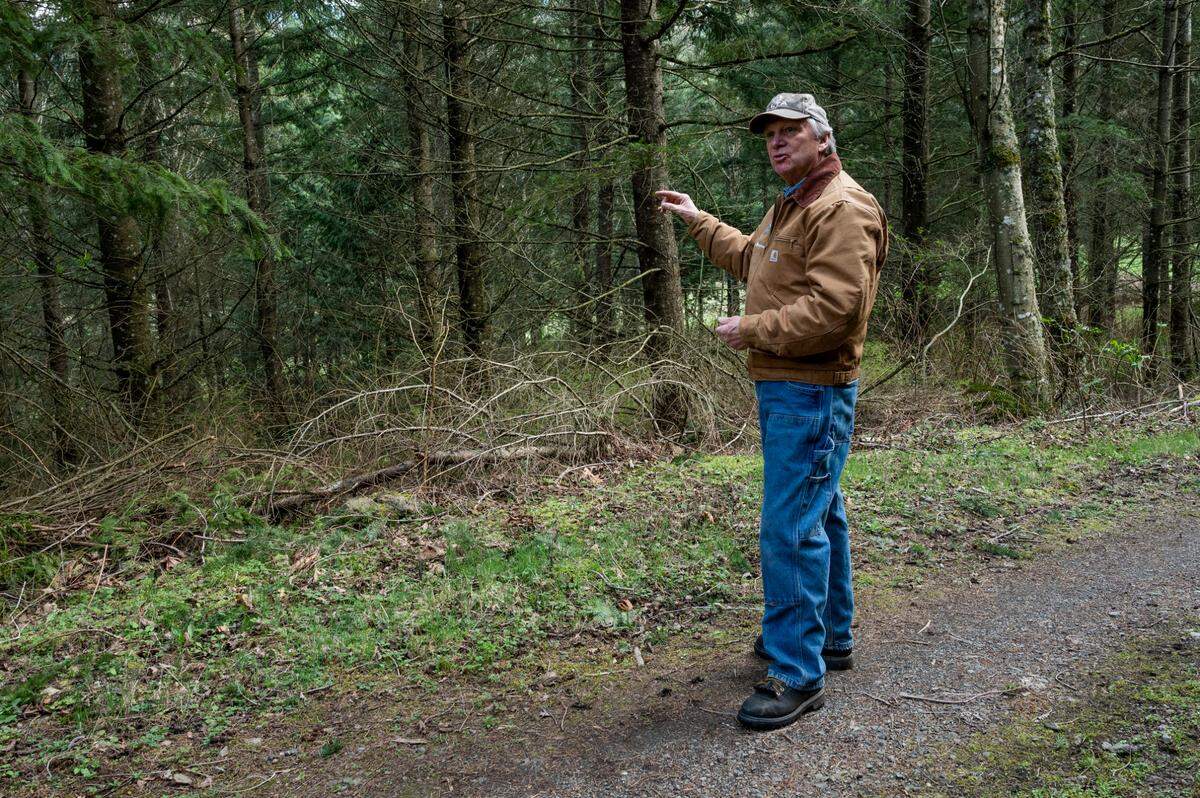
Proposed policies that further limit timber harvests overlook the reality that most of the acres in Whatcom County (two-thirds) are Federal lands where old-growth trees and older second-growth are already protected. On state trust lands, about half of the acres are set aside in stream buffers, unstable slopes, endangered species reserves, recreation areas and other special sites that are all preserved and off-limits to harvest.
When you take the harvestable trust lands out of production, neighboring private forest lands often go out of production because the nearby working forests no longer have a market. This leads to unmanaged lands or landowners converting their forest lands into other uses like housing and commercial developments.
Maintaining a forestry sector in Whatcom County and sustaining our family forest is difficult without competitive, local markets for our logs. Our tree farm is near Sumas, yet we are forced to transport maple logs to mills in Chehalis and Port Angeles. The cedar we raise must travel even farther to Morton or Kettle Falls.
The past two years have shown us that the smallest disruption within a sector can ripple well beyond the initial interruption, profoundly affecting supply chains and operations. This is the case with Washington state’s timber mills, which rely on a steady supply of wood from working forests on both private forest lands and state trust lands.
A robust, resilient forestry sector requires both. We can’t have one without the other.
The forest industry in Washington is already at a tipping point. Maintaining the remainder of DNR trust lands as part of the working forests’ land base is essential. When our state protects the trust mandate, it helps protect industrial forest lands and small family forests. Healthy, well-managed forests make life better for all of us, and for the generations to come.