
Law enforcement bill places costly, unnecessary restrictions on counties | Opinion
Earlier this month, the Washington State Senate passed Senate Bill 5974, a bill updating state laws related to our state’s law enforcement leaders — sheriffs, police chiefs, and town marshals. The bill tackles several different things. Several that I support, and some that I disagree with in the current version of the bill.
One I strongly support is that it will strengthen eligibility requirements and make sure they apply to all law enforcement leaders. I agree it’s a concern that current law places no real prerequisites on becoming a sheriff beyond completing training within the first year in office. And that the requirements for chiefs and marshals haven’t been updated for several decades. The bill addresses this by setting statewide eligibility standards that will now include, for example, minimum age of 25 years old; five years of uninterrupted experience with a government law enforcement agency; no felony convictions; no gross misdemeanor convictions (unless vacated); no past conduct that would lead to mandatory revocation of certification; and have not surrendered certification or had certification denied or revoked for misconduct in our state or any other state.
Also, if not already a certified officer, the person will have to have passed the same background check that all peace officers are required to pass before they can be appointed or elected. If already certified, they’ll need to pass a limited check that verifies they meet the other eligibility requirements. (Incumbents at the time the law is enacted will be exempted.)
I have always supported accountability, transparency, 21st-century policing best practices, and continuing education — in fact, I have been both a Chief of Police and, now, a Sheriff, and I currently meet all the requirements proposed in the new legislation. And I have had to pass several background checks over the course of my career in law enforcement. So, I agree with most of these requirements.
The part that I don’t support is that while law enforcement leaders who are appointed must have their background check done by the local jurisdiction appointing them within the six months prior to their appointment. For those who run for election, their background check is proposed to be done by the Washington State Patrol. While I understand this is to avoid any conflict of interest by the sheriff’s office since the candidate may be challenging the sitting sheriff or others who work in the agency, I don’t like the idea of the State Patrol getting to determine whether a prospective candidate for sheriff has passed the background check — a decision that could possibly keep someone off the ballot. It could disqualify capable candidates whom communities wish to elect. I also worry about the costs to counties of having to reimburse the State Patrol for the costs of doing the background checks for the candidates who run for sheriff in their county.
To be clear, I support background checks for all law enforcement officers. I would like to see a unified background check process across Washington law enforcement, which would strengthen accountability and consistency statewide. In the future it may be that we could centralize this for all agencies.
The bill also addresses what happens when a chief, sheriff, or marshal is decertified (has their license revoked) by the Washington State Criminal Justice Training Commission (CJTC). State law requires officers of all ranks to be certified, and if someone gets decertified, they are immediately separated from their agency, and they may no longer work in law enforcement in our state. I have sat on a CJTC hearings panel for a decertification hearing, and I appreciate that we need to have strong accountability when there has been serious misconduct. I also agree that those of us who lead law enforcement agencies must be held to high standards.
State law already requires all of us to maintain certification, and chiefs and sheriffs have been decertified for serious misconduct in the past. What existing law doesn’t say is what happens once they are decertified. What the bill does is to make that a cause of vacancy in office — the person must step down. What I don’t like about this approach is that I think the decision should be for the voters to make through the recall process. Although I have a clearer understanding after listening to testimony and debate of why some prefer the approach taken in the bill because it happens immediately, as with lower ranking officers (not allowing the person to stay in office if they have committed serious misconduct), declaring the office immediately vacant and having the local government appoint a replacement, takes power away from the electorate to make the decision for themselves through the recall process.
The bill provides parameters for how sheriffs, chiefs, and marshals may use volunteers, cadets, and specially commissioned officers. In this part of the bill what I like is that all agencies will be required to have policies — and cities, towns, and counties must adopt ordinances, that make it clear how they will be supervised and what authority they may be granted. This is mutually beneficial for agencies that experience natural disasters, which we are all too accustomed to.
For example, it will now be clearer that volunteers may not enforce criminal laws, or civil immigration laws, engage in pursuits, detain or arrest, use force, carry or use firearms or other weapons, use surveillance technologies, or share information from law enforcement databases. And that if specially commissioned officers or cadets are authorized to use guns or other weapons that they must be trained in their use. Importantly, volunteers are authorized to do a wide range of things that many of our agencies rely on them to help with, such as administrative support, community crime prevention, vehicle maintenance, search and rescue, caring for animals, traffic management, parks support, serving as faith leaders, and many other services.
In summary, this bill updates laws that have long needed updating, strengthens and aligns the professional qualifications for law enforcement leaders, and sets parameters for the use of volunteers.
But I worry that it may undermine local control for communities that have elected sheriffs by excluding some candidates from the ballot and by requiring a sheriff to step down after being decertified rather than allowing a recall election, and that it may add costs to already financially-strapped county governments.
I’ve appreciated the rigorous debate on this bill since its inception. I look forward to continued engagement with constituents, law enforcement leaders and our Whatcom County legislative delegation to help refine policy.
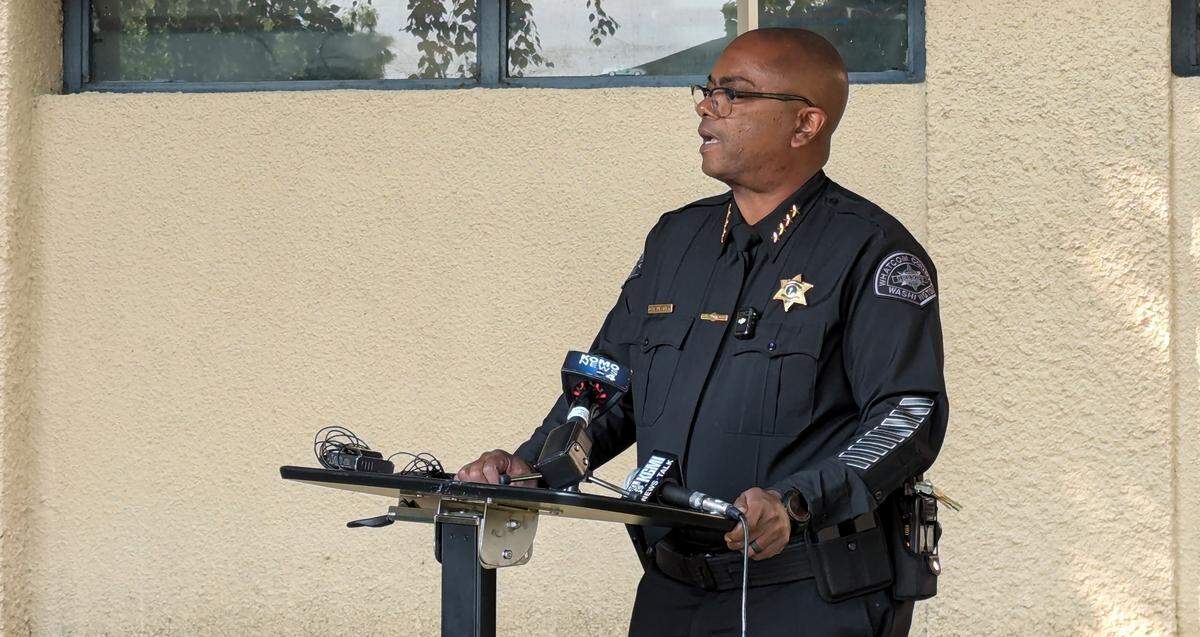
Donnell “Tank” Tanksley has served as sheriff for Whatcom County since January 2024.
Editor’s note (Feb. 25): This column was revised and republished to reflect substantial changes submitted by Sheriff Tanksley on Feb. 25, six days after original publication.
This story was originally published February 19, 2026 at 1:11 PM.