
Kudos to Upthegrove for re-examination of where we harvest Washington’s timber | Opinion
We can support thriving rural economies while conserving increasingly rare mature forests. Thoughtful stewardship demands that we consider both the environmental and the economic value of our forest landscapes.
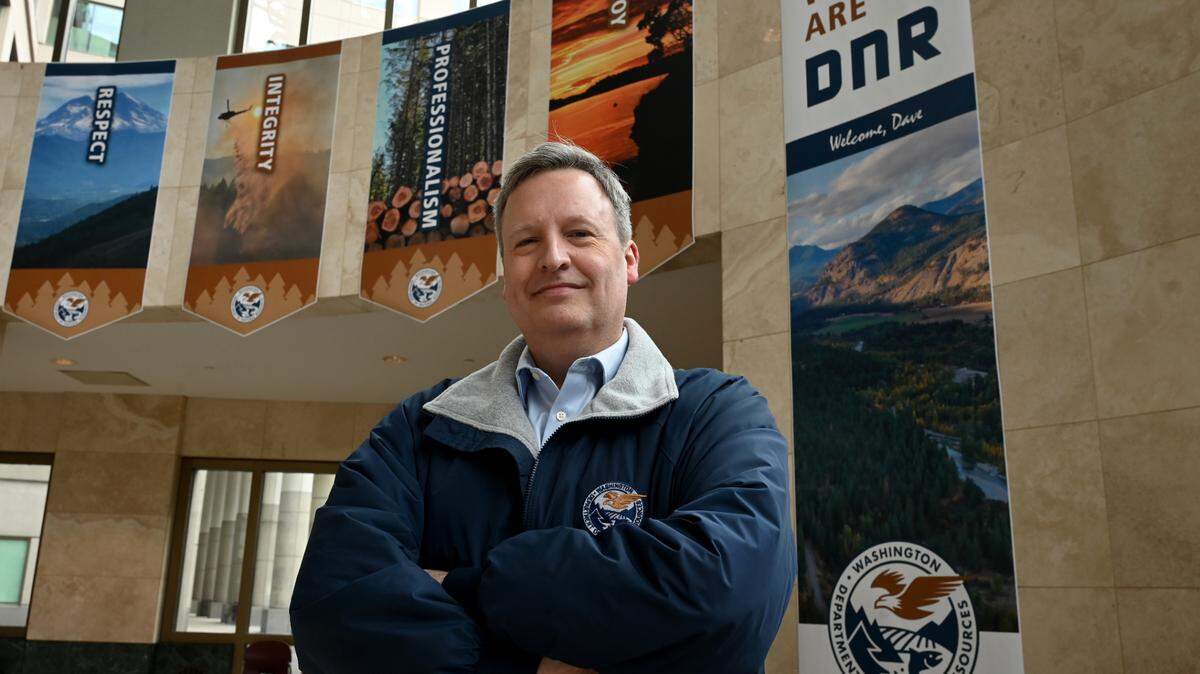
On Jan. 15, his first day as the new Commissioner of Public Lands, Dave Upthegrove announced a six-month pause on the timber sales of certain mature forests. Upthegrove now leads the Department of Natural Resources (DNR), which manages more than 2 million acres of public forestland on behalf of the people of Washington and on behalf of counties, providing revenue for beneficiaries such as school districts and local libraries.
We applaud Upthegrove, Washington’s first out, LGBTQIA+ statewide official, for keeping his campaign promise to reconsider logging mature forests. After four years of controversy, Commissioner Upthegrove is taking a thoughtful approach to these landscapes that are both the ecological and the economic backbone of our state.
In a press statement, Upthegrove explained that the pause will give DNR time to identify and map forests that meet ecologically-based criteria such as a diverse understory and small clearings caused by natural disturbances like wind. Taking this time will improve our understanding of how these forests affect watersheds and wildlife. It will give us scientific data about what impact harvesting them might have, or how conserving them might help our climate goals. Local constituents have been calling loudly for this.
At the same time, it’s critical to minimize the burden on junior taxing districts that depend on DNR revenue. Even minor delays can create major problems. Because there is typically a two-year lag in timber sale revenue reaching recipients, DNR must plan to minimize a dip in cash flow. DNR has made clear that it will identify alternate forests that are appropriate for harvest in the near-term and will work with the legislature to find supplementary funding where possible.
DNR emphasized that this doesn’t mean the agency will harvest less or fail to meet the agency’s harvest targets. This is a change in where the state harvests.
For years, Washington Conservation Action has researched, advocated and hoped for new thinking at DNR. It’s amazing and hopeful to see it happening.
First, it signals a recognition that we need to explore ways to better serve forest health, climate, wildlife and rural communities, which have been struggling for years. The old ways of doing things haven’t always worked.
Since 2022, Washington Conservation Action and Conservation Northwest have partnered with Resilient Forestry to model the effects of one ecological practice: increasing time between harvests from an average of 48 years to 80 years. These models show that by growing trees longer to be bigger at harvest and thinning more frequently we could generate more timber volume, and likely more jobs. New approaches to forestry, can contribute to revitalizing rural communities. This includes both conserving rare mature forests, and exploring active, climate-smart forestry management.
This leads to the second reason we’re so thrilled with Commissioner Upthegrove’s action: it recognizes that our forests create a wide range of benefits. In 2022, the Washington State Supreme Court ruled that DNR has a duty to manage forested state trust lands to both provide for beneficiaries (in ways both monetary and non-monetary) and to serve the general public. While the Supreme Court acknowledged that timber harvest on state lands supports local institutions and economies, it also affirmed that DNR’s duty is not to maximize revenue above all else.
Our forests, especially our older forests like these mature stands, enhance biodiversity and healthy ecosystems. They store carbon and are critical to our state’s climate strategy. They are vital to local communities and cultures. They are the foundation for our very way of life here — clean air and water, and healthy forests.
Let’s take a collective deep breath and think carefully about which forests will be harvested, when they will be harvested, and how. Commissioner Upthegrove is doing just that. We applaud his courageous leadership and look forward to working with DNR in this new era.
Rachel Baker is forests program director for Washington Conservation Action, and Kaylee Galloway serves on the Whatcom County Council.
This story was originally published March 10, 2025 at 2:21 PM.